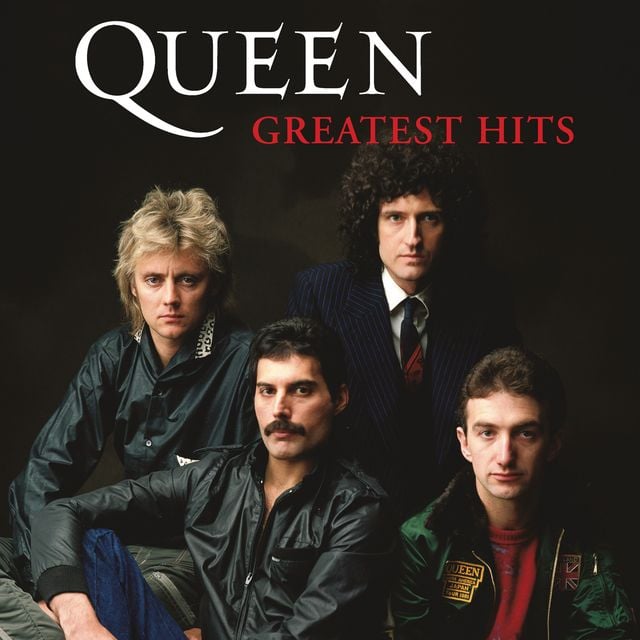

Queen's Greatest Hits was meant as a stopgap. It collected seventeen hit singles from 1974 to 1980, and came out in time for Christmas 1981, between The Game and Hot Space.
It is now the best-selling album in UK history. It passed six million sales in Britain, then seven million, and has spent more than a thousand weeks on the Official Albums Chart. In America, it took thirty-nine years to reach the Top 10.
“Queen's Greatest Hits compilation may just be one of the rock world's most perfect collections of songs.”
A Compilation Born at the Peak
By the autumn of 1981, Queen had nothing left to prove commercially and no obvious next move artistically. The Game had given them their only US number-one album and, in “Another One Bites the Dust,” their only US number-one single — a bassline John Deacon wrote almost as a private joke that ended up outselling everything else the band had made. EMI in the UK and Elektra in the US had a straightforward commercial instinct: package the decade's singles, put them out before Christmas, and let a band that had spent seven years having actual hits do the selling. Greatest Hits was released worldwide on October 26, 1981.
The cover photograph did more work than a compilation cover usually needs to. It was shot by Lord Snowdon — Antony Armstrong-Jones, the society photographer and former husband of Princess Margaret — at his own studio, using natural light rather than the theatrical staging Queen usually favored. Brian May later called it perfectly composed and beautifully lit “by Nature herself, with a little help from Lord Snowdon,” and the plain, undramatic portrait it produced has stayed the band's default image for compilations ever since; it was reused, cropped and recolored, for Greatest Hits II a decade later.
There was no consistent producer to credit, because there was no unified session to credit. The seventeen tracks had been made by four different production arrangements across six years of records, from the operatic multi-tracking of A Night at the Opera to the leaner, self-produced sound Queen had settled into by 1980. Assembling them into one sequence — and making that sequence work as an album rather than a jukebox — was the only creative decision anyone actually had to make in 1981, and whoever made it got it right often enough that the running order has never seriously been challenged.
The reception outside Britain was immediate rather than gradual. Greatest Hits topped the album charts in Germany, the Netherlands, Austria and New Zealand within weeks of release, and went on to become one of the biggest-selling catalog albums in Australian chart history, eventually certified multi-platinum many times over. Only the United States, oddly, took its time — a gap that would define the album's commercial story for the next four decades.
The song that opens the compilation, and the one that has now topped the UK singles chart at three separate points across five decades.
Seventeen Songs, One Missing Track
The tracklist runs from “Bohemian Rhapsody” through “We Are the Champions,” covering everything from 1974's “Seven Seas of Rhye” to 1980's “Flash.” Roy Thomas Baker produced the earlier material, through A Day at the Races; Mike Stone co-produced the mid-decade singles; Reinhold “Mack” Mack oversaw the The Game-era tracks, including “Another One Bites the Dust” and “Crazy Little Thing Called Love”; and Queen itself is credited, alone, on the songs from News of the World onward, once the band had enough studio confidence to stop hiring outside production help.
One song is conspicuously absent from the British edition and present on the American one: “Under Pressure,” Queen's collaboration with David Bowie, which had just topped the UK singles chart the same month Greatest Hits came out. According to Queen's longtime manager Jim Beach, the reason was purely mechanical — European vinyl pressing took longer than the American equivalent, and several hundred thousand European copies had already gone to press before the song was even finished. It is a small, almost bureaucratic footnote, but it means the two most common versions of the world's best-selling album are not, track for track, the same record.
None of that mattered to the chart. Greatest Hits entered the UK albums chart in November 1981 and reached number one within a fortnight, holding the top spot for four weeks. In an era when catalog and new-release sales were tallied on the same chart, a compilation of songs most buyers already owned as singles beating actual new albums to number one was, if anyone had stopped to notice, an early sign of exactly how this record was going to behave for the next four and a half decades.
Essential Tracks
“Bohemian Rhapsody”
Already six years old by the time it opened this compilation, “Bohemian Rhapsody” had already done the improbable once — a six-minute, structureless single with no chorus that spent nine weeks at number one in 1975. Placing it as track one on Greatest Hits was not really a creative choice; nothing else could plausibly open the record.
What the compilation did was give the song a second and third act. It returned to number one on the UK chart after Freddie Mercury's death in November 1991, becoming the only single ever to top the British chart twice with the same version, sixteen years apart. A third chart run followed the 2018 biopic that borrowed its title, this time driven almost entirely by streaming rather than physical sales.
No other song on the album carries that kind of recurring cultural weight. It is the reason casual listeners bought the compilation in the first place, and the reason it kept selling to people who were not yet born when it was recorded. Its five-part structure — ballad, guitar solo, mock-operatic middle section, hard-rock coda, and a return to the opening theme — is also the clearest single illustration of why a Queen compilation needed seventeen songs rather than ten: no other band of the era treated a pop single as a suite with movements.
“Another One Bites the Dust”
John Deacon wrote it after spending time around Chic and disco sessions in New York, and the rest of the band was reportedly unconvinced it belonged on a Queen record at all. It became their only American number-one single, propelled in part by radio and club programmers who had no idea it was the same band that made “Bohemian Rhapsody.”
That bassline — four notes, repeated with almost no variation for four minutes — is the most sampled and covered element of Queen's entire catalog, showing up in hip-hop tracks throughout the 1980s and 90s largely because it is one of the most recognizable rhythmic hooks ever put on a Queen record, disco or otherwise.
On Greatest Hits, it sits directly after “Bohemian Rhapsody” — six minutes of operatic maximalism followed immediately by four minutes of minimalist groove — and that jump-cut sequencing is exactly the range the compilation is selling.
“We Are the Champions”
The compilation closes on the pairing it was always going to close on: “We Will Rock You” into “We Are the Champions,” a stadium-chant intro built almost entirely from stomping and clapping followed by a piano ballad written, according to Freddie Mercury, to be sung back by an audience rather than merely listened to.
Both songs were written for a live setting before they were hits on record, which is why they have outgrown the album entirely — used at sporting events, graduations and rallies with no reference to Queen at all, functioning as public property rather than as tracks on a specific LP.
As a closing statement for a hits compilation, it is close to unbeatable: a song explicitly about being the best, placed last, on the album that would go on to prove the point commercially for the next forty-five years. Every football chant, graduation playlist and Live Aid highlight reel that has used it since traces back to this exact recording, not a cover or a re-record — the same piano take, on every copy sold.
Queen's only US number-one single, and the song most responsible for convincing American radio the band could do more than one thing.
A Compilation That Doesn't Sound Like One
The usual knock against a hits compilation is that it plays like a jukebox — individually great songs with no reason to sit next to each other. Greatest Hits mostly avoids that problem because the source material was, by 1981, already this stylistically restless. “They could do it all — heavy rock, pop, opera, disco, gospel — and they did it all brilliantly,” Classic Rock wrote in a retrospective review, pointing specifically to the way “the epic grandeur of opener Bohemian Rhapsody leads into the disco sizzle of Another One Bites the Dust” as evidence of the band's range rather than a sequencing accident.
That range is exactly what a normal studio album cannot offer, and it is arguably why this particular compilation has outlasted most actual Queen albums in the public imagination. A listener gets the six-minute mock-opera, the four-minute disco groove, the rockabilly pastiche of “Crazy Little Thing Called Love,” and the stadium-chant closer, all inside seventy-five minutes, with none of the padding a typical studio LP carries between its singles. It functions less like a Queen album and more like an argument for why Queen never needed to make the same album twice.
More Than One in Four Households
The numbers involved in Queen's Greatest Hits stopped being ordinary chart statistics a long time ago and became something closer to demographic data. In 2022, the Official Charts Company confirmed it had passed a thousand weeks inside the UK Top 100 — more than nineteen years of continuous chart presence — making Queen the first British act ever to reach that mark, trailing only ABBA's Gold and Bob Marley's Legend among all acts worldwide.
“What an incredible achievement by Queen, to become the first British act to strike up 1,000 weeks on the Official Albums Chart with their Greatest Hits, a total which amounts to more than 19 years solid,” said Official Charts Company chief executive Martin Talbot at the time. Later that same year the album passed seven million UK sales and streaming-equivalent units, the first album ever to do so in Britain. “It really is a fantastic achievement by Queen to become the first act to notch up 7 million sales of one album, with their legendary Greatest Hits,” Talbot said of that milestone.
Talbot has also put a figure on what that means in practical terms: “Queen's Greatest Hits can claim to be in more than one-in-four UK households' record collections today.” That is not a claim many albums, in any genre or era, could survive having independently verified. It has held up.
Where the famous “one in three” version of that statistic came from, and what the arithmetic really shows, is its own story: One in Three Homes: Checking the Maths on Queen's Greatest Hits →
Three Deaths and Three Rebirths
A hits compilation does not usually get resurrection stories the way a proper album does, but this one has collected three. The first came in November 1991, when Freddie Mercury died a day after publicly confirming he had AIDS. “Bohemian Rhapsody” went back to number one on the UK singles chart that Christmas — the only single ever to claim that spot twice with the identical recording — and Greatest Hits, alongside the newly released Greatest Hits II, spent nine weeks back in the UK Top 10.
The second rebirth happened in America, and it happened because of a comedy about two slackers in a Pacer. Mike Myers reportedly refused to make Wayne's World without the rights to use “Bohemian Rhapsody” for its headbanging car scene, at a point when Queen was considered commercially finished in the US. Brian May took a preview tape of the finished scene to Mercury, by then extremely ill, in the weeks before his death. “I took it round and he listened to it and watched it — and he loved it,” May recalled. When the film opened in February 1992, the single re-entered the American chart and climbed to number two — higher than it had ever reached in the US the first time around, in 1975.
I took it round and he listened to it and watched it — and he loved it.
The third rebirth arrived in 2018 and 2019, when the biopic Bohemian Rhapsody sent the song back onto the Billboard Hot 100 for a third distinct chart run and kept it near the top of the UK's rock and metal singles chart for the better part of a year. Three separate generational discoveries of the same six-minute song, spaced roughly fifteen years apart — 1975, 1991-92, 2018-19 — is not a pattern most catalog albums get to claim even once.
Thirty-Nine Years to America
For all its UK dominance, Greatest Hits was a comparatively modest American performer for decades. It peaked at only number 24 on the Billboard 200 during its original 1981–82 chart run, and a 1992 reissue — riding the Wayne's World wave — got no closer to the Top 10 than number 11. The gap between British and American reception, so wide it is almost a separate chart history, held for thirty-nine years.
It finally closed in November 2020, and the trigger was almost comically unglamorous: Walmart marked every vinyl LP in its stores down to fifteen dollars for a single week. Greatest Hits sold 24,000 copies in the United States that week, 23,000 of them on vinyl, and jumped to number 8 on the Billboard 200 — the album's first American Top 10 placement, thirty-nine years and one month after release. Only one album in Billboard 200 history has taken longer to reach the Top 10 after its original release.
It is a fittingly unglamorous ending to the record's commercial story. Queen's Greatest Hits did not conquer America through a triumphant new tour or a prestige reissue campaign; it got there because vinyl was briefly the same price as a large pizza, and enough people who already loved these seventeen songs decided that was worth walking into a store for.
Why It Still Matters
Greatest Hits has never been treated as a serious critical object, and it was never designed to be one — it is a compilation, assembled from other people's finished decisions, with no unifying sonic idea beyond “these songs were successful.” But that is precisely what makes its endurance worth taking seriously. Forty-five years on, it functions less like an album and more like a piece of national infrastructure: the record that introduces new listeners to a band whose actual studio albums range from operatic art-rock to disco to arena bombast, in a sequence coherent enough that first-time listeners rarely notice how strange that range should sound.
It also raises a question the band itself never had to answer while its members were alive to be asked: what does it mean for a group's single most-owned release to be the one none of them set out to make as a statement? Brian May, Roger Taylor and the surviving Queen organization have spent decades since Freddie Mercury's death fielding that question in practice — touring behind the songs on this tracklist far more than behind any individual studio album, because this is the version of Queen that most of the audience actually knows by heart.
For a generation too young to have bought the original singles, Greatest Hits was, and remains, the way in. It did the same job for listeners in 1982 that it does for listeners discovering Queen today off the back of a streaming playlist or a stadium singalong at a football match: it compresses seven years of one band's evolution into seventy-five minutes and lets the songs make the case for themselves. Forty-five years of sales figures suggest they still do.
“The British public and their infinitely-great taste have made this the biggest-selling album in history. Thank you very much; we're humbled and honored.”