
The most valuable song of the 1980s was nearly given away to a movie soundtrack. In a New Jersey basement in late 1985, Jon Bon Jovi, Richie Sambora and hired songwriter Desmond Child finished a mid-tempo story about two broke kids named Tommy and Gina.
Jon walked out unconvinced. “Eh, it's okay,” he remembered saying. Sambora's reply became band legend: you're an idiot; it's really good.
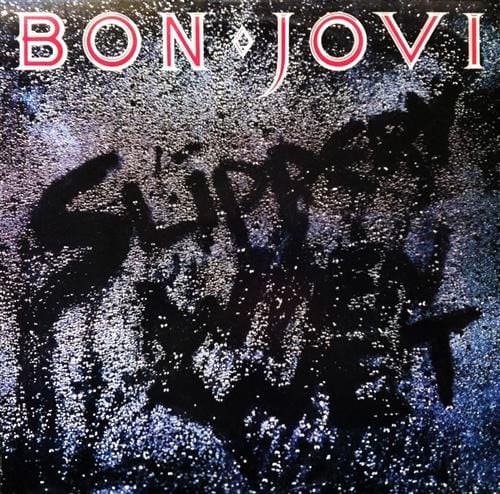
The song was “Livin' on a Prayer.” The album built around it, Slippery When Wet, spent eight weeks at No. 1 and delivered back-to-back chart-topping singles. It dragged a whole genre, whatever radio decided to call it, from the Sunset Strip into every American living room. Forty years on, it is the record that proved heavy guitars and Top 40 craft were never enemies.
“All we were hoping for was just to get a good-sounding record. Our goal, as I remember sitting down and talking to Jon about it, was, 'Okay, if we sell 500,000 copies of this record, we're in.'”
Third Album or Bust
By 1985, Bon Jovi were a mid-table band with a problem. Two albums had produced one modest hit and a reputation as openers — competent, photogenic, and completely dispensable. The follow-up, everyone in the PolyGram building understood, would decide whether the band from Sayreville, New Jersey became headliners or a tax write-off.
The label's answer was unromantic: bring in a professional. Desmond Child had co-written Kiss's disco-metal smash “I Was Made for Lovin' You” with Paul Stanley, and he treated choruses the way engineers treat bridges — as structures with load-bearing requirements. Jon had wanted an outside spark anyway; he liked what Bryan Adams had done writing with Tina Turner. The A&R department suggested Child, and the purists' objection — that real bands don't hire songwriters — was exactly the rule the album would spend the next year demolishing.
The writing sessions were pure New Jersey: Child driving out to jam with Jon and Richie in the basement of Sambora's mother's house. The band stockpiled roughly 30 songs, then did something almost no rock band of the era would admit to — they played the demos for local teenagers and let the kids' reactions help pick the track list. Market research, in 1986, was heresy. It was also quality control by the only jury that mattered.
Tommy, Gina, and a Recycled Chorus
Child's method was autobiography disguised as fiction. Tommy and Gina, the couple at the heart of “Livin' on a Prayer,” began as Johnny and Gina — Child himself (born John Barrett) and his girlfriend Maria Vidal, who waited tables under the nickname Gina while the two of them scraped by in late-'70s New York. Jon vetoed “Johnny” for sounding too much like himself, and Tommy was born — a union dockworker with his six-string in hock.
“You Give Love a Bad Name” had an even less sentimental origin. Child had just written a song called “If You Were a Woman (And I Was a Man)” for Bonnie Tyler; convinced its shout-along hook deserved a bigger stage than it got, he rebuilt the melody with Jon and Richie around a new title. The result opens with its full chorus sung a cappella — a radio programmer's dream and a statement of intent: this album would lead with hooks the way Zeppelin led with riffs.
The official video for 'Livin' on a Prayer' — flying harnesses, talk box, and the key change that ate American radio.
Little Mountain: Fairbairn's Hit Factory
Recording moved far from New Jersey — to Little Mountain Sound in Vancouver, run with horn-player discipline by producer Bruce Fairbairn, a former trumpeter who planned sessions like arrangements. His engineer was a local named Bob Rock, five years away from producing Metallica's Black Album, who mixed the record with a punch that made every chorus land like a downbeat. The sessions ran from January to July 1986.
Fairbairn nearly lost the job in rehearsals. Jon, expecting cheerleading, complained that the producer wasn't “comin' to the party.” Fairbairn's reply — that he wanted to find out what was at the party before he tried to move the venue — defined the record's temperament: enthusiasm was the band's department; judgment was his.
Even the title was a Vancouver artifact: the band decompressed at a local strip club where the showers onstage suggested the phrase. The original sleeve — a well-endowed woman in a soaked yellow T-shirt — was scrapped amid retailer nerves and Jon's own distaste for the design. The compromise, shot in a hurry, was a wet black garbage bag with the title traced in the spray. The most airbrushed era in rock ended up with an album cover that cost about a dollar.
Essential Tracks
“Livin' on a Prayer”
The song Jon nearly donated to a soundtrack became the band's signature because the band kept renovating it. The early version, by Jon's own description, lacked the famous bassline and “sounded more like the Clash.” Rebuilt in Vancouver, it gained David Bryan's synth intro, the octave-jumping bass, and Sambora's talk box — a guitar that appears to speak, wired straight into the listener's jaw.
The arrangement is a masterclass in delayed gratification: verse and pre-chorus stack tension for a full 90 seconds before the chorus detonates, and the final act modulates up a minor third — a key change so shameless it became the reference example of the move. Daltrey-scale screams were out of fashion; this was the new physics of the arena singalong.
It spent four weeks at No. 1 in early 1987 and never really left — a karaoke standard, a stadium chant, and the rare '80s rock single whose streaming numbers still behave like a current hit. Whole careers have been built on less than that key change; no rock chorus since has been more reliably screamed by 50,000 people at once.
“You Give Love a Bad Name”
The album's first single and first No. 1 announces its strategy in the opening second: no intro, no instruments, just the entire chorus delivered a cappella like a verdict. By the time the riff arrives, the hook has already been installed.
Underneath the gloss is Child's recycled Bonnie Tyler melody wearing a leather jacket — proof of his conviction that a great chorus is an asset, not a confession, and that pop songwriting is engineering before it is inspiration. Fairbairn's production stacks the gang vocals into a wall wide enough to fill any arena.
It hit No. 1 on the Hot 100 in November 1986, the band's first, and turned the album from a promising release into a phenomenon in a single chart week. MTV put the live-footage video into saturation rotation, and the shot-from-the-pit aesthetic — a band simply performing, filmed like an event — became the genre's default look for the rest of the decade.
“Wanted Dead or Alive”
The album's third Top 10 hit is its outlier: no Desmond Child, no dance-floor bassline — just Jon and Richie alone, casting the touring musician as a frontier gunslinger riding from town to town.
Sambora's 12-string acoustic intro is the record's most imitated guitar figure, and his duet vocal on the choruses is the band's secret weapon made audible. The song scales the cowboy myth to Meadowlands size without a wink — sincerity was always Bon Jovi's real genre.
It reached No. 7 in the spring of 1987 and outgrew the album around it: the template for every power ballad with dust on its boots, and the direct ancestor of rock-country crossovers that now fill the same stadiums.
The official video for 'You Give Love a Bad Name' — the a cappella chorus opening that made radio programmers surrender.
Eight Weeks at Number One
Released on August 18, 1986, Slippery When Wet reached the top of the Billboard 200 that October and kept returning, logging eight weeks at No. 1 and finishing as the best-selling album of 1987 in America. “You Give Love a Bad Name” and “Livin' on a Prayer” gave a hard rock band consecutive No. 1 singles — a feat the genre's heavyweights had never managed — and “Wanted Dead or Alive” made it three Top 10s from one record.
Critics mostly held their noses. The band was too pretty, the hooks too professional, the whole enterprise too obviously engineered to please. But even the era's most demanding graders had to acknowledge what the record documented about its audience — and the audience kept growing until the RIAA ran out of ordinary awards, certifying the album Diamond, 15 times platinum in the United States alone.
Sure seven million teenagers can be wrong, but their assent is not without a certain documentary satisfaction.
Fairbairn's 500,000-copy target had been beaten thirty times over. The band that hoped to earn a third album instead spent 1987 as the biggest rock act on the planet, headlining the very tours they had opened eighteen months earlier.
The Blueprint Everyone Borrowed
The industry read Slippery When Wet as an instruction manual. Every label wanted a hard rock band with an outside hitmaker, and Desmond Child became the most in-demand fixer in rock — Aerosmith, Alice Cooper, and half the Sunset Strip took the treatment. Fairbairn and Bob Rock's Little Mountain Sound became the genre's Abbey Road: Permanent Vacation, Dr. Feelgood, and New Jersey all came off the same Vancouver assembly line.
The formula eventually saturated — by 1991 pop-metal had become the establishment that grunge was invented to knock over, and Bob Rock had moved on to Metallica. But the album's deeper lesson outlived its genre: that populism is a craft, that a chorus tested against real listeners is not a compromise but a discipline. The pop-songwriter-plus-rock-band model it legitimized is now simply how records are made, from Nashville to K-pop.
And the songs refuse to age into nostalgia. “Livin' on a Prayer” remains a closing-time sacrament on every continent, Tommy and Gina still can't make the rent, and every stadium act that flies a hook over a heavy guitar — which is to say, most of them — is working inside the building Bon Jovi and Desmond Child framed in a Woodbridge basement. Forty years later, they're still halfway there.
“I remember walking out of the room with Richie, and I said, 'Eh, it's okay. Maybe we should just put it on a movie soundtrack.'”