
In the autumn of 1980, the two men who ran the Rolling Stones were avoiding each other. Meanwhile a young producer, Chris Kimsey, sat alone with a decade of the band's rejects. A world tour was booked, and there was no album.
Kimsey spent three months threading old reels through the playback heads. He found rejected jams from Jamaica, abandoned reggae experiments from Paris, and ballads left unfinished since Mick Taylor was in the band. He was hunting for anything that could pass as new.
The result was Tattoo You, built almost entirely from songs the Stones had already thrown away once. It spent nine weeks at No. 1 in America, longer than Some Girls or Exile on Main St. No Stones album has topped that chart since. Their great late triumph was a heist pulled on their own vault.
“I just went into the tapes, and went through all the outtakes. And so that's what Tattoo You is. It's virtually an outtake album, but one of their best. It took me about three months to assemble it all.”
A Tour Booked, No Album Written
The Stones entered the 1980s as a corporation with a personnel problem. Emotional Rescue had gone to No. 1 in the summer of 1980, but the partnership that wrote it was curdling: Keith Richards, newly clean after his Toronto heroin bust, wanted his band back from Mick Jagger, who had run it during the addiction years and saw no reason to stop. An enormous American tour was planned for late 1981 — and tours needed albums the way films needed posters.
Writing and recording a new record was impossible for the simplest reason. “Mick and Keith had had a big falling out and weren't really talking,” Kimsey told Classic Rock. The engineer-turned-producer, who had worked the desk on Some Girls and Emotional Rescue, knew the vault held four or five finished-sounding rejects from those sessions alone — and reasoned that if those existed, more did.
The proposal had one great political virtue: an outtakes album barely required the Glimmer Twins to occupy the same room. Kimsey could excavate; Jagger could write and sing over the results; Richards could add guitars on his own clock. The Stones' most harmonious album of the decade was possible precisely because it was assembled rather than performed.
Three Months in the Vaults
The tapes Kimsey surfaced spanned nearly ten years of discarded Stones. “Waiting on a Friend” and “Tops” dated to the Goats Head Soup sessions of late 1972, with Mick Taylor's guitar still on them — the departed guitarist later pressed for royalties when he heard the results. “Slave” and “Worried About You” came from the 1975–76 Black and Blue era, carrying Billy Preston's keyboards and the guitar of session ace Wayne Perkins. The newest material dated from Some Girls and Emotional Rescue leftovers.
Most of it was instrumentally complete and lyrically empty. “I had to write lyrics and melodies,” Jagger recalled of the salvage job. “A lot of them didn't have anything, which is why they weren't used at the time — because they weren't complete.” Working through 1980 and early 1981, he finished a decade of abandoned sketches, singing 1981 vocals over 1972 rhythm tracks and daring anyone to hear the seam.
The crown jewel had been rejected twice. “Start Me Up” was first taped as a reggae groove during the Black and Blue sessions in 1975, then reworked at the Some Girls sessions in Paris in 1978, where the band ran it through dozens of takes and shelved it. “It's definitely a reggae song, that's what it is,” Keith Richards said, “but some time around about take 36, I hit one version, and Charlie's with me, which was the rock'n'roll version.” Kimsey found that rock take in the vault. One of those became the most played Stones riff of the next 45 years.
The official promo for 'Start Me Up' — a reggae reject from 1978, rediscovered on a shelf and turned into the Stones' biggest '80s hit.
Disguising the Seams
Turning scraps into an album that didn't sound like scraps was a production problem, and Tattoo You solved it with two elegant decisions. The first was structural: rockers on side one, ballads on side two — a sequencing so confident it read as a concept rather than a cover-up, and gave the record a shape many “real” Stones albums lacked.
The second was a masterstroke of misdirection: hiring jazz colossus Sonny Rollins to blow tenor saxophone across “Slave,” “Neighbours,” and “Waiting on a Friend.” Nothing says deliberate artistic statement like the greatest living improviser guesting on your record; nothing could make ten-year-old backing tracks sound more like a plan. Fresh vocals, Rollins's horn, and a unified mix pulled recordings from five different years into one room.
The thing with Tattoo You wasn't that we'd stopped writing new stuff, it was a question of time.
Richards's framing was accurate as far as it went — and beside the point. Time was exactly what the album weaponized: the Taylor-era warmth of 1972, the groove experiments of 1975, the punk-adjacent snap of 1978, all issued as a single statement by a band that could no longer stand still in a room together long enough to make one.
Essential Tracks
“Start Me Up”
The definitive Stones riff of the album era after Exile was a leftover the band had rejected as a failed reggae tune. When Kimsey pulled the 1978 Paris tapes, he found the rock arrangement hiding among dozens of dub passes — Richards, who had dismissed the song, barely remembered the take existed.
It is the band's architecture at its most load-bearing: Richards's open-G riff answered by Charlie Watts playing fractionally behind the beat, the gaps between them doing the strutting. Jagger's new 1981 vocal — equal parts ignition metaphor and leer — gave the track its title and its afterlife. The arrangement is almost provocatively spare: no keyboards, no horns, just two guitars, bass, and drums holding open space the way only this rhythm section could.
Released as the album's first single, it parked at No. 2 in America for weeks and never left rotation. Fourteen years later Microsoft licensed it to launch Windows 95, making a twice-rejected outtake the sound of the personal-computing age. It has opened more Stones concerts than almost any other song since — the reject that became the entrance music.
“Waiting on a Friend”
The album's tenderest moment is also its oldest: a melody cut in late 1972 during the Goats Head Soup sessions, with Mick Taylor's liquid guitar intact and Nicky Hopkins — the same pianist who graces Who's Next — on keys. For nine years it had no words.
The lyric Jagger finally wrote in 1981 was the record's quiet confession: a song about male friendship outlasting romance, sung by a man locked in cold war with his oldest friend. Sonny Rollins's closing solo — Jagger reportedly danced in the studio to show him the feel — carries the last two minutes like a benediction.
The Michael Lindsay-Hogg video, with Jagger idling on the St. Mark's Place stoop from the Physical Graffiti cover until Richards ambles up, became an early MTV staple — two estranged partners playing best friends for the cameras, and momentarily meaning it. The single reached the US Top 15, and its warmth gave the album's second side an emotional center no amount of new writing had managed to supply.
“Slave”
Exhibit A for the vault's riches: a thundering 1975 Black and Blue groove, cut in the era when the Stones auditioned guitarists by jamming with them, with Billy Preston's keyboards steaming underneath. It had sat unfinished for six years for the usual reason — nobody had written it a song.
Its 1981 completion turned the jam into a manifesto of rhythm: Watts and Bill Wyman locked into one of their deepest pockets, Jagger reduced to chant, and Rollins's tenor slashing across the top. The credits even list Pete Townshend among the backing vocalists — rock aristocracy moonlighting in the chorus.
Never a single, it became the connoisseurs' favorite — proof that the album's method wasn't desperation but curation, and that the Stones' rejects outgrooved most bands' releases. Decades of dance and hip-hop producers have mined exactly this kind of locked-groove Stones cut for its feel; Tattoo You simply got there first by raiding its own archive.
The official promo for 'Waiting on a Friend', shot on the Physical Graffiti stoop at 96 St. Mark's Place — an early MTV fixture.
Nine Weeks at Number One
Released on August 24, 1981, days before the tour, Tattoo You did exactly what it was built to do, and then far more. It reached No. 1 on the Billboard 200 in September and held the spot for nine straight weeks — the longest run any Stones album ever managed there, and the last time the band has topped the American chart. In Britain it reached No. 2. The RIAA eventually certified it four-times platinum.
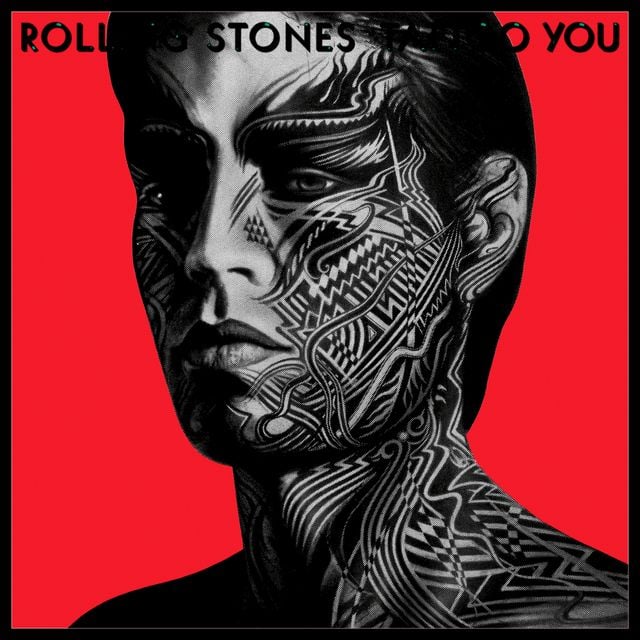
The 1981 American tour it serviced broke rock box-office records, playing to more than two million people. Even the sleeve won: Peter Corriston's design, wrapping Christian Piper's tattooed close-up of Jagger around the gatefold, took the Grammy for Best Album Package — the first Grammy the Rolling Stones had ever won, eighteen years into their career, for an album of leftovers.
Critics, primed to smell a stopgap, mostly capitulated. Reviewers who had savaged Emotional Rescue a year earlier heard focus and swing; the record's reputation has only climbed since, settling onto greatest-albums lists as the consensus final masterpiece of the Stones' imperial period — an ending the band has spent four decades failing to better.
The Leftovers That Outlived the Feast
Tattoo You's method eventually became an industry. The band that once buried its outtakes now mines them ceremonially — the album's own 40th-anniversary edition in 2021 completed nine more vault tracks, scoring the Stones a global hit with a business model Kimsey invented under duress. Every deluxe reissue and posthumous “lost album” on the market runs on the same insight: a great band's cutting-room floor is another band's greatest hits.
The deeper lesson is about editing as authorship. Nobody who bought Tattoo You in September 1981 experienced an archive; they experienced an album — arguably the best-sequenced one the Stones ever released. Kimsey's three months of listening, Jagger's retro-fitted lyrics, and Rollins's saxophone argue that curation, done at this level, is composition.
And “Start Me Up” still opens the show. Forty-five years after Kimsey rescued it from the reggae reel, the riff that got thrown away twice starts stadium concerts, sells software, and soundtracks first pitches — the most durable advertisement ever made for reading your own trash carefully. The Stones never got back to No. 1 in America. They never needed to; the leftovers are still feeding them.
“There's no denying it, unfortunately — this is a damn good record, a great band showing off its mastery, like Muddy Waters (just as a for instance) getting it up one more once.”