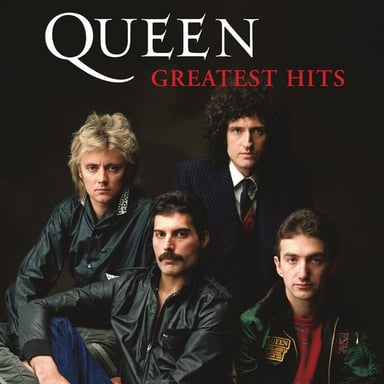
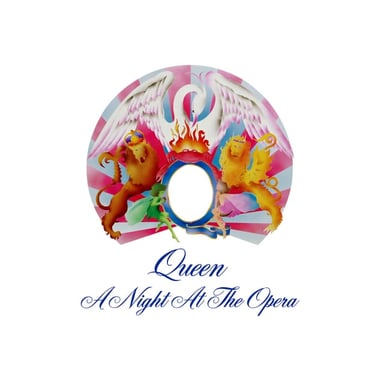

Somewhere in the summer of 1975, in a Welsh farmhouse studio, a producer held a strip of two-inch tape up to the light and could see through it. Three weeks of vocal overdubs — the same three voices, stacked pass after pass into a choir — had worn the oxide off the plastic. Most producers would have called that a disaster. Roy Thomas Baker, a Decca-trained engineer who loved opera and owned no concept of “too much,” called it the middle section of “Bohemian Rhapsody.” Over the following three decades the same hands built the gleaming choirs behind Queen, the Cars, Journey, and Foreigner — records of wild excess, executed with watchmaker precision. He died in April 2025, at 78, having spent a career proving the two were never opposites.
“You just knew that you were listening for the first time to a big page in history.”
The Method: More, Precisely
Baker's signature is the easiest to hear of any producer in this series: the vocal choir. Where other producers doubled a chorus, Baker multiplied it — three singers recorded in unison, bounced down, recorded again, bounced again, until a rock band became a cathedral. The trick was never volume; it was patience. Each layer had to be sung in tune with a slightly degraded copy of the last, which is why his stacks shimmer instead of smearing.
The patience was trained into him. Baker joined Decca's London studios in 1963 as a second engineer under Gus Dudgeon and Tony Visconti — the apprenticeship system at its most rigorous — and then moved to Trident in Soho, the independent room where London's biggest sessions landed. Before he produced anything, he had engineered for the Rolling Stones, Frank Zappa, and Nazareth, and served as chief engineer on two of the era's defining rock singles: Free's “All Right Now” and T. Rex's “Get It On.” English studio discipline — documentation, mic craft, tape management — underwrote everything extravagant he later did. When the excess arrived, it arrived on schedule and in tune.
His second habit was structural: recording songs in sections, like scenes in a film, and splicing the sections together afterward. A Baker production could change tempo, key, and genre at a cut because the cut was the plan all along. It made him the one producer in London for whom a six-minute mock opera was not a problem but a format — and, less obviously, it made him fast, because sections could be perfected independently instead of chasing one flawless full take.
What he never did was chase fashion by subtraction. When punk arrived promising three chords and honesty, Baker's answer was not to strip his records down but to point the same machinery at new material — which is how the man behind rock's most extravagant single came to produce one of new wave's foundational albums within three years of it. Genres changed around him; the craft, and the appetite, did not.
1972–1974: Gold Dust in the Downtime
It was Trident that supplied the band. The studio's owners had signed a struggling four-piece of students to their production company, and the engineer they paired with them heard something worth staying late for. Queen recorded their first album in Trident's dead hours — the band and their co-producer allotted whatever time paying clients left unused, sometimes starting after midnight. Baker co-produced Queen (1973) and Queen II (1974) under those conditions, and the constraint shaped the sound: with no budget for indulgence, the extravagance had to be constructed — guitar orchestras and vocal stacks assembled overdub by overdub on borrowed time. The debut single, “Keep Yourself Alive,” was remixed over and over before anyone was satisfied — the first sign that this engineer-band pairing would treat finished as a moving target.
The breakthrough came with Sheer Heart Attack (1974) and “Killer Queen,” Freddie Mercury's vaudeville miniature, which reached No. 2 on the UK singles chart and gave the band its first American hit. Every Baker fingerprint is already on it in scale model: the stacked harmonies that answer the lead vocal, the multitracked guitar filigree, the arrangement that changes costume every eight bars without dropping the groove. It was the sound of a band and a producer discovering that their shared appetite for theatre was commercially viable — and it bought them the budget for something far less reasonable the following year.
Listen for: the backing vocals on “Killer Queen” entering like a chorus line — the cathedral choir of 1975, still in miniature.
“Killer Queen” — the scale model for everything that followed.
1975: The Tape You Could See Through
The full story of A Night at the Opera — the costliest album ever recorded at the time, and the gamble that saved a nearly bankrupt band — is told in our review and in our companion story on the £40,000 gamble. What belongs here is what Baker actually did. Mercury previewed the song for him at the piano, played the ballad section, then stopped, as Baker told Sound on Sound: “He played a bit further through the song and then stopped suddenly, saying, ‘This is where the opera section comes in.’”
The song was built Baker's way: in sections, across six studios, starting with backing tracks at Rockfield Farm in Wales — the room from this feature's opening scene. The opera section was recorded as its own project, ballooning daily. “We originally planned to have just a couple of ‘Galileos,’” Baker recalled. “But things often have a habit of evolving differently once you're inside the studio, and it did get longer and bigger.” Mercury, Brian May, and Roger Taylor sang the choir parts three at a time, bounced across generations until one part was eight copies from its original, roughly 180 overdubs deep — the process that wore the tape transparent.
That section alone took about three weeks to record, which in 1975 was the average time spent on a whole album.
The industry said a six-minute single could not be playlisted; the band and producer refused to cut it, a friendly DJ leaked it across a weekend, and “Bohemian Rhapsody” spent nine weeks at No. 1 in Britain. Baker's own verdict stayed characteristically dry: he thought it would be a hit — just not quite that big a one. The record remains the reference point for every producer who has since tried to smuggle an art piece onto pop radio.
Baker and Queen made one more album together, and it was a fittingly unreasonable reunion: Jazz (1978), recorded in tax exile at Mountain Studios in Montreux and Super Bear in the French Alps, with the double A-side of “Fat Bottomed Girls” and “Bicycle Race” carrying the old choir-stacked theatrics into arena rock's late-seventies prime. Five albums, one partnership, and a sonic vocabulary that both parties would spend the rest of their careers exporting separately.
One detail from those sessions doubles as a mission statement. Queen's early sleeves carried the proud credit “no synthesisers” — because listeners kept assuming the orchestral wash of sound had to be electronic. It wasn't. Every texture the audience mistook for a machine was voices and guitars, multiplied by patience, which is as concise a summary of Baker's production philosophy as exists.
Listen for: the choir's slightly glassy sheen in the opera section — the audible texture of eight tape generations, worn into the sound itself.
Three singers, roughly 180 overdubs, three weeks — the section that wore out the tape.
1978: Teaching Journey to Sing
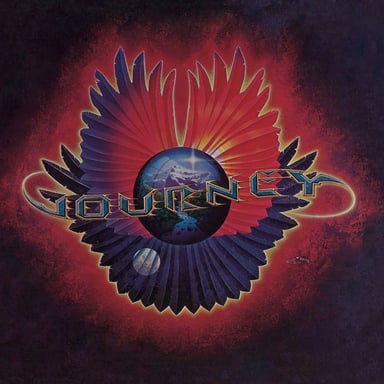
By the late seventies American arena bands were hiring Baker the way studios hire a cinematographer — to install the Queen finish — and the clearest case is Journey. On Infinity (1978) — the first album with new singer Steve Perry — Baker took a respected but modest-selling jazz-fusion outfit and rebuilt the whole record around the new voice, stacking Perry against Gregg Rolie and Neal Schon into the layered harmonies of “Lights” and “Wheel in the Sky.” Schon later credited Baker with introducing the band to production techniques they had never seen — the choir-building, the sectional tracking, the treatment of a chorus as an event to be staged rather than a part to be played. The album became Journey's commercial breakthrough and set the template — big voice, bigger choruses — that carried them to Escape.
Baker stayed for two more Journey albums — Evolution (1979), which produced the band's first US top-20 single in “Lovin', Touchin', Squeezin',” and Departure (1980) — by which point the transformation from fusion outfit to hit machine was complete. The connective tissue to what followed is a Baker export: Mike Stone, his engineer across the Queen years, co-produced Escape and carried the vocal-stack craft with him. The same seasons produced Foreigner's Head Games (1979), which reached No. 5 and sold five million copies in America. Within two years of Infinity, the sound of American rock radio — massed choruses over precision guitars — was substantially a London engineer's harmony technique, franchised across three bands.
Listen for: the block harmonies under the chorus of “Wheel in the Sky” — Queen's choir voicing, transplanted into an American arena band.
The first single of the Steve Perry era, harmonies by way of London.
1978: New Wave, Cut Clean
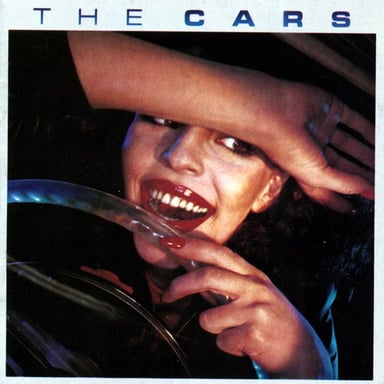
The same year, Baker produced the opposite record. The Cars came to him pre-sold: their demo of “Just What I Needed” had become one of the most requested tapes on Boston rock radio before the band had a record deal, and the club residencies that followed left the songs drilled to the bar. The debut was cut swiftly at AIR Studios in London — George Martin's rooms — because the material needed capturing more than construction. Baker supplied the frame: dry, clipped rhythm tracks under his one indulgence, the harmonies, which turn “Just What I Needed” and “My Best Friend's Girl” into new wave with a choir hidden inside it.
Critics heard the discipline immediately — Rolling Stone's Mikal Gilmore later praised the album's “polished, economical production” — and radio never stopped playing it: the debut stayed on the Billboard 200 for 139 weeks and went six-times platinum, so thoroughly mined for singles that the band joked it should have been called The Cars' Greatest Hits. Guitarist Elliot Easton remembered the sessions' architect simply as “fun to work with, a mirthful guy.”
Baker produced the next three Cars albums — Candy-O (1979) climbed to No. 3 — but the debut remains the proof that his maximalism was a choice, not a reflex: given a band that needed less, he knew exactly how much less. Play the two 1978 records side by side, the Cars' debut and Journey's Infinity, and the same signature harmonies arrive in completely different doses. The excess merchant, it turned out, kept precise scales.
Listen for: the backing vocals that answer each verse of “Just What I Needed” — Queen's stacking technique, rationed to new wave portions.
Recorded at George Martin's AIR Studios — maximalism on a ration book.
1982–2007: Maximalism Comes Back Around
The eighties kept him busy turning good bands into arena bands. Alice Cooper hired him to modernize his sound on the new-wave detour Flush the Fashion (1980); Cheap Trick got the full treatment on One on One (1982); and Ozzy Osbourne's double-platinum No Rest for the Wicked (1988) proved the vocal-stack gloss survived contact with heavy metal. In Britain, he steered T'Pau's Bridge of Spies (1987) and its chart-topping ballad “China in Your Hand” — a Queen-scaled production around an eighties pop voice. Even the industry's most famous unfinished record passed across his desk: Baker logged time inside Guns N' Roses' decade-long Chinese Democracy sessions around the turn of the millennium. By then “Produced by Roy Thomas Baker” functioned as a brand on a sleeve, a promise of scale the way a director's name promises a genre.
The more telling chapter came when the sound he invented returned as homage. In 2005 the Darkness, British glam-rock revivalists who had built a career on early-Queen theatrics, hired the original architect for One Way Ticket to Hell... and Back: stacked choirs, panned guitar armies, a record that sounds like 1975 rendered in modern fidelity because the same man was at the desk.
Two years later Billy Corgan brought him in for the Smashing Pumpkins' comeback album Zeitgeist (2007), chasing the same massed-overdub density for a heavier era. By then Baker's technique had long since dissolved into the industry's bloodstream: the gang-choir choruses of eighties hard rock, and every modern pop chorus assembled from dozens of comped vocal layers, descend from the man who wore the oxide off a reel of tape in 1975.
Listen for: the choirs behind the Darkness's title track — the 1975 technique reproduced by its inventor, thirty years on.
The revivalists hired the original: Baker at the desk, thirty years after Bohemian Rhapsody.
The Choir in Every Chorus
Baker died on April 12, 2025, at his home in Lake Havasu City, Arizona, at 78. The tributes traced the two halves of his reputation: Brian May reflected that the production behind “Bohemian Rhapsody” would never be forgotten, while Roger Taylor called him instrumental to Queen's early years — the engineer-producer who taught a band of students that the studio itself was an instrument of theatre.
The theatre was the point. Baker's taste for opera was never an affectation; it was the organizing idea behind every record in this feature — pop songs staged rather than merely performed, with entrances, costume changes, and a chorus that arrives like a crowd scene. Other producers of his generation chased naturalism, the band caught live in a room. Baker never believed the room was the show.
His method survives wherever a chorus is bigger than the people singing it. The gang-vocal choruses that ruled eighties rock radio — most famously the stadium-sized stacks Mutt Lange built for Def Leppard — worked Baker's technique at industrial scale, and their makers knew whose idea it was. Digital workstations then made infinite vocal stacking a hobbyist's trick, and modern pop assembles its hooks from layers numbering in the dozens by default — a workflow Baker pioneered when every layer cost a tape generation and a piece of the oxide.
The difference is that he had to decide, pass by pass, whether the next voice earned its place. Excess with a budget breeds judgment; excess for free breeds mush. That judgment — how big, exactly, this chorus deserves to be — is the craft his records still teach, and our review of A Night at the Opera documents its masterpiece.
“I thought it was going to be a hit. We didn't know it was going to be quite that big.”