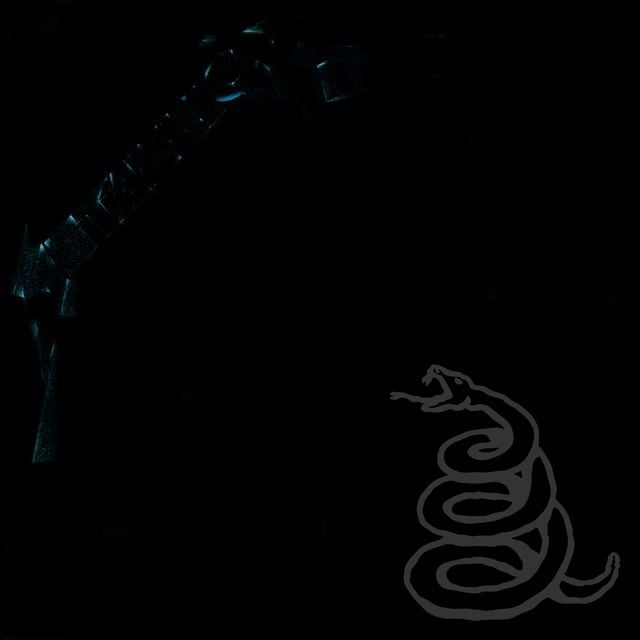

On October 6, 1990, the fastest band in the world walked into One on One Recording in Los Angeles and met a producer who told them to slow down.
Bob Rock had made his name on Mötley Crüe's glossy Dr. Feelgood, and Metallica's fans called his hiring a betrayal before a note existed. The band had only wanted him to mix. Rock insisted on producing. Then he insisted on something more radical: that the four of them play together, live, in one room, which they had never done on tape.
Eight months, one million dollars, three full remixes and three divorces later, they had twelve songs. Those songs lost a chunk of their old audience and replaced it with the world. Thirty-five years on, Metallica, the Black Album, is the best-selling album of the American SoundScan era.
“Metallica are not wimps. They believe that they're the best band in the world, and everyone else needs to get out of the way.”
Why the Fastest Band Alive Slowed Down
The decision that produced the Black Album was a reaction to the band's own excess. ...And Justice for All (1988) had pushed thrash's progressive wing to its limit — nine-minute suites, riffs stacked on riffs, and a notoriously dry mix with the bass all but erased. It went double platinum and earned the band its first Grammy nomination, but the songs were exhausting to play and, by Lars Ulrich's own admission, exhausting to follow.
Hetfield framed the correction plainly: after years of extended compositions, the band was writing simpler tunes, some built on as few as two riffs. The unlikely model was groove — the swing and low-end weight the drummer heard on Dr. Feelgood — and that record's producer became the target hire. James Hetfield and Ulrich intended to use Rock as a mixer only; hearing the demos for “Enter Sandman” and “Sad but True,” Rock heard a band changing shape and pushed to produce.
The fan reaction to the announcement previewed the next decade's argument. To the thrash faithful, the man behind Bon Jovi and Mötley Crüe records could only mean dilution; letters of protest arrived before the sessions did. The band, characteristically, treated the outrage as encouragement.
Eight Months at One on One
The sessions ran from October 1990 to June 1991 and were, by every participant's account, a war. Rock's first demand — the band tracking live in one room instead of assembling songs in isolated sections — attacked the band's entire working method. His second front was Hetfield's voice, pushing the barked delivery of the eighties toward actual singing, take after take. The cameras rolling for the documentary A Year and a Half in the Life of Metallica caught the friction in real time.
Rock never claimed it was pleasant. “It wasn't a fun, easy record to make,” he said afterward, famously telling the band he would never work with them again — a sentiment they returned, before hiring him for every album of the next fifteen years. His method, as he described it, was never confrontation for its own sake: “I never said, ‘No, you're wrong.’ I just showed them other ways to potentially get what they wanted.”
The fight with Rock, and the fan backlash that followed him for fifteen years, is its own story: The Mötley Crüe Producer: How Bob Rock Fought Metallica All the Way to the Black Album →
The turmoil wasn't only professional. During the recording, Ulrich, Kirk Hammett, and Jason Newsted were all going through divorces — a private undertow beneath the album's darkest material. Hammett later described himself as an emotional wreck, trying to channel the guilt and failure into the music. The budget reflected the perfectionism: roughly a million dollars, with the album mixed in full three times before anyone would sign off.
The two-riff thesis statement — the song that carried metal onto every radio format that existed.
Slower, Lower, Heavier
The paradox the Black Album proved is that slower reads as heavier. Tempos dropped toward the body's pulse, riffs repeated until they became architecture, and the low end the band had famously buried on Justice came forward like a tide. “Sad but True” detuned to D and moved at a crawl; nothing on the band's first four records hit as hard at half the speed.
This time we're doing the simpler tunes. One of the songs is like two riffs in the whole song with different singing over it, which is pretty cool.
Rock's production gave every element a stadium's worth of space: drums tuned and miked like cannon fire, rhythm guitars tracked into walls, and Hetfield's vocals — doubled, harmonized, exposed — treated as a lead instrument for the first time. Twelve songs, no epics, nothing over seven minutes: the band that had made complexity a creed delivered the tightest track list in metal history.
The reach extended in one more direction the faithful never expected: an orchestra. Michael Kamen's string arrangement on “Nothing Else Matters” wrapped a ballad Hetfield had written privately — picked on open strings while holding a phone, never intended for the band — in film-score scale. It became the gateway through which an audience that had never bought a metal record found one.
Essential Tracks
“Enter Sandman”
The album's opener began as a Kirk Hammett riff written in the small hours, reportedly under the influence of Soundgarden's Louder Than Love. Ulrich's suggestion to repeat the riff's opening part three times — simplifying Hammett's original — is the Black Album's whole philosophy in a single edit.
The arrangement is a masterclass in patience: a clean guitar figure, a bass pedal, drums entering piece by piece, a full minute of construction before the riff drops with the whole band behind it. Hetfield's nursery-prayer bridge turns a childhood ritual sinister without a single horror-movie cliché.
Released as the lead single on July 29, 1991, it reached No. 16 on the Hot 100 — unthinkable placement for thrash lineage — and became the band's permanent set closer and one of the most recognized riffs ever recorded, in any genre.
“Sad but True”
The heaviest thing on the record is also the slowest: a monolithic groove detuned a whole step, moving with the deliberation of something that knows it cannot be stopped. It was one of the two demos that convinced Bob Rock to fight for the producer's chair rather than the mixer's.
The track is the album's clearest display of the Rock-era rhythm section: Ulrich playing to the room instead of the click of his own ambitions, Newsted finally audible, and Hetfield's down-picked rhythm guitar compressed into a physical force.
Its long tail runs through decades of heavy music — the de facto template for every detuned groove-metal riff of the nineties — and into hip-hop, where Kid Rock's sample on “American Bad Ass” carried the riff to yet another audience.
“Nothing Else Matters”
Hetfield wrote it alone on tour, cradling a phone with one hand and picking open strings with the other, and never meant the band to hear it. Ulrich pulled it onto the record; Rock pushed the vocal to the front; and Michael Kamen's orchestra gave a private confession the scale of a film score.
For a band whose frontman had spent a decade in armor, the exposure was the risk — a metal ballad with no irony and no solo theatrics, sung rather than snarled. Hetfield even plays the solo himself, melodic and unhurried, in place of Hammett's usual wah-drenched runs.
It reached the top ten across Europe and became the band's wedding-and-funeral standard — the Metallica song owned by people who own no other. Kamen's involvement seeded the idea that became the S&M orchestral concerts at the decade's end.
The private song Hetfield never meant the band to hear — with Michael Kamen's orchestra behind it.
598,000 Copies in a Week
Released on August 12, 1991, Metallica sold 598,000 copies in its first week and entered the Billboard 200 at No. 1, where it stayed for four consecutive weeks — the band's first chart-topper, achieved with no radio formatting designed to hold it. Five singles kept the album on the chart for years: “Enter Sandman,” “The Unforgiven,” “Nothing Else Matters,” “Wherever I May Roam,” and “Sad but True.”
The long numbers dwarf the launch. The album won the 1992 Grammy for Best Metal Performance, has moved more than 30 million copies worldwide, and in 2025 the RIAA certified it double Diamond — twenty million in the United States alone, making it the best-selling album of the SoundScan era, ahead of every pop blockbuster whose company the band was accused of chasing. It has never really stopped selling; it still appears on the Billboard 200 most weeks, three and a half decades after release.
The Sellout Argument, Settled by Time
The accusation arrived with the album and never fully left: slower meant softer, melody meant surrender, and Bob Rock became a curse word on denim jackets. The band answered by getting bigger and, over three ensuing albums, changing even more — which kept the argument alive well past its natural life. What the argument missed was visible in the credits: nothing about the Black Album was a concession. It was the hardest record the band ever worked to make.
Its cultural verdict came in 2021, when the thirtieth anniversary brought The Metallica Blacklist — 53 artists covering the album's twelve songs, from Miley Cyrus and Elton John to Phoebe Bridgers and J Balvin. No thrash record could have assembled that guest list; only a record that had become common property could. The album that supposedly betrayed metal turned out to be the way three generations found it.
Every heavy band since has faced the Black Album fork — stay pure and bounded, or simplify and risk the letters. The record's real legacy is that it made the second path imaginable at the highest level of craft: twelve songs, two riffs each, played live in a room by four men having the worst year of their lives, mixed three times until it was right. Purity is a genre's business. Records like this one belong to everybody.
“I was trying to take those feelings of guilt and failure and channel them into the music, to get something positive out of it.”