One in Three Homes
Britain's best-selling album comes with a famous statistic attached. The arithmetic behind it is stranger, and more impressive, than the headline.
 Trevor Fortune•🎵 Queen - Greatest Hits•6 min read•October 8, 2026
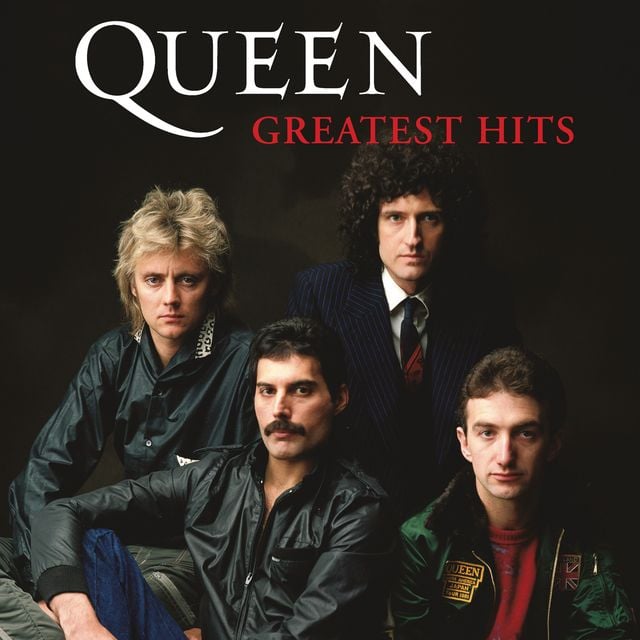
On February 11, 2014, Queen's Greatest Hits became the first album to sell six million copies in Britain. The press release came with a line that has followed the record ever since. One in three British families, it said, owned a copy. Then, in brackets, it said something slightly different: “or one in four British households.”
Both versions have been repeated ever since, often as if they meant the same thing. They don't. The gap between them says a lot about how a compilation of old singles became the best-selling album in British history.
A Stopgap From 1981
Greatest Hits came out in October 1981. It collected Queen's biggest chart hits, from “Seven Seas of Rhye” in 1974 to “Flash” in 1980. It went to No. 1 in Britain on November 14, 1981, and stayed there for four weeks.
At the time, that kind of record was unusual. “When it was released for the first time in 1981, career-spanning packages such as Greatest Hits were relatively rare, the preserve of only the very biggest acts,” the Official Charts Company's chief executive, Martin Talbot, said in 2022.
It never really left. By 2014 it had sold 6.0 million copies in Britain. ABBA's Gold and the Beatles' Sgt. Pepper were tied a long way behind on 5.1 million each. Brian May called it “incredible.” Roger Taylor said: “Who would have thought it! And all due to the Great British public.”
Families Are Not Households
The two famous fractions come from dividing those sales by two different numbers. The Office for National Statistics counted 18.6 million families in the UK in 2014. It counted 26.7 million households.
The difference is people who live alone or with friends. To the ONS, a family is a couple, with or without children, or a single parent with at least one child. A pensioner living on their own is a household but not a family. So are three students sharing a flat.
The 2014 arithmetic
6.0 million sales ÷ 18.6 million families = 32%
Just under one in three. This is where the famous headline comes from.
6.0 million sales ÷ 26.7 million households = 22%
Closer to one in four and a half. The press release rounded it to one in four.
Both figures assume one copy per home
They divide sales by homes. Neither counts how many homes actually have a copy on the shelf.
So “one in three” is correct arithmetic, but it uses the smaller number on the bottom. “One in four” uses the larger one and rounds up generously. Neither is a survey. Nobody went door to door checking record shelves.
When Streams Became Sales
A year after the six-million milestone, the rules changed. In 2015 the Official Albums Chart began counting streams. Every 1,000 streams of an album's tracks counted as one sale. The two most-played songs were weighted down to the average of the rest, so a single smash hit couldn't carry an album on its own.
For Greatest Hits, that mattered. It is an album made almost entirely of famous songs. On July 19, 2022, the Official Charts Company announced it had become the first album to reach seven million UK chart “sales.” The quotation marks were theirs. The total combined physical copies, downloads, and streams.
By then the album's tracks had been streamed 1.26 billion times in the UK, 240 million of them for “Bohemian Rhapsody” alone. At the chart's exchange rate, that is worth at most around 1.26 million album sales. The rest of the seven million, at least 5.7 million, is copies people actually paid for.
One in Four, Just About
The 2022 announcement dropped the “one in three” line. Talbot went with the household version instead.
"Queen's Greatest Hits can claim to be in more than one-in-four UK households' record collections today…"
The ONS counted 28.2 million UK households in 2022. Seven million divided by 28.2 million is 24.8 percent. That is a shade under one in four, even counting every stream. Divide by the 19.4 million families instead and you get 36 percent, comfortably more than one in three.
In practice, a sales total overstates ownership. Plenty of homes will have bought it on vinyl in 1981, on cassette for the car, and on CD later. Some copies were bought as presents for homes that already had one. Many of the households that bought it in 1981 no longer exist. The real share of shelves holding a copy is almost certainly lower than any of these fractions.
But that is a quibble about the percentage, not the achievement. No other album has come close to seven million. Guinness World Records put ABBA's Gold in second place on about 6.1 million. By July 2022, Greatest Hits had spent 1,006 weeks in the UK Top 100, almost twenty years of chart life for a record of singles most buyers already knew.
“Infinitely-Great Taste”
The band have never worried much about the fractions. “No album has done this before in history,” Brian May said when it passed seven million. “Thank you, we appreciate it.”
Roger Taylor was more expansive. “The British public and their infinitely-great taste have made this the biggest-selling album in history,” he said. “Thank you very much; we're humbled and honoured.”
Whether it is one home in three, one in four, or somewhat fewer, the statistic does describe something real. In Britain, seventeen old singles, gathered up between studio albums in 1981, have outsold every other album ever released there.