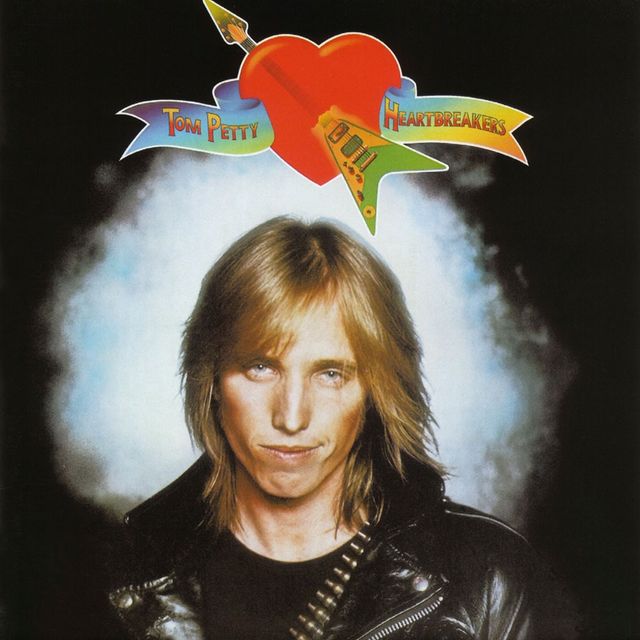

On July 4, 1976 — America's bicentennial — a little-known Gainesville, Florida band cut a song called “American Girl” inside a cramped Hollywood studio. Nobody involved thought much of the timing. When the album it belonged to came out that November, almost nobody in America noticed it at all. Tom Petty and the Heartbreakers had formed out of the wreckage of Petty's previous band, signed to a label run by a producer who'd once worked with Leon Russell, and cut their self-titled debut in two weeks flat — only to watch it sit largely ignored on American shelves while critics obsessed over disco and arena rock. It took a tour of England, a fanbase built almost entirely by word of mouth in the British music press, and nearly two years of patience before the record found an audience in its own country. What America eventually caught up to was a tight, unpretentious rock record built on Byrds-jangle guitars and Stones-style swagger that would go on to define an entire strain of American rock radio for the next four decades.
“Tom Petty and the Heartbreakers is purely and simply the best mainstream rock debut by any American band this year.”
From Mudcrutch to the Heartbreakers
Tom Petty, guitarist Mike Campbell and keyboardist Benmont Tench had spent the early 1970s together in a Gainesville band called Mudcrutch, which relocated to Los Angeles in 1974 chasing a record deal. They found one at Shelter Records, the label co-run by producer Denny Cordell and Leon Russell, but Mudcrutch's only single flopped and the band fell apart within a year. Shelter's response was blunt: the label broke up the band and kept only Petty under contract.
Rather than go solo, Petty regrouped almost immediately with Campbell and Tench and added two more Gainesville natives, bassist Ron Blair and drummer Stan Lynch, to form Tom Petty and the Heartbreakers. It was a quiet act of defiance against a label that had just dissolved his old band for underperforming — Petty effectively rebuilt the same musical partnership under a new name and dared Shelter to bet on it again.
Cordell, who produced the album himself, gave the new band Shelter's Hollywood studio and comparatively little time to prove the gamble had paid off. What the Heartbreakers delivered was recorded so quickly it barely resembles the deliberate, expensive rock productions dominating American radio at the time.
Two Weeks at Shelter Studios
The entire album was cut and mixed at Shelter Studios in Hollywood in roughly two weeks, a pace that left little room for second-guessing. Petty wrote most of the songs himself and brought them into the studio nearly finished, but the record's two most enduring tracks both came together through late-night studio accidents rather than careful planning.
“Breakdown” began as a loose jam between Petty and Campbell that stretched past seven minutes, with Campbell's now-famous guitar lick buried near the very end almost as an afterthought. Visiting musician Dwight Twilley happened to be in the room during a playback, heard the lick, and told Petty it needed to run through the whole song. Petty agreed on the spot and called the band back into the studio at nearly four in the morning to re-cut it. Campbell first tried playing the riff with a slide improvised from an empty vitamin bottle before deciding it sounded too bluesy and just played it straight — the version that became one of rock radio's most recognizable guitar hooks.
“American Girl,” recorded on the Fourth of July, grew out of Petty and Campbell's shared love of the Byrds, built on two ordinary six-string guitars tuned and played to sound like Roger McGuinn's twelve-string jangle. Petty always maintained the resemblance wasn't deliberate — “I don't think it sounds anything like the Byrds to me,” he said — but McGuinn himself heard it differently. On first hearing the song, he reportedly wondered, “When did I write that?” and later recorded his own cover of it.
Recorded on July 4, 1976, and mistaken by Roger McGuinn for a song he might have written himself.
Byrds Jangle, Stones Swagger
The album arrived at an odd moment for American guitar rock: too tough and unpolished for mainstream radio still chasing disco and soft rock, but built from a fundamentally different lineage than the punk explosion beginning to erupt in New York and London that same year. The Heartbreakers were closer in spirit to the mid-60s bands they'd grown up on — the Byrds' ringing guitars, the Rolling Stones' loose-limbed swagger — filtered through a leaner, faster arrangement style that happened to sound urgent at exactly the moment punk was making urgency fashionable again.
That coincidence of timing confused critics on both sides of the Atlantic. British writers, hearing the record's tight, aggressive energy without much context for where it came from, filed the Heartbreakers alongside the new wave and punk acts breaking through in 1976 and 1977. Petty found the comparison bemusing at best. “The press thought we were punks,” he said later, despite a sound built on twelve years of American and British rock tradition rather than any rejection of it.
The misreading didn't hurt the band commercially — if anything, being lumped in with rock's most talked-about new movement got the Heartbreakers noticed by exactly the audience primed to pay attention to guitar music again, even if the label never quite fit.
Essential Tracks
“American Girl”
Closing the album on its most enduring note, “American Girl” pairs a chiming, Byrds-indebted guitar figure with a lyric about restlessness and longing that never quite resolves into either triumph or despair. Petty and Campbell built the ringing lead sound from two standard six-strings played and layered to mimic a twelve-string, rather than the actual twelve-string most listeners assumed they'd used, recording the whole thing on the Fourth of July almost as an afterthought between other sessions.
It wasn't a hit on release, but it slowly accumulated cultural weight over the following decades, turning up in films including FM and Fast Times at Ridgemont High, and, most memorably, as the song Catherine Martin sings along to in her car moments before her abduction in The Silence of the Lambs — an unsettling juxtaposition that introduced the song to an entirely new audience fifteen years after its original release, its cheerful jangle curdling into dread in retrospect.
It has since become one of the most-played songs in Petty's catalog and a fixture of American rock radio, covered by Roger McGuinn himself within a year of its release, and proof that a song can fail commercially on arrival and still eventually become inescapable.
“Breakdown”
Built around the guitar lick Dwight Twilley talked Petty into repeating throughout the song rather than saving for the ending, “Breakdown” is a masterclass in restraint — long stretches of near-silence punctuated by Campbell's spare, insistent riff and Petty's half-spoken verses. The lick almost came out entirely different: Campbell first tried playing it with a slide improvised from an empty vitamin bottle before the band decided the bluesy tone didn't suit the song and had him play it clean instead.
Released as the album's first single, it became a modest Top 40 hit in the US and Canada on its initial run in early 1977, giving the band its first sign of American radio traction even as the album itself continued to languish commercially in the months that followed.
Once word of the band's British success filtered back home later that year, radio stations gave the song a second push, and this belated American embrace of a song that had barely registered the first time around became the model for how the rest of the album eventually found its audience.
“Anything That's Rock 'n' Roll”
A tougher, more straightforwardly propulsive track than either of the album's eventual American hits, this became the song that actually broke the band in Britain first — released as a single there, it climbed into the UK charts in the summer of 1977 despite never being issued as a single in the band's own country at all.
Its title doubles as a mission statement: an unfussy declaration that genre labels and scene politics mattered less than the basic appeal of a loud guitar and a good hook, delivered at a moment when the British press was busy trying to decide whether the band belonged to punk, pub rock, or something else entirely and Petty himself seemed uninterested in settling the argument either way.
Its UK success directly triggered the American label's decision to re-service “Breakdown” to domestic radio, making this the quiet hinge on which the entire album's commercial fate eventually turned, even though almost no American listener ever heard the song that started it.
A first-run Top 40 hit that radio rediscovered a second time once the band's UK success made headlines back home.
Ignored at Home, Embraced Abroad
The album's American release in November 1976 landed with barely a ripple. It took a UK tour in early 1977, supporting guitarist Nils Lofgren, for the band to find any real momentum — British music papers, primed by punk's explosion that same year to pay close attention to any tough, guitar-driven American act, gave the Heartbreakers the kind of coverage they weren't getting at home. “Anything That's Rock 'n' Roll” became a genuine UK hit single that summer, and the album climbed into the UK top 30.
Word of that British breakthrough eventually reached American radio programmers, who gave “Breakdown” a second push to domestic airplay in mid-1977 — nearly a year after the album's original release. The single became a proper US hit on its second life, and the album itself, buoyed by the renewed attention, finally cracked the Billboard 200 in 1978, well over a year after it first came out.
It was an unusually slow-motion commercial arc for a debut album — ignored, then belatedly rescued by a foreign audience, then finally accepted at home once its reputation had already been made somewhere else. Few American rock records have taken quite that circuitous a route to eventual gold certification.
Not Punk, Not Disco: Critical Reception
British critics were the first to properly champion the record, and their enthusiasm bordered on evangelical. The tour programme for the band's 1977 UK dates called the album, without qualification, “purely and simply the best mainstream rock debut by any American band this year” — a striking claim for a band still virtually unknown in its own country at the time.
Retrospective American criticism eventually caught up to that assessment. AllMusic's later review noted that on release the band was “fresh enough to almost be considered punk,” sharing “a similar love for pure '60s rock” with contemporaries, embracing the Byrds as readily as the Stones, and delivering “tuneful jangle balanced by a tough garage swagger” — a description that captures exactly why the record confused genre-conscious critics on first contact.
The press thought we were punks.
Petty spent much of his career gently correcting that framing, but he never seemed particularly bothered by it. Being mistaken for punk, at a moment when punk was the only guitar music getting serious press attention, did more for the album's reputation than a more accurate genre label ever could have.
Legacy: The Blueprint for Heartland Rock
The unpretentious, riff-first template the Heartbreakers established here became the foundation for what critics would later call heartland rock — plainspoken, guitar-driven, allergic to overproduction — a lineage that runs directly through the rest of Petty's four-decade career and into bands who cite him as a formative influence. None of that was evident in November 1976, when the record was, by any commercial measure, a failure.
“American Girl” in particular has had a stranger afterlife than almost any other song on the album, resurfacing in films across five decades and getting introduced to new generations of listeners entirely disconnected from its quiet commercial debut. A song nobody paid much attention to in 1976 has become one of the most recognizable album closers in American rock.
Fifty years on, what's remarkable about the album isn't just that it eventually succeeded, but how completely its commercial failure at home has been forgotten. The Heartbreakers didn't need to change a single note between 1976 and 1978 — American audiences simply needed someone else to notice first.
“Tuneful jangle balanced by a tough garage swagger.”