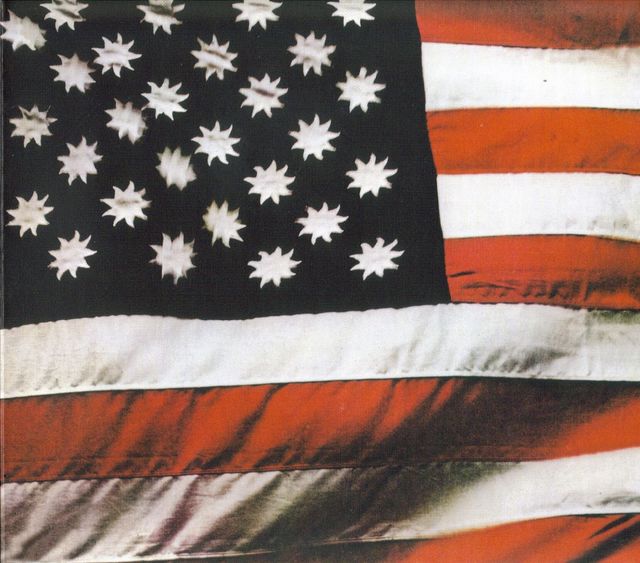

By 1970, Sly Stone had a rented Bel Air mansion, a secret recording studio built behind a bookcase in its attic, and a cheap Maestro Rhythm King drum machine meant for cocktail-lounge organists — and he used all three to make an album almost entirely by himself. Sly and the Family Stone had spent the late 1960s as the sound of racially integrated optimism, closing out Woodstock with a set built on togetherness and dancing. Eighteen months of missed shows, a departed drummer, and a country curdling under Vietnam and COINTELPRO later, Sly retreated into that attic and recorded over the same reels of tape so many times the oxide coating started to wear thin — audibly, on the finished record. There's a Riot Goin' On, released in November 1971, turned that physical decay into an aesthetic: murky, minor-key, mumbled, and hugely influential on everything from Exile on Main St. to D'Angelo's Voodoo.
“Muzak with its finger on the trigger.”
From Woodstock's Stage to a Bel Air Attic
Two years earlier, Sly and the Family Stone were the picture of late-'60s crossover optimism — a racially and sexually integrated band built on the promise of songs like “Everyday People” and “Stand!,” and the group that closed out Woodstock's second night with a set most attendees remembered as the festival's emotional peak. Miles Davis, an early convert, told critic Ralph Gleason to book Sly on sight after wearing out his copies of the band's first records.
What followed the Woodstock triumph was a slow unraveling rather than a victory lap. Sly missed 26 of 80 scheduled shows over the next year, a reliability problem that turned into a full stall on new material. Epic Records, growing anxious, released a stopgap Greatest Hits compilation in 1970 just to have something on shelves while it waited for a follow-up that showed no sign of arriving.
Sly relocated to Los Angeles and rented a Bel Air mansion once home to John and Michelle Phillips of the Mamas and the Papas, fitting its attic with a secret recording studio built in behind a bookcase. Most of the Family Stone stayed behind in San Francisco; only trumpeter Cynthia Robinson and saxophonist Jerry Martini moved into the house with him, on call for horn overdubs rather than functioning as a full band in the room. Drummer Greg Errico quit partway through the sessions, leaving Sly to lean on the Rhythm King — a preset drum machine built for lounge organists, repurposed here as the record's primary rhythmic engine.
Erasing the Tape Until It Wore Through
Sessions stretched across 1970 and into 1971, split between the Bel Air attic and the Record Plant in Sausalito, and they didn't run like a conventional recording process. Sly worked largely alone, playing most of the instruments himself and building tracks up through take after take of overdubs on the same limited stock of multitrack tape rather than starting fresh reels. The physical tape began to show it — the oxide coating wore thin from so many erasures and re-recordings, and that degradation is audible on the finished album as a distinctive hiss and murk that no amount of later remastering has fully removed.
Guest musicians cycled through when Sly needed a specific part he couldn't or didn't want to play himself. Bobby Womack contributed rhythm guitar and Billy Preston electric piano to “Family Affair,” the album's eventual lead single, while bassist Larry Graham's signature thumb-slap style — itself a genre-defining innovation from the band's earlier records — was pushed to the margins on several tracks in favor of Sly's own bass or the drum machine's programmed low end. Miles Davis visited hoping to record with Sly and left without cutting anything. He later described the scene in his autobiography: “There was nothing but girls and coke everywhere.”
The working title for most of the process was Africa Talks to You, only replaced late with the title that stuck — a title track that runs exactly zero seconds on the finished record, credited on the sleeve as “0:00.” It is the album's bluntest joke and its most literal statement: after the darkness of everything surrounding it, there was nothing left to say by that point that hadn't already been said.
Built on the Rhythm King drum machine — reportedly the first No. 1 pop single ever built on a programmed beat.
A Sound Built From Wearing Things Down
Where Stand! had been bright, horn-forward, and built for dancing, Riot buries its hooks under a haze of overdubbed vocals, minor-key changes, and a mix so dense it can be hard to pick out individual instruments. Sly's vocals frequently slur and drift behind the beat rather than driving it, and the album's most memorable grooves — “Family Affair,” “Runnin' Away,” “(You Caught Me) Smilin'” — carry an exhausted, narcotic quality that stands in deliberate opposition to the crisp, celebratory funk that made the band famous in the first place.
The Rhythm King's presence is the clearest signal of the shift. Built as a cocktail-lounge accompaniment tool, its stiff, unswinging pulse became — in Sly's hands — a cold, mechanical heartbeat running under some of the most emotionally exhausted music of his career. It gave the album a skeletal, almost inhuman rhythmic foundation that later producers, working in hip-hop and neo-soul, would draw on directly once sampling technology made that kind of texture easy to lift wholesale.
Critic Greil Marcus, writing about the record's bleakness, connected its sound directly to the political mood surrounding it — describing the album as marking the end of the spirit “of Martin Luther King's speeches mixed with the fire of riots in Watts and Detroit,” replaced by music “appropriate to new realities,” affirmative, in his words, “only at the thinnest margin.”
Essential Tracks
“Family Affair”
The album's sole hit single is also its clearest thesis statement — a slow, hazy groove built on the Rhythm King's programmed pulse, Billy Preston's electric piano, and Bobby Womack's rhythm guitar, with Sly's and Rose Stone's vocals slurring together rather than trading clean lead lines the way earlier Family Stone singles had.
Where earlier Family Stone singles turned family and community into a rallying cry, this one turns the same subject inward and ambivalent, describing a family bound as much by obligation and friction as by love — a considerably more honest picture than the band's earlier anthems allowed, and one that resonated precisely because it refused the easy uplift of “Everyday People.”
It became the last Sly and the Family Stone song to reach No. 1 on the Billboard Hot 100 and is widely credited as the first chart-topping pop single built around a drum machine — a genuinely new sound smuggled to the top of the charts inside a song that, on its surface, simply sounded tired. Its influence on how producers would later treat programmed rhythm as a texture rather than a novelty is difficult to overstate.
“Runnin' Away”
The album's brightest-sounding track is also one of its most cutting — a jaunty, almost childlike melody, complete with kazoo-like horn lines, wrapped around lyrics that needle a listener for lying to themselves about a situation they know is failing.
That gap between the music's sing-song cheerfulness and the sourness of what's actually being said is the album's method in miniature: Riot repeatedly uses inviting surfaces to deliver unsparing content, daring the listener to keep dancing once the words catch up with them, a trick the band had used before but never with this much bite underneath it.
It reached the outer edges of the pop and R&B charts as a single, a modest commercial showing that undersells how often the track's melody and arrangement have been referenced by musicians since, drawn to exactly the tension between sweetness and warning that makes it work.
“There's a Riot Goin' On”
The title track is the album's bluntest joke and its most literal statement, credited on the sleeve with a running time of “0:00.” There is no song here — just a title sitting on the track listing where a song should be, a placeholder where the album's namesake ought to sit.
The gesture reads as pure exhaustion rather than a cute conceptual flourish: after eleven other tracks of murk, paranoia, and hard-won small mercies, Sly had nothing left to add under that title, and said so by saying nothing at all. It is a rare moment in popular music where silence functions as the loudest possible statement on the record.
Coming after a working title of Africa Talks to You was scrapped late in the process, the empty title track underlines how much the album's final shape was decided under pressure and in the moment rather than mapped out in advance — consistent with everything else about how the record was made.
A jaunty melody wrapped around lyrics that needle the listener — the album's method in miniature.
Recorded Under Pressure, in More Ways Than One
The album took shape against a specific and dangerous political backdrop. The Black Panther Party, which Sly had ties to, pressured him during this period to remove the band's two white members, drummer Greg Errico and saxophonist Jerry Martini, and to replace his white manager. Sly refused, and Martini later credited him with standing between the band and real physical danger over it. The pressure was real enough that it shaped who was in the room during the Bel Air sessions, even as Sly held the group's integrated lineup together.
That tension sat inside a country still under COINTELPRO's active surveillance and disruption of Black political organizations, with the Panthers themselves at the peak of both their influence and the government pressure bearing down on them. Riot arrived the same year as Marvin Gaye's What's Going On, and the two records are frequently discussed as opposite answers to the same question — Gaye's composed and pleading, Sly's exhausted and fractured, each reflecting how far the utopian promise of the late 1960s had curdled by 1971.
Epic's nervousness about months without a clear single evaporated once “Family Affair” hit No. 1 on the Hot 100 on December 4, 1971, holding the top spot for three weeks and carrying the album itself to No. 1 on the Billboard 200 shortly after. Label executive Clive Davis later framed the company's patience through the sessions in blunt terms: “When you're dealing with a pathfinder, you allow that genius to unfold.”
Confusing Critics, Then Converting Them
The contemporary reaction was uneasy. Listeners expecting the bright, horn-driven pop-funk of “Everyday People” and “Dance to the Music” found a murky, downbeat record that took real effort to like, and much of the initial critical response reflected that confusion. Robert Christgau was an exception. Writing in his Village Voice Consumer Guide at the time, he graded the album an A+ and called it “despairing, courageous, and very hard to take” — one of, in his words, “those rare albums whose whole actually does exceed the sum of its parts.”
Despairing, courageous, and very hard to take, this is one of those rare albums whose whole actually does exceed the sum of its parts.
Later critics have largely caught up to Christgau's early read. Writing decades on for PopMatters' Counterbalance retrospective series, Eric Klinger described the record's atmosphere as “a wrong side of the night vibe, as if you've wandered into a place where things could switch from fun to dangerous,” while co-writer Jason Mendelsohn, more skeptical, still allowed that the record contains “snatches of pure genius” beneath its uneven, drug-fogged surface.
That split — genuine discomfort paired with grudging, then full, admiration — has defined the album's critical afterlife more than any single rave ever could. Few records this bleak have aged into consensus classics; fewer still did it while confusing almost everyone who first heard them.
The Blueprint for Murk
Riot's influence runs directly through some of the most acclaimed records of the decades that followed. The Rolling Stones drew on its murky, druggy atmosphere while making Exile on Main St. the following year, and generations of funk, soul, and hip-hop producers have returned to its degraded, overdub-worn sound as a reference point for how to make murk itself into a musical texture rather than a flaw to engineer away.
The clearest modern heir is D'Angelo's 2000 album Voodoo, built by the Soulquarian collective of D'Angelo, Questlove, and J Dilla with Riot as an explicit touchstone. Questlove has been direct about the lineage: “I would not be far off by saying this is probably my generation's version of Sly [and the Family Stone's] ‘There's a Riot Goin' On.’”
Fifty-five years on, the album's central trick — turning technical limitation and personal exhaustion into a deliberate aesthetic rather than hiding them — remains one of the most copied moves in popular music, even when the artists copying it have never heard the specific story of a bookcase, an attic, and a stack of tape worn thin from being recorded over one too many times.
“A wrong side of the night vibe, as if you've wandered into a place where things could switch from fun to dangerous.”