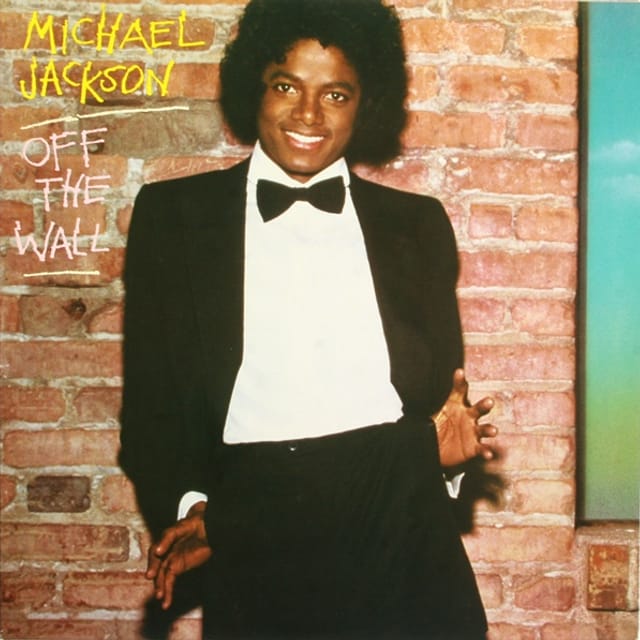

Michael Jackson released Off the Wall on August 10, 1979. It was his first album with producer Quincy Jones, and his declaration of independence from Motown and the Jackson 5.
It mixed disco, funk, R&B and pop into something sleeker than any of them alone. Forty-seven years later, it marks the moment a former child star became the artist who would be called the King of Pop.
“Off the Wall did for R&B what the Beach Boys' Pet Sounds did for rock” — a complete sonic revolution that established new possibilities for popular music through sophisticated arrangements and impeccable production.
Breaking Free: From Motown to Creative Independence
By 1978, Michael Jackson was at a crossroads. Despite his success with The Jackson 5 and solo hits like "Ben," he felt creatively constrained by Motown's formulaic approach. His role as the Scarecrow in "The Wiz" provided the catalyst for change, introducing him to Quincy Jones, who would become his most important creative collaborator. Their partnership represented a perfect marriage of Jackson's innate musicality and Jones's sophisticated production sensibilities.
The timing was crucial. Disco was reaching its commercial peak but facing increasing critical backlash. Rather than abandoning the genre, Jackson and Jones refined it, stripping away the excess while retaining the irresistible rhythmic foundation. They understood that great dance music required more than just a beat—it needed emotional depth, melodic sophistication, and impeccable craftsmanship.
Recording sessions took place between December 1978 and June 1979 at various Los Angeles studios, with Jackson collaborating with an impressive roster of musicians including members of Toto, Stevie Wonder, Paul McCartney, and Rod Temperton. This was Jackson's first album where he had significant creative control, and his growing confidence as a songwriter and vocal arranger is evident throughout.
The Quincy Jones Collaboration: Perfecting the Sound
Quincy Jones brought to the project not just his jazz credentials and film scoring experience, but also an understanding of how to structure pop songs for maximum impact. Together with engineer Bruce Swedien, they pioneered recording techniques that would become industry standards. Swedien's "Acusonic Recording Process" created a sonic clarity that made every element—from Jackson's multi-tracked vocals to the precisely placed percussion—crystal clear.
The album's secret weapon was Rod Temperton, the British songwriter who contributed three tracks including "Rock with You" and the title track. Temperton had studied Jackson's vocal style meticulously, crafting melodies that showcased the singer's range while providing infectious hooks. His sophisticated chord progressions and harmonic sophistication elevated what could have been simple disco tracks into enduring musical statements.
Jackson's own contributions as a songwriter—particularly "Don't Stop 'Til You Get Enough" and "Workin' Day and Night"—revealed his growing sophistication. These weren't just catchy pop songs but complex arrangements featuring multiple vocal parts, intricate rhythmic patterns, and dynamic builds that showcased his evolving artistry.
The Sound of Tomorrow: Genre-Blending Innovation
"Off the Wall" succeeded because it refused to be categorized. While built on disco's rhythmic foundation, the album incorporated elements of jazz fusion, soft rock, and traditional R&B in ways that seemed effortless. Songs like "I Can't Help It" featured sophisticated jazz harmonies, while "She's Out of My Life" demonstrated Jackson's ability to deliver heart-wrenching ballads with genuine emotion.
The album's production values were revolutionary for their time. Jones and Swedien created a sonic landscape where every instrument occupied its own space, allowing Jackson's vocals to float above intricate arrangements without ever feeling cluttered. The use of synthesizers was tasteful rather than overwhelming, providing texture and color while maintaining the organic feel that made the songs timeless.
Jackson's vocal performance throughout the album showcased his remarkable range and growing maturity. From the playful exuberance of "Don't Stop 'Til You Get Enough" to the vulnerable confession of "She's Out of My Life," he demonstrated an emotional depth that transcended his years. His use of vocal layering and harmonies became a signature element that would influence countless artists.
Essential Tracks
“Don't Stop 'Til You Get Enough”
Jackson's first fully self-written solo hit remains one of his greatest achievements, a six-minute tour de force that perfectly encapsulates his artistic vision. Built around a hypnotic bass line and featuring Jackson's most intricate vocal arrangement to date, the song creates an irresistible groove that builds and releases tension with masterful precision.
The song's structure is deceptively complex, featuring multiple sections that flow seamlessly while maintaining the central groove. Jackson's vocal performance is extraordinary, ranging from intimate whispers to ecstatic shouts, often within the same phrase. The layered vocals create a choir of Michaels, each harmony perfectly placed to enhance the song's emotional impact.
Lyrically, the song captures the pure joy of music and dancing, but Jackson's delivery suggests deeper meanings about creative fulfillment and artistic freedom. The track's success—reaching number one on the Billboard Hot 100—proved that sophisticated musicianship and commercial appeal weren't mutually exclusive, setting the template for Jackson's future work.
Jackson's first fully self-written solo hit — the song that announced his declaration of independence.
“Rock with You”
Rod Temperton's masterpiece showcases the perfect collaboration between songwriter and performer. Built around a seductive mid-tempo groove, "Rock with You" demonstrates how sophisticated pop music could be both intimate and danceable. The song's smooth sophistication made it a radio favorite while its subtle complexity revealed new details with each listen.
Jackson's vocal performance is a study in restraint and sensuality. Rather than showcasing his full range, he focuses on groove and emotion, letting the rhythm carry the song while his voice provides the melody and feeling. The subtle use of synthesizers and the precise arrangement create a sonic space that feels both contemporary and timeless.
The song's success—reaching number one on the Billboard Hot 100—proved that Jackson could master any style. Its influence can be heard in countless R&B and pop songs that followed, establishing a template for how to blend disco's rhythmic foundation with more sophisticated musical elements.
That single R&B trophy was also the extent of it — no Album of the Year nomination, no Record of the Year, and a second nod filed under a disco category the Academy scrapped the very next year. How that snub directly shaped the making of Thriller is its own story: One Grammy: How Michael Jackson Turned a Snub Into Thriller →
“She's Out of My Life”
Quincy Jones had originally set songwriter Tom Bahler's ballad aside for Frank Sinatra, reasoning that a lyric about grown-up heartbreak needed a grown man's voice. He changed his mind, betting that the contrast between the song's adult grief and Jackson's 20-year-old voice would make it more affecting, not less.
Jackson cried at the end of nearly every take—engineers counted eight to eleven attempts—and Jones stopped trying to get a dry one. “That's supposed to be, leave it on there,” Jones told the engineer, keeping the audible catch in Jackson's breath in the final mix rather than punching in a cleaner replacement.
The unedited take became the fourth single from Off the Wall and its fourth top-10 Hot 100 hit, proving the album's balladry could move audiences as powerfully as its uptempo singles. It stands as the clearest evidence on the record of the 21-year-old Jackson straining against the boundaries of his own carefully managed image.
“That's supposed to be, leave it on there.”
Rod Temperton's mid-tempo groove became the album's second consecutive No. 1 single.
The Template for Stardom: Legacy and Influence
"Off the Wall" didn't just launch Michael Jackson's solo career—it established the blueprint for modern pop stardom. The album's success proved that artistic integrity and commercial appeal could coexist, that dance music could be sophisticated, and that R&B artists could cross over without compromising their identity. Jackson became the first solo artist to have four singles from one album reach the top 10 of the Billboard Hot 100, a feat that demonstrated the album's remarkable consistency.
The album's influence extends far beyond chart positions. Its sophisticated production techniques, pioneered by Jones and Swedien, became industry standards. The way Jackson layered vocals, the precise placement of instruments, and the balance between electronic and organic elements created a sonic template that countless artists would follow. From Prince to Justin Timberlake, from Usher to The Weeknd, Jackson's approach to blending genres and creating sophisticated pop music continues to influence artists today.
Perhaps most importantly, "Off the Wall" proved that Black artists could achieve massive crossover success without diluting their artistic vision. The album's success opened doors for future generations of R&B and pop artists, demonstrating that excellence in songwriting, production, and performance could transcend racial and genre boundaries. In an era when MTV barely played videos by Black artists, Jackson's success forced the industry to reconsider its limited vision of mainstream appeal.
Conclusion: A Timeless Achievement
Forty-seven years later, "Off the Wall" sounds as fresh and vital as ever. While "Thriller" may have achieved greater commercial success, many critics and fans consider this earlier work to be Jackson's purest artistic statement. Here, we hear an artist coming into his own, finding his voice, and establishing the creative foundation that would support his entire career.
The album's enduring appeal lies in its perfect balance of innovation and accessibility. Jackson and Jones created music that was undeniably sophisticated yet immediately engaging, deeply soulful yet pristinely produced. It remains a masterclass in how to create popular music that respects both the artist's vision and the audience's intelligence.
In the annals of popular music, few albums have achieved the lasting impact of "Off the Wall." The RIAA certified it Diamond in September 2025—10 million certified U.S. units—making it Jackson's third Diamond album alongside Thriller and Bad, a belated but fitting recognition arriving decades after the fact. For anyone seeking to understand the evolution of popular music from the 1970s to the present, this album remains essential listening—a perfect snapshot of an artist and genre at their absolute peak.
“A triumph for producer Quincy Jones as well as for Michael Jackson, Off the Wall represents discofied post-Motown glamour at its classiest.”