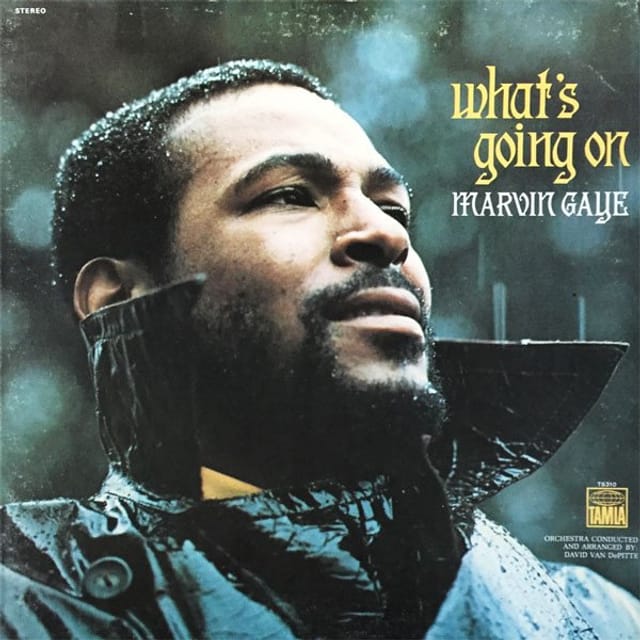

Marvin Gaye released What's Going On on May 21, 1971. It changed what a soul record could be about.
The album asked soul music, and American culture, to face the war in Vietnam, environmental destruction and social injustice. More than five decades later, its questions still feel urgent.
The album emerged from a period of profound personal and cultural upheaval. Gaye, who had spent the 1960s as Motown's most reliable hitmaker, was increasingly disturbed by the Vietnam War, the growing environmental crisis, and the violent responses to civil rights activism. As his brother Frankie returned from Vietnam with harrowing stories, and as urban riots erupted across America, Gaye felt compelled to use his platform for something more meaningful than romantic ballads.
"Ambitious, personal albums may be a glut on the market elsewhere, but at Motown they're something new… I've always admired Marvin Gaye, but I didn't expect that he would be one of them. Guess I seriously underestimated him. It won't happen again."
The Sound of Revolution: Redefining Soul Music
What's Going On represented a radical departure from the Motown formula that had made Gaye a star. Working with arranger David Van De Pitte and the Funk Brothers, Gaye created a sound that was simultaneously lush and urgent, sophisticated and deeply emotional. The album's sonic palette drew from jazz, classical music, and Latin rhythms, creating a musical landscape as complex and nuanced as the social issues it addressed.
The album's innovative production techniques were as revolutionary as its subject matter. Gaye layered multiple vocal tracks to create a sense of community dialogue, with background voices serving as a Greek chorus commenting on the lead vocals. The instrumental arrangements, anchored by James Jamerson's visionary bass lines and Dennis Coffey's inventive guitar work, created spaces for improvisation and experimentation that were unprecedented in popular soul music.
"I was the one that suggested that we put the musical bridges between the tunes and hang them together, which [Marvin] thought was a great idea. It just kind of felt that one should flow into the next. He said, 'OK, we'll try it and if it doesn't work, we can always cut them up.' As it turned out, it worked just fine."— David Van De Pitte, arranger
Gaye himself was blunt about why he'd abandoned the romantic material that had made him famous. Reflecting on the unrest around him—the Watts riots, his brother Frankie's stories from Vietnam—he later put it simply: "With the world exploding around me, how am I supposed to keep singing love songs?"
Breaking the Motown Machine: Artistic Independence
Berry Gordy's initial resistance to the album revealed the magnitude of Gaye's artistic leap. The Motown founder famously called the title track "the worst thing I ever heard" and refused to release it until Gaye went on strike, refusing to record anything else. The standoff lasted eight months, during which Gaye's determination to make socially conscious music never wavered. The full story of how the single got released anyway — without Gordy's permission — is here: The “Worst Thing I Ever Heard”: How Marvin Gaye Outmaneuvered Motown →
When "What's Going On" was finally released as a single in January 1971, it immediately proved Gaye's artistic instincts correct. The song shot to number two on the Billboard Hot 100 and became the fastest-selling Motown single to that point. More importantly, it demonstrated that audiences were hungry for music that engaged with the pressing issues of the day.
“What's Going On”
The album's opening track and title song established a new paradigm for soul music. Gaye's multi-tracked vocals create a sense of communal questioning, with the background voices providing a conversational context that mirrors the social dialogue the song sought to inspire. The track's jazz-influenced chord progressions and Latin-tinged percussion created a sophisticated musical foundation for Gaye's urgent inquiries about war, suffering, and social breakdown.
James Jamerson's bass line, played on a detuned instrument for a darker tone, provides the song's emotional anchor while allowing space for improvisation and spontaneity. The track's structure—flowing seamlessly between verses and featuring extended instrumental sections—broke from traditional pop song formats to create something more akin to a jazz suite or gospel testimonial.
The groundbreaking title track that redefined what soul music could accomplish, addressing Vietnam War and social unrest.
Environmental Consciousness and Spiritual Seeking
One of the album's most prescient elements was its environmental consciousness, years before ecological concerns became mainstream. "Mercy Mercy Me (The Ecology)" stands as one of the first major pop songs to address environmental destruction, with Gaye lamenting poisoned seas, polluted air, and the loss of blue skies. The song's gentle melody belied the urgency of its message, making environmental awareness accessible to mainstream audiences.
Throughout the album, Gaye wove spiritual seeking with social activism, drawing on his Christian faith while questioning institutional responses to suffering. Songs like "God Is Love" and "Wholly Holy" presented spirituality not as escapism but as a call to action, suggesting that true faith required engagement with worldly suffering and injustice.
For Gaye, that fusion of spirituality and social conscience wasn't a contradiction to work through but the album's whole premise—the same religious conviction that had shaped his upbringing as the son of a Pentecostal minister now aimed outward, at a world he felt Motown's usual love songs could no longer address.
Jazz Influences and Musical Innovation
The album's musical sophistication reflected Gaye's growing interest in jazz and his desire to create music with the improvisational freedom and harmonic complexity of that genre. Saxophonist Eli Fontaine's contributions throughout the album provided a jazz sensibility that elevated the arrangements beyond traditional soul music structures. The interplay between Fontaine's saxophone and Gaye's vocals created moments of pure musical conversation.
The Funk Brothers, Motown's legendary house band, rose to the challenge of Gaye's expanded musical vision. Earl Van Dyke's keyboards, Robert White's guitar work, and particularly Jamerson's bass playing achieved new levels of sophistication while maintaining the rhythmic drive that made the music irresistibly danceable. The album proved that conscious music didn't have to sacrifice groove or emotional impact.
“Inner City Blues (Make Me Wanna Holler)”
The album's closing track represents perhaps its most powerful statement about urban poverty and social neglect. Gaye's raw vocal delivery, punctuated by anguished ad-libs and spontaneous outcries, conveyed the frustration and desperation of inner-city life with unprecedented honesty. The track's sparse arrangement—built around a hypnotic rhythm section and atmospheric strings—created space for Gaye's vocals to carry the full weight of social commentary.
The song's structure, featuring multiple false endings and emotional peaks, mirrored the cyclical nature of urban poverty and social neglect it described. Lines like "Money, we make it / Before we see it, you take it" spoke directly to the economic exploitation that trapped inner-city residents, while the repeated phrase "makes me wanna holler" became a rallying cry for social justice movements.
Cultural Impact and Critical Reception
The album's reception marked a turning point not only for Gaye but for soul music as a whole. Critics immediately recognized its significance, with many noting that it elevated soul music to the level of art music while maintaining its emotional accessibility. The album spent five weeks at number one on the Billboard Soul Albums chart and reached number six on the Billboard 200, proving that conscious music could achieve commercial success.
More importantly, What's Going On opened the door for a generation of socially conscious soul and R&B artists. Curtis Mayfield's soundtrack work, Stevie Wonder's political period, and Isaac Hayes' cinematic compositions all built on the foundation Gaye established. The album demonstrated that Black artists could address serious social issues without losing their commercial viability or artistic credibility.
Revisiting the record forty years on for Pitchfork, Ryan Dombal singled it out as the moment What's Going On “marked the emergence of Marvin Gaye as an all-in-one talent”—singer, producer, and social critic operating with equal authority, a combination few Motown artists had ever been given the room to attempt.
Technical Innovation and Production Mastery
The album's technical achievements were as groundbreaking as its artistic ones. Gaye's use of overdubbing to create multiple vocal personalities within single songs created a sense of community discussion that perfectly matched the album's themes. His decision to leave in studio chatter, false starts, and spontaneous comments created an intimate, conversational atmosphere that drew listeners into the musical community he was creating.
The album's mixing, overseen by Gaye himself, created a sound that was both immediate and atmospheric. Instruments emerged from and disappeared into the mix like voices in a conversation, while the overall sound maintained a warmth and presence that made even the most challenging material emotionally accessible. The stereo mix utilized spatial effects to create a sense of movement and depth that enhanced the album's conceptual unity.
Legacy and Contemporary Relevance
Fifty-three years after its release, What's Going On remains startlingly relevant. The questions Gaye posed—about war, environmental destruction, poverty, and social justice—continue to demand answers. The album's approach to combining political consciousness with musical sophistication has influenced generations of artists across genres, from hip-hop to indie rock to contemporary R&B.
The album's influence extends beyond music to broader cultural conversations about the responsibility of artists to engage with social issues. In an era when celebrity activism is commonplace, Gaye's album stands as a masterclass in how to address serious issues without sacrificing artistic integrity or emotional authenticity. The album proved that conscious art could be both commercially successful and artistically uncompromising.
Half a century on, the album is still cited as the template for how to make political music that moves listeners rather than lecturing them—a balance later artists working in explicitly conscious territory, from Curtis Mayfield's soundtrack work to Kendrick Lamar's To Pimp a Butterfly, have measured themselves against.
In our current moment of social upheaval, environmental crisis, and political polarization, Gaye's album offers both inspiration and instruction. It reminds us that art's highest calling is not merely to entertain but to illuminate, to question, and to imagine better possibilities. What's Going On doesn't just ask its titular question—it provides a model for how to engage with that question through beauty, compassion, and uncompromising honesty.
As we face our own urgent questions about war, inequality, and environmental destruction, Marvin Gaye's masterpiece reminds us that the first step toward solutions is simply asking the right questions. What's going on, indeed? The answer, Gaye suggests, begins with the courage to look honestly at our world and the determination to imagine it transformed.