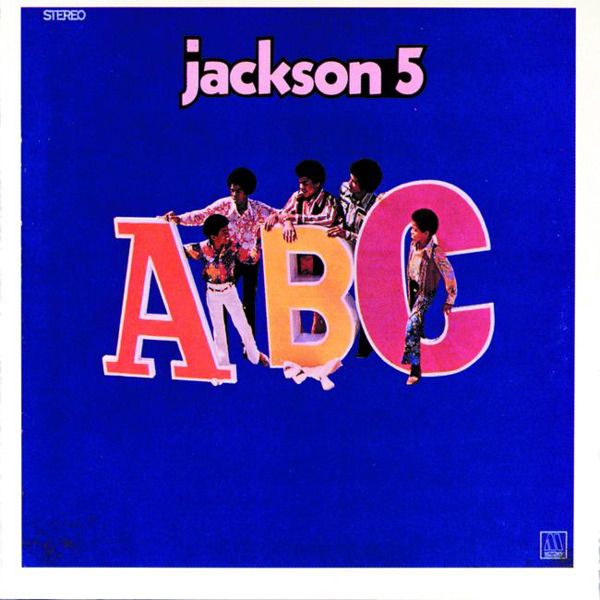

On the Billboard Hot 100 dated April 25, 1970, the Beatles' “Let It Be” dropped from No. 1. The song that replaced it was “ABC” by the Jackson 5, sung by 11-year-old Michael Jackson. Two months later it happened again.
On June 27, the Jackson 5's “The Love You Save” took No. 1 from the Beatles' “The Long and Winding Road.” Both songs came from ABC, the group's second album, released by Motown on May 8, 1970.
It was made fast, less than six months after their debut. Its hit singles were written and produced by a Motown team called the Corporation, which included the label's founder, Berry Gordy. The album reached No. 4 on the Billboard pop chart and No. 1 on the R&B albums chart.
“In many ways, this is the template for every boy band long-player since – just enough soul, just enough raunch, lashings of pathos, all bound together with an elegant sufficiency of feel-good sentiment.”
From Indiana to Hollywood
The Jackson brothers, Jackie, Tito, Jermaine, Marlon and Michael, came from Gary, Indiana. From about 1965 their father, Joe Jackson, pushed them onto stages, first at local talent shows and then on the chitlin' circuit. Stereogum's Tom Breihan writes that he “abused the hell out of his kids,” and that the boys became “a ridiculously tight performing unit.”
Motown was not interested at first. It turned the group down twice. In 1968 they released singles on a small Gary label, Steeltown, including “Big Boy” with Michael singing lead. Gladys Knight had tried to get Motown to sign them as early as 1967.
Berry Gordy finally signed them in March 1969 and put the whole company behind them. He sent them out to open for the Supremes. He was also in the middle of moving Motown from Detroit to Hollywood, so their records would be made mostly in California.
Their first Motown single, “I Want You Back,” went to No. 1 early in 1970. Their debut album, Diana Ross Presents the Jackson 5, had come out just before Christmas 1969. Ross did not sing a note on it. Breihan calls the title “smart marketing”: it made the group look important and helped Ross, whose solo career was just starting. Motown wanted more, quickly.
The label needed it. BBC Music's Daryl Easlea writes that Motown “had been showing its first hairline fractures” as buyers moved from singles to albums. The Jackson 5, he says, became “the label's big thing for the new decade.”
The brothers recorded constantly. According to Motown, the material on ABC was cut over the twelve months after they signed. The “ABC” single came out in February 1970, three months before the album.
The Corporation's Formula
The team started with three Motown writers: Deke Richards, Freddie Perren and Alphonzo “Fonce” Mizell. They had written a song called “I Wanna Be Free” for Gladys Knight & the Pips. Then Richards saw the Jackson 5 play at the Daisy, a club in Los Angeles, and called Gordy. Gordy had the same idea and suggested kid-friendly lyrics in the style of Frankie Lymon. The song became “I Want You Back.”
Richards invited Gordy to join as the fourth member, and he chose the name too. When Gordy asked what to call the team, Richards looked at the stationery on Gordy's desk, which read Motown Record Corporation. “I said, ‘How about the Corporation?’” Richards told Rolling Stone. “He said, ‘OK, that sounds pretty good.’”
For the follow-up they did something simple. They wrote “I Want You Back” again. Richards had learned from the Motown writer Lamont Dozier that hits could share the same chords. “He showed me that all the chords were similar, and there was no shame in that,” Richards said. “It kept the feeling going.”
The verses of “ABC” loosely follow the pattern of the choruses of “I Want You Back.” Tom Breihan, who reviews every No. 1 hit in Stereogum's The Number Ones, calls it “a totally, shamelessly formulaic work.” He means it as praise. “In most cases, that would be an artistically bankrupt move,” he writes. “But Gordy was working with magic, and he must've known it.”
We would go to Berry Gordy and he would tell us what to do. Most people think he's just an executive, but he's a great writer.
The team existed mainly to make Jackson 5 hits, and it lasted only a couple of years. Breihan describes its first three singles for the group as “springy, funky, uptempo jams that reimagined the giddiest bits from Sly & The Family Stone.”
Gordy had used the same method before. Breihan points out that he made Holland-Dozier-Holland stick to a formula on the early Supremes singles. With the Jackson 5 it worked again. The difference, Breihan notes, is that “ABC” was written for children from the start, while “I Want You Back” had originally been meant for Gladys Knight & the Pips.
Not every track came from the Corporation. Motown names Hal Davis as the album's other producer. Davis ran Motown's Los Angeles operation for a while, and later that year he produced the group's ballad “I'll Be There.” A couple of tracks on ABC were made earlier in Detroit with Bobby Taylor, who had supervised the brothers' first Motown sessions.
The single that replaced the Beatles' 'Let It Be' at No. 1 on the Hot 100 in April 1970.
Learning the Songs in the Studio
Most of ABC was recorded at the Sound Factory in Hollywood, Motown's preferred studio there. The brothers rarely knew the material in advance. “Usually, the first time we'd hear a song was when we walked into the studio,” Jermaine Jackson recalled in his autobiography, You Are Not Alone.
That did not slow them down. “We worked hard on improving our song presentation,” Jermaine said, “but there was nothing we couldn't do because Michael had an incredible range in his voice.”
Richards ran the sessions. “I basically was in charge of the Jackson 5 – all their creative, when it came down to the studio,” he told Rolling Stone shortly before his death in 2013. “I tried to create a Hitsville on the West Coast.” The days could run long, until a social worker began turning up to make sure the boys finished at a reasonable hour.
Doing the same part again and again tested everyone. “When you've got one [song] you have to do over and over again, the monotony brings out the little one-liners and the joking around and silly stuff,” Richards said. Just as he was close to the take he wanted, the boys would start fooling around. “It's like, ‘Jesus! No, not now!’”
He also had a clear idea of how they should sound. Earlier producers, he said, had used Michael's ability to sing like an adult. Richards wanted the opposite. “There weren't as many young artists who could sing like kids,” he said. “There was something so magical about it. I wanted to keep it as long as they could.” Rolling Stone credits him with inventing “bubblegum soul” in the process.
The brothers sang, but the backing tracks were played by Motown's session musicians, who went uncredited. Even the most famous Jackson 5 bassline is disputed. Breihan notes that James Jamerson of the Funk Brothers claimed he played on “I Want You Back,” while most people credit a newer recruit, Wilton Felder.
Alongside the new songs, the album leans on covers. There are two Stevie Wonder songs, “Never Had a Dream Come True,” which Wonder had just put on his own Signed, Sealed & Delivered, and “Don't Know Why I Love You.” There is “(Come 'Round Here) I'm the One You Need,” a Holland-Dozier-Holland song made famous by Smokey Robinson & the Miracles.
Two covers came from outside Motown. “La-La Means I Love You” was a Delfonics hit from the new Philadelphia soul sound. “I'll Bet You” came from Funkadelic, George Clinton's early band. AllMusic's Lindsay Planer calls ABC “arguably the brothers' most solid effort of the early '70s,” but says the Corporation's songs “were of primary significance not only on the ABC album, but within the entire Jackson 5 oeuvre.”
The album closes with “The Young Folks,” previously sung by Diana Ross. Easlea hears it turn into “a statement of intent” in Michael's voice. He also credits the blend: “it's not all about Michael – it's the vocal blend of brothers Jermaine and Tito along with Michael, with support from Marlon and Jackie.”
Essential Tracks
“ABC”
The idea is a child's one: learning about love is as easy as learning the alphabet. Unlike “I Want You Back,” the Corporation wrote this one for the brothers from the start.
Breihan describes “a ridiculously funky confection, with fuzzed-out guitars and berserker bongos and a nagging piano riff that keeps the song airborne throughout.” Midway there is a short breakdown, and the brothers trade lines throughout. Breihan singles out Jermaine, whose “vaguely gritty howl nicely complements Michael's exuberance.”
It reached No. 1 on the Hot 100 dated April 25, 1970, and stayed for two weeks. Norman Greenbaum's “Spirit in the Sky” got stuck at No. 3 behind it. Christgau, reviewing the album, saw no need to explain it: “‘ABC’ you know.”
“The Love You Save”
The album's opening track was another Corporation song, with Michael and Jermaine sharing the lead. Marlon, Jackie and Tito sang backing vocals. Easlea calls it “another almost note-for-note reworking” of “I Want You Back.”
It is faster and busier than “ABC.” Breihan hears “staccato guitar-squelches and percussive push-pulls and sugar-rush strings,” and finds it “a bit faster and more restless, almost to the point of being fidgety.” The lyric is a joke about a girl who runs around with other boys, full of playground teasing and references to historical figures.
Released as a single just after the album, it reached No. 1 on the Hot 100 dated June 27, 1970, replacing the Beatles' “The Long and Winding Road.” That was the Beatles' last American No. 1. Breihan thinks Jermaine is the key: “Without Jermaine, there's no way the young Michael could've been as great as he was.”
The Beatles story had a happy ending. As uDiscover Music points out, a grown-up Michael later made two hit singles with Paul McCartney, “The Girl Is Mine” and “Say Say Say.”
“La-La Means I Love You”
The Delfonics' Philadelphia soul ballad was an unusual choice for a group known for fast dance songs. It gave Michael a chance to sing slowly, and to show the control behind the shouting.
It is one of two covers on the album from outside Motown, along with Funkadelic's “I'll Bet You.” Lindsay Planer of AllMusic counts both among the album's “contemporary nuggets from beyond the boundaries of Detroit.”
The covers on ABC show how much an 11-year-old had already absorbed. Robert Christgau admitted that “the charm of hearing an eleven-year-old cover Smokey, Stevie, and the Delfonics may not be enduring.”
Then he changed his mind. “In fact the eleven-year-old doesn't disgrace himself against Smokey and Stevie and beats the Delfonics going away,” he wrote. It is one of the reasons he gave the album a B+.
He was harder on the next record, Third Album, which got a B−. “The first bad sign,” he wrote, “is that the best cut on the album is a ballad.”
Michael and Jermaine share the lead on the song that replaced 'The Long and Winding Road' at No. 1.
Jermaine, the Other Lead Singer
Michael gets the attention, but ABC is also a showcase for Jermaine. He was almost four years older. On the hits he is the foil, answering Michael's lines in a rougher, more adult voice.
Breihan thinks Jermaine could have been a star himself. “His voice – strained and convincingly adult – exists on the songs to help push Michael forward,” he writes, “to give him a base that will allow him to fly off into the stratosphere.” The other three brothers, he says, mostly sang backing vocals deep in the mix.
Jermaine did have a solo career. He reached No. 9 on the Hot 100 twice, with “Daddy's Home” in 1972 and “Let's Get Serious” in 1980. But he never came close to his younger brother.
Jackson-Mania at the Spectrum
Six days before ABC came out, the Jackson 5 played their first official Motown concert. It was at the Spectrum arena in Philadelphia, in front of a sold-out crowd of 16,000.
About a third of the way through, the audience left their seats and pushed toward the stage. “It was like the beginning of a small earthquake,” Jermaine remembered. The show was stopped for fear of damage and injuries. Motown dates the start of Jackson-mania to that night.
The week ABC was released, the debut album was in the Billboard top 10. Two Jackson 5 albums were now selling at once, and a third single from the new one was on the way.
Two No. 1s Over the Beatles
Twice in two months, a group of children from Indiana took the top of the chart from the Beatles. The Boombox notes that the swap has been seen as a passing of the torch from one generation of pop stars to the next. Easlea jokes about it: “After all, they were old men pushing 30.”
The album did well too. It topped Billboard's R&B albums chart and reached No. 4 on the Billboard 200 in July. Motown says it stayed on the pop chart for a year.
The streak kept going. In October 1970, “I'll Be There” gave the group a fourth straight No. 1 and held the top for five weeks. They were the first group whose first four singles all reached No. 1. Breihan calls the run “one of the all-time great singles runs.”
“I'll Be There” also showed where the group was going next. Breihan points out that the first three No. 1s, including the two from ABC, were “all variations on the same thing.” The fourth was a slow, adult ballad. Michael turned 12 the day after it was released.
Christgau found that even some of the filler, such as “2-4-6-8,” recalled “the days of great B sides,” though he called “The Young Folks” “embarrassing even by Motown standards.” Easlea's verdict was that “ABC is a fine work that shows maturity beyond their years.”
Writing for a British audience, Easlea credits ABC with helping to start “the UK's long love affair with Michael Jackson.” He sums up the group's sound as a “potent brand of identikit kindergarten soul,” built to a pattern and full of energy.
Where Michael Jackson's Career Begins
Easlea argues that the best Jackson 5 album will always be one of their hits collections. But ABC holds two of the four No. 1s from that first year, plus “I Found That Girl,” the B-side of “The Love You Save.”
Michael was already making history. Breihan notes that with “I Want You Back,” he became the first singer to top the Hot 100 who was younger than the chart itself, which began in August 1958. On ABC he does it twice more.
It is also the best early record of Michael Jackson's voice. Easlea admits his “high-pitched squall does outstay its welcome on a few occasions,” but calls the album “beautiful bubblegum soul.” Breihan says the joy in Michael's voice on the title track “goes beyond language.”
The brothers later left Motown, became the Jacksons, and made Triumph and Victory. Michael went on to Off the Wall and Thriller.
Fifty-six years on, ABC is where to hear how it started. It is a short, fast album made in a hurry, by a group that had to learn many of its songs on the day they recorded them.
“Is it possible to maintain a bad mood when ‘ABC’ is playing? I've never managed it.”