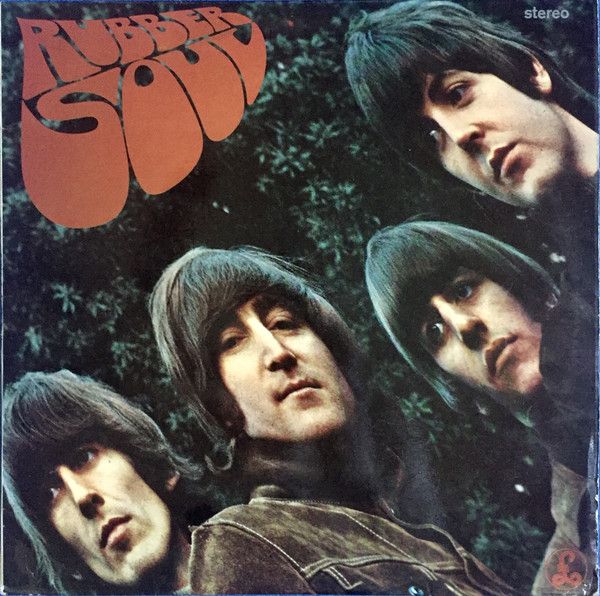

On October 12, 1965, the Beatles began work on a new album in EMI's Studio Two at Abbey Road. It had to be in the shops for Christmas. They had about four weeks to record it.
The result was Rubber Soul, released in Britain on December 3, 1965. It had “Norwegian Wood,” with George Harrison on sitar. It had “In My Life,” which John Lennon called his first real major piece of work. It had “Michelle,” “Nowhere Man” and “Drive My Car.”
It went to No. 1 in Britain and America. Across the Atlantic, it made Brian Wilson of the Beach Boys want to write Pet Sounds.
The album is back in the news. A new Special Edition, remixed by Giles Martin, came out on October 2, 2026. It sent Rubber Soul back into the Billboard 200 top 10 for the first time in sixty years.
“We were getting better technically and musically, that's all. We finally took over the studio.”
After Shea Stadium, a Change of Direction
The Beatles had just come home from a North American tour. It opened at Shea Stadium in New York, in front of more than 55,000 fans. They had made a second film, Help!, and its soundtrack album was barely four months old.
Their rivals were catching up. Pitchfork's Scott Plagenhoef lists them: the Who's singles “were far more ferocious,” the Rolling Stones had “Satisfaction,” and “the Kinks beat the Beatles to both satirical, character songs and the influence of Indian music.” Bob Dylan was changing what a pop lyric could be.
McCartney described the shift in the Anthology. The early songs, he said, were “directly relating to our fans, saying, ‘Please buy this record,’” but now the band felt free to “branch out into songs that are more surreal, a little more entertaining.” He added: “Dylan was influencing us quite heavily at that point.”
The band felt it too. Dylan had also introduced them to marijuana, and Plagenhoef hears its effect all over this record. George Harrison later said that on Rubber Soul “we were suddenly hearing new sounds that we weren't able to hear before.” Ringo Starr called it “the departure record.”
Lennon put it plainly in 1970. In the early days, he said, “We had to make it in two hours or whatever it was. And three takes was enough.” With Rubber Soul, “we were more precise about making the album – that's all. We took over the cover and everything.”
Four Weeks in Studio Two
The sessions ran from October 12 to November 11, 1965, with producer George Martin and engineer Norman Smith. The first song they worked on was Lennon's “Run for Your Life.” He later called it his least favourite Beatles song.
Short of material, they dug up old songs. “Wait” had been recorded in June for Help! and was finished off with overdubs. “Michelle” dated back to around 1959. “We were always looking for tunes,” Paul McCartney said, “because we were making lots of albums by then and every album you did needed fourteen songs.”
The sound changed in small ways. McCartney ran his bass through a fuzzbox on Harrison's “Think for Yourself.” Starr got his first songwriting credit, on “What Goes On.” Asked about it in 1966, he said his contribution was “About five words, and I haven't done a thing since!”
The album's opener nearly didn't happen. McCartney brought in a tune with a chorus about golden rings. “The lyrics were disastrous and I knew it,” he said. “This is one of the songs where John and I came nearest to having a dry session.” After a break, the hook became “Drive My Car,” which McCartney noted was “an old blues euphemism for sex.”
They recorded it on October 13. The session ran from 7 p.m. until 12:15 a.m., the first Beatles session to finish after midnight. Harrison played a line “really like a lick off ‘Respect’” and McCartney doubled it on bass. McCartney also played lead guitar on the track.
Giles Martin, who remixed the album in 2026, says the speed shows on the tapes. In some cases only one version of a song exists. “They rehearsed and rehearsed, and they played it live, and they were really good,” he told Spin of “If I Needed Someone.” “They didn't make a mistake when they recorded it.”
Harrison, the Byrds and “The Word”
Harrison wrote two songs for the album, “Think for Yourself” and “If I Needed Someone.” Plagenhoef calls the second one “practically a Byrds pastiche.” The influence ran both ways: Roger McGuinn of the Byrds had first picked up a Rickenbacker 12-string after seeing A Hard Day's Night.
Harrison's guitar is all over the record in small ways. Plagenhoef points to “the ping at the end of the ‘Nowhere Man’ solo” as one of the album's “small wonders.” “Nowhere Man” itself was Lennon writing about his own lack of confidence and insecurity.
It came late in the sessions, when he and McCartney were short of songs. “I'd spent five hours that morning trying to write a song that was meaningful and good and I finally gave up and lay down,” Lennon said. “Then ‘Nowhere Man’ came, words and music, the whole damn thing, as I lay down.” McCartney thought it was really about the state of Lennon's marriage.
Lennon and McCartney wrote “The Word” together at Lennon's house. “We smoked a bit of pot, then we wrote out a multicoloured lyric sheet, the first time we'd ever done that,” McCartney said. Lennon later called it his first statement that love was the answer, years before “All You Need Is Love.”
Harrison never lost his affection for it. “Even now, when I hear songs like ‘The Word,’ they just ooze this sort of energy and optimism,” he said. Only one song from the sessions was left unreleased, an instrumental called “12-Bar Original,” which finally came out on Anthology 2.
Giles Martin's 2026 mix of the first Beatles recording to feature George Harrison's sitar.
Where “Plastic Soul” Came From
The title was McCartney's joke. He had read about an American blues musician who dismissed Mick Jagger as “plastic soul.” You can hear McCartney mention it at the end of a take of “I'm Down,” released on Anthology 2.
“So ‘plastic soul’ was the germ of the Rubber Soul idea,” McCartney said in the Anthology. Lennon agreed that it was Paul's title, meaning English soul. “Rubber Soul is just a pun,” he said. “There's no great mysterious meanings behind all of this.”
The cover happened by accident. Robert Freeman photographed the band at Lennon's house in Weybridge. Back in London he projected the slides onto a piece of album-sized card. Then, McCartney recalled, “the card that the picture was projected onto fell backwards a little, elongating the photograph.” The band asked Freeman to print it that way.
I liked the way we got our faces to be longer on the album cover. We lost the ‘little innocents’ tag, the naivety, and Rubber Soul was the first one where we were fully-fledged potheads.
The bulging lettering was drawn by Charles Front, a London art director, for 26 guineas and five shillings. He was thinking of sap from a rubber tree, “starting narrow and filling out.” It was the first Beatles album with no band name on the front.
Essential Tracks
“Norwegian Wood (This Bird Has Flown)”
Lennon started the song on a skiing holiday in St. Moritz, playing it to George Martin in a hotel room. It was about an affair he was hiding from his wife, Cynthia. “I was trying to be sophisticated in writing about an affair,” Lennon told Playboy, “but in such a smoke-screen way that you couldn't tell.” McCartney helped finish it, and said he knew where the title came from. Peter Asher had decorated his room in wood. “It was pine really, cheap pine,” McCartney said. “But it's not as good a title, ‘Cheap Pine’, baby.”
The band first tried it on October 12 and didn't like the result. They remade it on October 21. Harrison had bought a cheap sitar from a shop on Oxford Street called Indiacraft. When the backing track needed something, he picked it up. “It was quite spontaneous: I found the notes that played the lick,” he said. “It fitted and it worked.”
Martin was not surprised. “I was no stranger to Indian instruments,” he said, having used them on comedy records with Peter Sellers. It was one of the first Western pop records to use the sitar. Bob Dylan answered it the next year with “4th Time Around” on Blonde on Blonde, which has a similar tune. “It seemed as though Bob had listened to that and wrote the same basic song again,” Harrison said in 1992.
“In My Life”
The song began when the journalist Kenneth Allsop asked Lennon why his songs weren't as personal as his books. Lennon's first draft listed every place on the bus ride from his Liverpool home into town. He hated it. “It was the most boring sort of ‘What I Did On My Holidays Bus Trip’ song,” he said.
He rewrote it as a song about the people and places he remembered. Who wrote the tune is one of the few things Lennon and McCartney disagreed on. Lennon said McCartney helped with the middle eight. McCartney remembered writing the whole melody, “based in my mind on Smokey Robinson and the Miracles.”
The band cut the rhythm track on October 18 but left a gap in the middle. Four days later Martin filled it while the band were on a tea break. “I put down a baroque piano solo which John didn't hear until he came back,” Martin said. He first tried a Hammond organ, then switched to piano.
The part was too hard to play at full speed, so Martin played it “at exactly half normal speed, and down an octave.” Played back at normal speed, it sounded like a harpsichord. “It's a means of tricking everybody into thinking you can do something really well,” he said.
Lennon called it “my first real major piece of work. Up till then it had all been sort of glib and throwaway.” Plagenhoef hears in it “a remarkably calm and peaceful attitude toward not only one's past and present, but their future and the inevitability of death.”
“Michelle”
McCartney wrote the tune as a teenager, as a joke French song to impress people at parties thrown by one of Lennon's art college tutors. Years later Lennon reminded him of it. “He said, ‘Well, that's a good tune. You should do something with that,’” McCartney recalled.
The French lyrics came from Jan Vaughan, a French teacher and the wife of an old schoolfriend. McCartney later sent her a cheque, he said, “because she's virtually a co-writer on that.” Lennon wrote the middle section after hearing Nina Simone's “I Put a Spell on You.”
The Beatles recorded it in one day, November 3, 1965. Only four tracks were used, so there was little left to decide. “We would mix them, and it would take half an hour, maybe,” McCartney said. Plagenhoef admires “the Gallic ‘Michelle’” but argues that McCartney “oddly comes off third-string on Rubber Soul.”
The 2026 mix of the song Lennon called his first real major piece of work, with George Martin's sped-up piano solo.
No. 1 Without a Single
Rubber Soul came out in Britain on December 3, 1965, the same day as the double A-side single “We Can Work It Out” / “Day Tripper.” Neither song was on the album. Nothing from the British album was released as a single there.
It entered the UK chart on December 11. From Christmas Day it was No. 1 for eight weeks in a row, and it stayed on the chart for 42 weeks. NME called it a “fine piece of recording artistry and adventure in group sound.” Not everyone was sold. One Record Mirror critic preferred Manfred Mann's new album, Mann Made.
America got a different record. Capitol released its version on December 6 with 12 tracks instead of 14. It dropped “Drive My Car,” “Nowhere Man,” “What Goes On” and “If I Needed Someone,” and added two leftovers from the British Help!, “I've Just Seen a Face” and “It's Only Love.” The result was more acoustic, closer to folk-rock.
It still went to the top. The US album reached No. 1 in January 1966 and held it for six weeks. It sold 1.2 million copies in less than two weeks. The Billboard Book of Number One Albums notes it was the first Beatles chart-topper with no No. 1 single on it.
How It Pushed Brian Wilson to Pet Sounds
In California, Brian Wilson heard Rubber Soul and was stunned. In 2002, Noise11 asked him whether Rubber Soul inspired Pet Sounds, which in turn inspired Sgt. Pepper. “That is absolutely the truth, yeah,” he said.
“I was listening to Rubber Soul one night and I could not believe my ears,” Wilson said. “They all went together like a nice little collection of songs. So I wrote an album of a collection of songs called Pet Sounds.”
The rivalry continued on the Beatles' next album. As our Revolver review explains, McCartney absorbed Pet Sounds while finishing that record in 1966. Plagenhoef calls Rubber Soul “arguably the most important artistic leap in the Beatles' career.”
He also notes how different it is from what came next. “With its patient pace and languid tones,” he writes, “Rubber Soul is an altogether much more mellow record than anything the Beatles had done before, or would do again.”
The 2026 Special Edition
The new Rubber Soul Special Edition came out on October 2, 2026, from Apple Corps and Universal. Giles Martin, George Martin's son, remixed it with engineer Sam Okell from the original four-track tapes. They used the de-mixing technology developed by Peter Jackson's WingNut Films team.
Rubber Soul played a part in that technology. Martin told Spin he gave Jackson's team “In My Life” as an early test, “because that was a song where there was guitar, bass, and drums on one track.” On “Norwegian Wood,” where Lennon sang and played guitar live onto a single track, Martin balanced him with the band, instead of putting Lennon in one ear and the rest of the band in the other as the old stereo mix did.
Martin hears honesty in the songs. “You get the sense that they're not trying to impress you here,” he said. “They're just trying to tell you how they feel about stuff.”
The extras show how fast the songs changed. One take of “I'm Looking Through You,” from a six-hour session on November 6, 1965, is faster and has two instrumental 12-bar sections. McCartney later replaced them with a new bridge, and the final version was recorded on November 10 and 11. The song was inspired by his up-and-down relationship with the actress Jane Asher.
The Super Deluxe sets add 24 early session recordings, including 20 previously unreleased takes and three home demos. One is “Little Girl,” a Lennon song idea nobody had heard or even heard of. The sets also include the original mono album and Capitol's American version.
The reissue sold. In the US it re-entered the Billboard 200 at No. 4 with 58,000 units, 50,000 of them sales, and topped the vinyl and rock album charts. In Britain it finished at No. 2 behind Blossoms' Songs From the Wedding Cake, while topping the Official Vinyl Albums Chart.
Looking back, McCartney has called the record “a strong advance on what had gone before.” Giles Martin hears the album as a turning point. “It's the sound of them peeling off their Beatlemania jackets and refusing to have their hair cut in the right way,” he told Spin. He also finds it darker than its reputation: “It's quite a bitter album, really, Rubber Soul.”
Sixty-one years on, Rubber Soul is the place to start if you want to hear how the Beatles changed. The pop group that made Help! is still there, but so is the studio band that would make Abbey Road.
“I see Rubber Soul like oxygen being fed to the flames.”