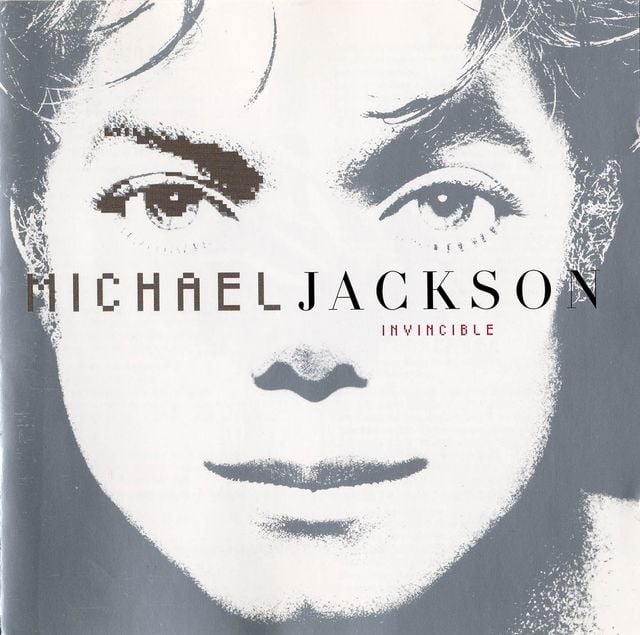

On September 10, 2001, Michael Jackson closed a concert at Madison Square Garden with “You Rock My World.” It was the first single from his first album of new songs in six years. The next morning, terrorists attacked New York. Seven weeks later, on October 30, Epic Records released Invincible.
Jackson had spent about four years making it. His main producer was Rodney Jerkins, who had co-written and produced Destiny's Child's “Say My Name.” The recording reportedly cost $30 million.
It debuted at No. 1 in the United States, selling 366,272 copies in its first week. Then it stalled. Less than a year later, Jackson rode a tour bus around his record company's Manhattan headquarters, chanting against its chairman.
Invincible turned out to be the last studio album Jackson released in his lifetime. Twenty-five years on, it is still the one his fans and critics argue about most.
“Jackson's obsession with fame, his grotesque life magnified by his grotesque wealth, are such an offense to rock aesthetes that the fact that he's a great musician is now often forgotten.”
Four Years and a $30 Million Bill
Jackson's previous album of new material, HIStory, had come out in 1995. Work on its follow-up began in late 1997. Sony wanted its biggest star back at the top of the charts, and no expense was spared. The sessions ran on and off for almost four years, and the last touches went on the record only about two months before it reached stores.
The album's credits read like a map of American recording studios. Jackson worked at the Hit Factory and Sony Music Studios in New York, at Record One, Capitol Studios and Marvin's Room in Los Angeles, and at Jerkins's Darkchild Studios, among others. Besides Jackson himself, the main producers were Rodney Jerkins, Teddy Riley, Babyface, R. Kelly, Dr. Freeze and Andre Harris. Bruce Swedien, Jackson's longtime engineer, mixed much of it.
Teddy Riley was the link to the past. He had co-produced much of Dangerous in 1991, and here he handled four songs, including “2000 Watts” and “Whatever Happens.” Jerkins was the new blood. With his writing partners Fred Jerkins III and LaShawn Daniels he had just had hits with Destiny's Child and Toni Braxton, and the three of them co-wrote most of the album's uptempo songs with Jackson.
The price became part of the story before anyone heard a note. Far Out magazine puts the recording cost at $30 million, with a further $25 million reportedly set aside for marketing. Irish broadcaster RTÉ's review in November 2001 quoted an even higher figure of $50 million. Whatever the exact number, it was an enormous sum for a pop album, and it set the bar the record would be judged against.
Junkyards, Cranes and a Broken Light Bulb
Jerkins learned quickly that a hot beat was not enough. Talking to the Almanac of Rap in 2024, he said Jackson would dismiss tracks he thought were his best. “Like I would play him a track I would think was the hottest: ‘that's too generic’ [he would say],” Jerkins recalled. What Jackson wanted, he said, was sounds no one else was using.
So Jerkins went looking for them. He sampled a motorcycle revving and worked it into a bass sound. On Jackson's instructions, he spent hours in a junkyard with his cousin, hitting things and sampling them. Once, out in New York together, Jackson heard a crane and told Jerkins to sample it. Jerkins had to borrow a Sony DAT recorder from the studio and go back to the spot, hoping the crane was still there.
Another time, Jackson asked for a track that sounded like electricity. Jerkins and his engineer, Jean-Marie Horvat, broke a light bulb and combined the sound with one of Jerkins's favorite snare drums. The result, Jerkins said, was “like a pop sound.”
“He was all about invention. So it was like, go invent some things.”
The same instinct cost Jackson some famous songs. Jerkins says Pharrell Williams handed him a CD of demos by the Neptunes, Williams's production team with Chad Hugo, to pass to Jackson during the sessions. Jackson turned them down because “he felt it was too generic at the time.” The demos are believed to include songs that ended up on Justin Timberlake's 2002 debut, Justified.
The full 13-minute short film for the lead single, directed by Paul Hunter, with Chris Tucker, Michael Madsen and Marlon Brando.
Sixteen Songs and a Long Guest List
Invincible runs 77 minutes. The first three tracks, “Unbreakable,” “Heartbreaker” and the title song, are hard, clipped Jerkins productions. “You Rock My World” is warmer, closer to the breezy feel of Off the Wall. It opens with a spoken skit between Jackson and the comedian Chris Tucker, whose Rush Hour 2 had just hit theaters.
The middle of the album leans heavily on ballads. Babyface co-wrote and produced “You Are My Life.” R. Kelly wrote “Cry,” a choir-backed song in the line of “Man in the Mirror.” Jackson wrote two songs entirely on his own, “Speechless” and “The Lost Children.”
The guest list kept growing. Carlos Santana plays guitar on Riley's “Whatever Happens.” “Unbreakable” includes a posthumous verse from the Notorious B.I.G., lifted from a track he recorded with Shaquille O'Neal. The closer, “Threatened,” is built around spliced narration by Rod Serling from The Twilight Zone, the way Vincent Price had narrated “Thriller”.
Some early listeners thought the older hands did the most interesting work. Nikki Tranter of PopMatters wrote that Riley “proves with just two songs that he's a hundred times the composer the young hipsters flooding most of this album are.” She heard “a Latin twist” in “Whatever Happens” and called “Threatened” “almost a sequel to ‘Thriller.’”
Essential Tracks
“Unbreakable”
The opening track is Jackson answering his critics before they have said a word. He wrote it with Rodney Jerkins, Fred Jerkins III, LaShawn Daniels and Nora Payne, among others, and Brandy is among the credited vocalists. Midway through, a posthumous verse from the Notorious B.I.G. drops in. It comes from “You Can't Stop the Reign,” a song Biggie had recorded with Shaquille O'Neal.
Musically it is the clearest example of what Jerkins brought. The beat is dense and metallic, and the hook keeps coming back without letting up. Under Jackson's pre-chorus, Albumism's Andy Healy points out, sits “an inspired reworking of The Notorious B.I.G.'s ‘Unbelievable.’” Christgau wrote that the album's first three tracks “are the Rodney Jerkins of the year,” in other words Jerkins's best work in 2001.
Some critics thought it should have led the campaign instead of “You Rock My World.” Nikki Tranter, reviewing the album for PopMatters the day before release, called it “without doubt the album's standout” and “the comeback single Michael Jackson should have allowed himself.”
“Speechless”
“Speechless” is one of two songs on the album Jackson wrote alone, and he gave an unlikely account of where it came from. He told Vibe he had been with a group of children in Germany and they had a water balloon fight. “I was so happy after the fight that I ran upstairs in their house and wrote ‘Speechless,’” he said.
He knew how that sounded for a love song. “Fun inspires me. I hate to say that, because it's such a romantic song,” he told the magazine. “I was happy, and I wrote it in its entirety right there.”
Jackson is the only credited producer. Brad Buxer played on the track and helped record it, and Bruce Swedien mixed it. The recording opens and closes with Jackson singing unaccompanied, with strings and stacked vocals filling the middle.
Critics split on it. NME's Mark Beaumont called it “a Grease finale gut-wallop of a ballad.” The BBC's reviewer filed it with “The Lost Children” as “pure Disney.” Albumism's Andy Healy called it “arguably the poster child for all that is right and wrong with the album as a whole.”
“Butterflies”
The album's softest hit came from outside Jackson's circle. Marsha Ambrosius, then a member of the duo Floetry, wrote it with producer Andre Harris while she was still looking for a record deal. “I wrote about a guy who I had a crush who used to work at a McDonalds in London,” she told theGrio in 2014. Jackson heard the song on her demo tape and brought her in to work with him on it.
It is the most restrained thing on the record: a slow neo-soul groove with Jackson singing high and light over it. Ambrosius trades scat runs with him on the finished track. “I believed in that song,” she said. “I just didn't know that I'd get Michael Jackson to believe in it too […] I was just embraced by ‘the greatest.’”
“Butterflies” went to radio only, with no commercial single, and still reached No. 14 on the Billboard Hot 100. Healy, looking back for Albumism, called it “a gorgeous track that warranted more than an only-to-radio release.”
R. Kelly wrote “Cry,” the album's choir-backed message song.
A No. 1 Album Seven Weeks After 9/11
The press was already expecting trouble. Rolling Stone wrote that “reports of inflated budgets and of the lukewarm reception for his album's lead single” had built anticipation for “a stumble of gargantuan proportions.”
The rollout began with two star-packed concerts at Madison Square Garden, on September 7 and 10, 2001. Both ended with “You Rock My World.” The single peaked at No. 10 on the Billboard Hot 100 on the last chart before the September 11 attacks, which derailed it along with almost everything else. In Britain it stalled at No. 2, kept off the top by Kylie Minogue's “Can't Get You Out of My Head.”
Invincible came out on October 29 in the UK and October 30 in the US. Retailers had braced for a flop. “Honestly, we expected Michael to flop and to come in behind both Enrique and the Backstreet Boys,” the manager of a Chicago Tower Records store told Billboard. Instead, the album sold 366,272 copies in its first week and debuted at No. 1, ahead of Enrique Iglesias's Escape.
Even the stores that were pleasantly surprised doubted it would last. “I sincerely hope Michael will stick around, but I suspect that won't be the case,” said Dave Alder of Virgin Entertainment Group North America. A buyer for the Hastings chain guessed that “a lot of the early buyers are the die-hard Michael Jackson fans.”
The number was good but not historic. HIStory had opened with 391,000 copies in 1995, and Rolling Stone summed up the debut as “not bad, but not Bad.” The concert footage became a two-hour CBS special. Delayed by the attacks, it aired in mid-November and drew 25.6 million viewers.
The audience was still there in person, too. At a Britney Spears concert in Salt Lake City that fall, the video screens on stage played the long version of the “You Rock My World” video before the opening act. The Deseret News reported that the crowd watched it in silence and cheered at the end.
The album had nothing like the staying power of Jackson's 1980s records. By November 2003 it had sold 2.1 million copies in the United States, according to Nielsen SoundScan. Far Out puts its worldwide total at more than eight million. CNN called the US figure “respectable” for a lesser star, but next to Thriller, and next to a budget that size, it was treated as a disappointment.
Critics Couldn't Separate the Man and the Music
Many reviews in 2001 were as much about Jackson's face, money and private life as about the songs. RTÉ's Luke McManus called the album “little short of a disaster” and ended his review: “Invincible? I think not.” Mark Beaumont's NME review spent its opening paragraph on tabloid insults before turning to the music.
When Beaumont did get to the music, he was more positive than his tone suggested. He called the album “pompous, desperate, laughably self-reverential, two hours too long and dusted sparingly with genius,” but added that “a good half of ‘Invincible’ rocks bells.” He liked “2000 Watts,” “Heartbreaker” and the title track. His main complaint was the length: “At 76 minutes and 16 tracks the studio clearly never rang with the dreaded words ‘no, Michael.’”
The BBC's Adam Smith landed in the middle: “It's not a great album and it's not a bad album. It's just not very thrilling.”
“His funk is steelier and his ballads are airier, both to disquieting effect.”
Robert Christgau gave it an A-minus. He argued that Jackson's skills “seem undiminished” and that he was “doing new stuff with them.” He still had complaints. “At 78 minutes this is too long,” he wrote, and he called “The Lost Children” offensive, “especially given his history.” That meant the child molestation allegation against Jackson that had been settled out of court years earlier.
A few reviewers were simply fans. Scott Iwasaki of Utah's Deseret News wrote, “To be honest, ‘Invincible’ is very good,” while admitting it would never live up to Thriller. PopMatters' Nikki Tranter heard a record that was “quite relevant while at the same time being experimental and fresh.” Almost everyone, admirers included, agreed it was too long.
“Down With Tommy Mottola”
The promotion that followed did not match the budget. Jackson did not tour the album, and a planned world tour was canceled after September 11. Sony, which backed the album at first, quickly dropped planned promotion. Jackson also complained that the label had failed to release a charity song he recorded after the attacks.
On July 6, 2002, he took the fight public. At a press conference at the Rev. Al Sharpton's National Action Network in Harlem, Jackson accused the record industry of cheating Black artists. “The recording companies really, really do conspire against the artists,” he said. He singled out Tommy Mottola, the head of Sony Music, calling him “mean, he's a racist, and he's very, very, very devilish.”
Later that day Jackson arrived outside Sony's Manhattan headquarters on the open top deck of a double-decker tour bus. It circled the block twice. About 150 fans below held signs reading “Terminate Tommy Mottola” and “Invincible is Unbreakable,” and Jackson joined them chanting “Down with Tommy Mottola!” He held up a poster showing Mottola with devil's horns.
Sony called the comments “ludicrous, spiteful and hurtful.” Press reports at the time noted the album's disappointing sales despite an estimated $25 million in promotion, and said others in the industry blamed Jackson's declining appeal. Even Sharpton defended Mottola, telling the New York Post he was a friend. Jackson released no more new albums on Epic. A 2003 hits collection, Number Ones, was the last project under his contract.
Twenty-Five Years of Second Opinions
Jackson died on June 25, 2009, and Invincible became, by default, his final word as a studio artist. In 2022 the Journal of Michael Jackson Academic Studies described it as the album “least appreciated by critics and even some of Jackson's fans,” and the one “most likely to cause heated debate in online forums.”
Opinion has warmed, mostly toward the uptempo songs. Andy Healy, in an Albumism anniversary piece updated this October, wrote that its dance tracks “hold up surprisingly well.” He singled out “Heartbreaker” as a “glitch heavy precursor to dubstep” and named “Whatever Happens,” with Carlos Santana, as the album's crowning moment. He also repeated a long-running fan argument that it would have been stronger cut from sixteen tracks to ten.
Healy also points to a detail that changes how one song reads. “The Lost Children” samples voices from “Kick the Can,” a Twilight Zone episode about people in a retirement home who feel young again by playing a children's game. Heard that way, the song is about the child adults lose as they grow up, not about missing children.
For the anniversary, retailers are taking preorders for a double-vinyl pressing of the original 16 tracks, due November 13, 2026.
“Is Invincible Jackson's greatest album? I think most fans and critics would agree it's not. But does it deserve to be as maligned as it is? Arguably not.”