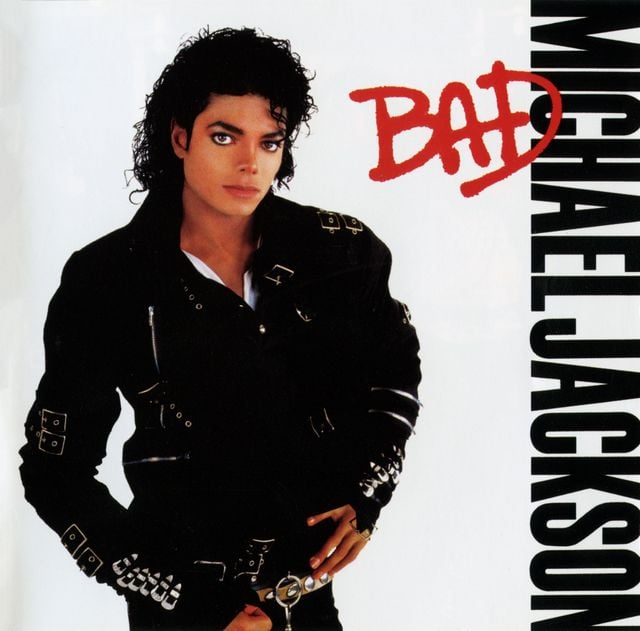

Michael Jackson's Bad had to follow Thriller. That album had sold about 30 million copies in the US alone, spent 37 weeks at No. 1, and won a record eight Grammys in one night. Whatever Jackson did next would be compared with the best-selling album ever made.
Bad came out on August 31, 1987. Jackson spent more than two years making it with Quincy Jones, their third and last album together. He wrote and co-produced nearly every song himself.
It debuted at No. 1 and stayed there for six weeks. It was the first album ever to produce five No. 1 singles. By most standards it was a huge success. It just couldn't match Thriller.
“The strongest and most consistent black pop album in years.”
The Impossible Job: Following Thriller
Jackson and Quincy Jones began work on the follow-up in January 1985, back at Westlake Recording Studios in Los Angeles, the same rooms where Thriller had been built. There was no illusion about the pressure: Epic Records was banking on another Thriller-sized event, and the music press had already started keeping score before a single track was finished. Jackson's response was to write almost the entire album himself. Where Off the Wall leaned on Rod Temperton and outside songwriters, and Thriller mixed Jackson's writing with Temperton's, Bad is credited to Jackson alone on nine of its eleven songs — a deliberate assertion that the sound of the decade's biggest album was his, not a collaborator's.
The title track set the tone before the album even had a tracklist. Built around a defiant, almost confrontational lyric, "Bad" was Jackson's answer to years of being characterized in the press as shy, fragile, eccentric — a public persona increasingly at odds with a 29-year-old who had just sold tens of millions of records. Quincy Jones, producing Jackson for the third and last time, later described the two years of sessions as some of the most exacting of his career: multiple full re-recordings of vocals, arrangements built and discarded, and a perfectionism that occasionally tested even Jones's famous patience.
What emerged from those two and a half years was, in commercial terms, almost impossible to overstate. Bad debuted at Number One on the Billboard 200 and held the position for six consecutive weeks. It sold an estimated 2.25 million copies in its first week alone, making it the fastest-selling album in American history at the time of release, and went on to become the best-selling album in the world in both 1987 and 1988.
The Duet That Never Happened
Before Jackson recorded the title track alone, he wanted a duet partner who could match his energy line for line, and he asked Prince. The two biggest pop stars of the decade in the same booth, trading verses on a song called "Bad," should have been an event in itself. It never happened. Prince turned it down flat. Years later, talking to Chris Rock, he explained that the song's opening line, a boast of who was going to dominate whom, made a duet between two men impossible.
“Who is going to sing that to who? Cos you sure ain't singing it to me and I sure ain't singing it to you so right there, we got a problem.”
There was a postscript. Decades later, Prince's former bandmate Sheila E. revealed on a podcast that Prince had gone into the studio and recorded his own version of “Bad” anyway. “It was so funky, it was so amazing,” she said. “We were like ‘Oh my God, we can't wait for Michael to hear it.’ And then Prince went and he erased the whole thing.”
Martin Scorsese's 18-minute short film for the title track, co-starring a then-unknown Wesley Snipes, was loosely inspired by the real case of Edmund Perry.
Scorsese, Snipes, and an 18-Minute Short Film
For the title track's video, Jackson didn't hire a music-video director — he hired Martin Scorsese, fresh off The Color of Money, and Scorsese brought in his Color of Money screenwriter, novelist Richard Price, to build a real narrative rather than a performance clip. The result ran a full 18 minutes: Jackson plays Darryl, a prep-school student who returns to his old Brooklyn neighborhood on break and is confronted by his former gang, led by Wesley Snipes in one of his first screen roles, for having left them behind. The confrontation resolves into the song, shot in black-and-white until it explodes into color at the Hoyt-Schermerhorn subway station — six weeks of filming, in the winter of 1986, staged as a direct homage to the "Cool" sequence from West Side Story.
The story wasn't invented from nothing. Price and Scorsese drew on the real 1985 case of Edmund Perry, a Harlem teenager and prep-school graduate who was shot and killed by a plainclothes police officer days after his graduation — a case that had gripped New York with exactly the questions the film dramatizes, about what a young Black man owes the neighborhood he's left and the world he's entering. When Jackson died in 2009, Scorsese remembered the shoot with something close to awe. “Every step he took was absolutely precise and fluid at the same time,” he said. “It was like watching quicksilver in motion.”
The Song Michael Didn't Write
Of the album's eleven tracks, only two weren't written solely by Jackson — and one of them became the record's most enduring song. Songwriter Glen Ballard, a staff producer for Quincy Jones, had tried and failed to land a song on the album. His writing partner Siedah Garrett had been carrying a title around for about a year — "Man in the Mirror" — and the two wrote the song quickly, finishing a demo on a Friday evening.
Garrett couldn't wait for Jones's office to reopen on Monday, so she took the tape straight over. Four hours later he called back, impressed but cautious. “I've been playing songs for Michael for two years,” he told her. “And he has yet to accept an outside song.” Three days later Jones called again: Jackson loved it and wanted to cut it.
“I screamed! Couldn't believe it,” Garrett told American Songwriter. When she tried to leave a later session, Jackson stopped her. “We're getting ready to do ‘Man In The Mirror’ and I need you to stay,” he said, “because I want to sing it like you.” The finished song, with its call for self-examination before social change, became the fourth of the album's five consecutive Number One singles and, for many listeners, its emotional center.
Essential Tracks
“Bad”
The title track had to work as both a song and a thesis statement, and it manages both. Built on a stuttering bassline and a chorus engineered for stadiums, "Bad" is Jackson at his most percussive and least melodic — a deliberate departure from the smoother funk of Off the Wall and Thriller, written to sound like a challenge rather than an invitation.
The song exists in two very different forms: the radio single, and the 18-minute Scorsese short film that reframes it as the climax of a story about identity and belonging. Heard on its own, it's a hard, minimal groove. Seen in context, it's the payoff to one of the most unlikely director-artist pairings in music video history.
It spent two weeks at Number One as the second of the album's five consecutive chart-topping singles, proving that Jackson's post-Thriller pivot toward harder, sparer production hadn't cost him the audience Off the Wall and Thriller had built.
“Man in the Mirror”
The one song on the album Jackson didn't write is also the one that has aged into his most quoted. Siedah Garrett and Glen Ballard built it around a simple, almost sermon-like structure — verses of quiet self-examination building into a gospel-choir climax — and Jackson's vocal performance matches that architecture exactly, starting restrained and ending in full-throated conviction.
The video breaks from every other clip on the album by never showing Jackson performing at all. Instead it cuts together archival footage — civil rights marches, famine relief, Reagan and Gorbachev — turning the song's call for personal accountability into a montage of the decade's biggest unresolved problems.
It became the fourth of Bad's five consecutive Number One singles and has outlived the rest of the album's charting singles as Jackson's most frequently invoked song in tributes, eulogies, and benefit performances — the rare hit written by someone else that came to define how the writer of everything else on the record was remembered.
“Smooth Criminal”
Built on a relentless, almost mechanical rhythm track, "Smooth Criminal" is the album's most purely choreographic song — the one written with a specific piece of physical performance already in mind. Jackson conceived the track's signature forward lean specifically for the accompanying film sequence, and had shoes custom-designed with a peg-and-slot mechanism in the heel to make the gravity-defying angle physically possible on stage.
Released after the run of five chart-toppers, "Smooth Criminal" peaked at No. 7 on the Hot 100. For almost any other artist that would have been a major hit; on Bad it read as a comedown, a sign of how absurdly high the rest of the album had set the bar.
Its full choreography and story arrived later, as the centerpiece of 1988's Moonwalker film, but the song itself — and that lean — became one of the most imitated and referenced pieces of Jackson's catalog, sampled and covered for decades after.
A rare Jackson video that never shows him performing, cutting archival footage of the decade's crises into the song's call for self-examination.
Five in a Row, and a Grammy Shutout
"I Just Can't Stop Loving You," "Bad," "The Way You Make Me Feel," "Man in the Mirror," and "Dirty Diana" — released across more than a year, from late 1987 through July 1988 — each reached Number One on the Hot 100 in sequence, making Jackson the first artist in history to generate five chart-topping singles from a single album. No one has matched it since.
None of it fully satisfied the Recording Academy. At the Grammy Awards on March 2, 1988, Album of the Year went to U2's The Joshua Tree rather than Bad. The album's only win that night went to its engineers, Bruce Swedien and Humberto Gatica, for Best Engineered Recording. Four years after Thriller swept a record eight Grammys, it was a thin return for an album that outsold nearly everything else released in 1987.
That gap between commercial dominance and industry recognition became the defining story of Bad's reception. Some critics were kinder than the Grammy voters, though not without reservations. Robert Christgau's B+ review praised the record's "studio mastery" but argued that consistency was not what had made Thriller a miracle: "it was genius like 'Beat It' and 'Billie Jean.'" The closest thing to genius on Bad, he wrote, was the CD-only "Leave Me Alone," "which isn't all that close."
The Bad World Tour
Bad also launched Jackson's first tour as a solo headliner. Opening in Tokyo on September 12, 1987, and running until January 1989, the Bad World Tour played 123 shows across 15 countries to an estimated 4.4 million people, grossing $125 million — a total Guinness World Records recognized as the largest-grossing tour in history at the time. A run of dates at London's Wembley Stadium alone drew 504,000 fans, including a night attended by Diana, Princess of Wales.
At the tour's close, Jackson announced it would be his last, saying he intended to shift his focus to filmmaking. It wasn't — the Dangerous and HIStory tours followed in the 1990s — but as a statement of scale, the Bad World Tour set the template for what a global pop stadium tour was supposed to look like for the next two decades.
A Quarter-Century Later, a Second Look
It took twenty-five years for the album to get the archival treatment its commercial numbers had always justified. Director Spike Lee — who had worked with Jackson on the "They Don't Care About Us" video years earlier — spent the album's 25th anniversary combing through vault footage and interviewing the choreographers, musicians, and engineers who built the record, released as the documentary Bad25 in 2012 alongside an expanded reissue of the album itself.
The documentary made the case, essentially, for treating Bad as more than a Thriller footnote — as a record whose five Number One singles, whose Scorsese short film, and whose stadium tour would have defined any other artist's entire career, and that only looked like a disappointment because of what had come immediately before it.
“When we worked together on ‘Bad,’ I was in awe of his absolute mastery of movement on the one hand, and of the music on the other.”