
In the spring of 1963, a 30-year-old Mercury Records A&R man learned that Phil Spector was about to cut “It's My Party” with the Crystals — the same song he had just recorded with a 16-year-old from New Jersey named Lesley Gore. As Quincy Jones recounted the episode throughout his life, he finished the record that night, pressed a hundred copies, and mailed them to radio stations before Spector could release his version. Within weeks, Gore had the No. 1 song in America. Twenty-six years later, the same producer put Miles Davis and Ice-T on the same album and won the Grammy for Album of the Year. Between those two points lie the two best-selling pop records ever made, a charity single cut in a single overnight session, and a way of working that redefined what a record producer was for. This feature tells that story through the sessions themselves.
“A great song can make the worst singer in the world a star, and a bad song can't be saved by the three best singers in the world.”
The Method: Songs, Casting, Space
Jones came to producing as an arranger, and the arranger's habits shaped everything that followed. He had written charts for Count Basie's band and for Frank Sinatra — his 1964 arrangement of “Fly Me to the Moon” became, via the cassette player Buzz Aldrin carried aboard Apollo 11, the first music played on the moon — and he had scored films including In Cold Blood and In the Heat of the Night. An arranger's job is deciding which notes belong in the piece at all, and Jones carried that discipline directly into the producer's chair.
The discipline was formally trained. In 1957 Jones moved to Paris to study with Nadia Boulanger, the legendary composition teacher whose pupils included Aaron Copland and Leonard Bernstein, and the classical rigor stayed under everything he later did at a mixing desk. So did the bandleader's instincts: before the pop hits resumed, Jones spent the late 1960s making orchestral jazz records under his own name, and Walking in Space, made with producer Creed Taylor for A&M, won the 1970 Grammy for large-group jazz performance. A man who had conducted big bands, written for string sections, and scored thrillers did not need to guess whether an arrangement would work — he could read the answer off the page before a note was recorded.
Three habits recur across every session he ran. The first was song selection: Jones canvassed hundreds of demos for each project and discarded anything that could not plausibly become a single. The second was casting — hiring the specific songwriter, horn arranger, or soloist whose sound the record needed, rather than whoever was available. The third was space. Where other producers of the era stacked overdubs, Jones subtracted, leaving arrangements in which every remaining element stays audible.
The range never narrowed. In 1984, between Thriller and Bad, Jones produced Frank Sinatra's L.A. Is My Lady — a reunion with the singer he had arranged and conducted for two decades earlier, most famously leading the Count Basie Orchestra on Sinatra at the Sands (1966) — which made him the rare producer to put both Sinatra and Michael Jackson on one decade's résumé. The method did not care whose name was on the record. Songs, casting, space: the checklist was the same whether the voice belonged to a 16-year-old from New Jersey or the Chairman of the Board.
Quincy always says: leave space for God to walk through the room.
1963: The Race for “It's My Party”
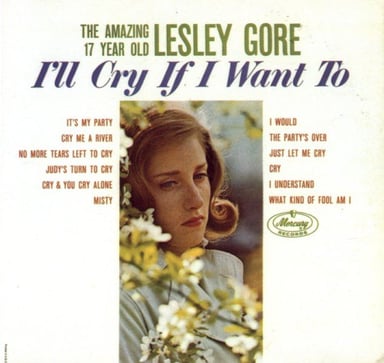
Jones discovered Gore singing at a Manhattan hotel and signed her when no other label had shown interest. The record he built around her runs barely two and a quarter minutes: a lean rhythm section, strings that punctuate rather than smother, and Gore's vocal placed at the very front of the mix. When word of Spector's competing version reached him, Jones sent his record to radio stations immediately rather than wait for a polished master — a decision that won Gore the No. 1 spot and won Jones a reputation for decisiveness that followed him for six decades. Mercury pressed the advantage with an answer record, “Judy's Turn to Cry,” which reached the top five within weeks.
The follow-ups showed the hit was no accident. “You Don't Own Me,” a strikingly assertive statement of independence for 1963, climbed to No. 2 and held there behind only the Beatles. The next year, Mercury promoted Jones to vice president, making him one of the first Black executives at a major American label — a producer, in other words, whose judgment the industry now paid for directly. The Gore records have refused to age, too: “You Don't Own Me” has been revived by generation after generation, most recently as a 2015 hit cover, each time landing as the statement of independence Jones framed so carefully around a teenager's voice.
Listen for: how complete “It's My Party” sounds at barely two minutes — nothing missing, nothing spare, every bar pointing at the chorus.
“It's My Party” — the 1963 single that started the producing career.
1976–1981: The Lab Years
The stretch between 1976 and 1981 is the least celebrated period of Jones's producing career and among the most consequential, because this is where he assembled his team. Across a run of Brothers Johnson albums — including “Strawberry Letter 23,” a gleaming reinvention of a Shuggie Otis song, and the R&B chart-topper “Stomp!” — Jones gathered the players who would define the next decade of popular music: songwriter Rod Temperton, horn arranger Jerry Hey, engineer Bruce Swedien, keyboardist Greg Phillinganes, and bassist Louis Johnson, whose slapped bassline would later open “Billie Jean.”
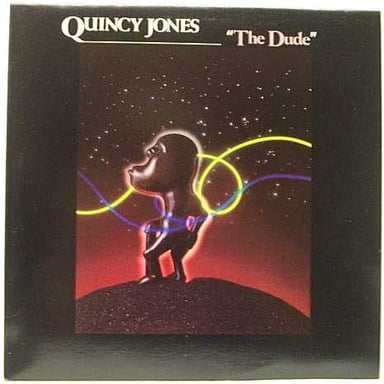
The same musicians powered George Benson's Give Me the Night (1980), released through Jones's newly founded Qwest imprint, with Temperton writing the title track. The album carried a respected jazz guitarist into the pop mainstream, its lead single reaching the top five of the Billboard Hot 100. He gave Rufus and Chaka Khan the same treatment on Masterjam (1979), Khan's voice set inside the horn-charted architecture the team now built to order. On his own The Dude (1981), alongside the dance hit “Ai No Corrida,” Jones introduced an unknown session singer named James Ingram on “Just Once” and “One Hundred Ways” — the latter won Ingram a Grammy — so that by the time the biggest assignment in pop arrived, every member of the team had years of shared studio shorthand behind them.
One Qwest record from this stretch shows how far Jones would trust a casting decision. For Patti Austin's Every Home Should Have One (1981), he paired her with Ingram on a Rod Temperton ballad called “Baby, Come to Me.” Released as a single, it stalled at No. 73 and died — until ABC's soap opera General Hospital adopted it as a love theme and the switchboards lit up. Re-released, it reached No. 1 on the Hot 100 in February 1983 and stayed on the chart for seven months. The song had been right all along; the market simply needed a second chance to hear what the producer had heard the first time.
Listen for: Jerry Hey's horns answering George Benson's vocal on “Give Me the Night” like a second lead singer — the signature call-and-response of every Jones pop record.
Rod Temperton's song, Jerry Hey's horns, George Benson's voice — the team Jones assembled in the years between Off the Wall and Thriller.
1979–1987: The Jackson Trilogy
The three albums Jones made with Michael Jackson are each covered at length in their own reviews on this site — see Off the Wall and Thriller — so what belongs here is the production story. CBS executives considered Jones too jazz-rooted for a 20-year-old singer coming out of disco; Jackson, who had worked with him on the set of The Wiz, insisted on the hire. Off the Wall (1979) made Jackson the first solo artist to place four singles from one album in the Billboard top 10. For Thriller (1982), Jones raised the standard further, treating every track as a potential single. When the first full playback at Westlake Audio fell flat in November 1982, he stopped the session, gave the team two days off, and remixed the album one song at a time — the version that emerged became the best-selling album ever made.
Nearly every story that survives from those sessions concerns editing. Rod Temperton drafted Vincent Price's horror monologue for the title track on the ride to the studio, and Price delivered it in two takes. Jones wanted to shorten the long “Billie Jean” intro and retitle the song “Not My Lover”; Jackson defended the intro — “that's the jelly,” as Jones retold it, “that's what makes me want to dance” — and prevailed. Swedien mixed the track 91 times before Jones chose the second mix. A cassette sent over by Toto's David Paich yielded Steve Porcaro's “Human Nature,” which replaced a weaker track late in the sessions. The casting instinct ran in both directions: “P.Y.T. (Pretty Young Thing)” came from James Ingram — the singer Jones had introduced on The Dude — writing with the producer himself. And when “Beat It” needed a guitar solo that rock radio would accept, Jones telephoned Eddie Van Halen.
“I did it as a favor. ... I knew what I was doing — I don't do something unless I want to do it.”
The casting had been just as deliberate on Off the Wall. Jones assigned three songs to Rod Temperton — “Rock with You,” the title track, and “Burn This Disco Out” — effectively making the Heatwave songwriter an in-house composer for Jackson's adult debut, while “Don't Stop 'Til You Get Enough” won Jackson his first Grammy. And in the middle of the Thriller sessions, producer and singer detoured into the least commercial project imaginable: a storybook album of Steven Spielberg's E.T., with Jackson narrating over John Williams's themes. Withdrawn from sale within weeks over a label dispute, it still won the 1984 Grammy for Best Recording for Children — a footnote that shows how completely the two trusted each other's instincts by then.
Bad (1987) completed the trilogy, generating five consecutive No. 1 singles — a record at the time. It was the last album Jackson and Jones made together.
Listen for: the first 29 seconds of “Billie Jean” — drums and bass alone, recorded on a purpose-built plywood platform, making their case before anything else is allowed in.
The intro Jones wanted to cut — and the clearest lesson in his use of space.
1985: Producing a Room Full of Egos
On the night of January 28, 1985, immediately after the American Music Awards, more than 40 of the biggest names in American music arrived at A&M Studios in Los Angeles to record “We Are the World.” Taped to the studio door was a sign Jones had written: Check your egos at the door. Working with co-producer Michael Omartian, Jones had the finished charity single — solo lines assigned, harmonies stacked, superstars kept on schedule — by the following morning. Not everyone complied: Prince skipped the session entirely, contributing a separate track to the album instead.
Musically the record sits apart from everything else in his catalog, but the production behind it is his method in concentrated form. Every solo line was cast in advance, each singer given a phrase suited to what that particular voice could do, and the running order of voices was planned the way an arranger plans a horn chart. The session itself — dozens of stars, one night, no second chances — has never really been repeated.
The numbers were as unprecedented as the guest list. The initial shipment of 800,000 copies sold out within three days of release, making “We Are the World” the fastest-selling American pop single to that point; within weeks it sat at No. 1 on the Hot 100, and it became the first single the RIAA ever certified multi-platinum, at four times platinum. Global sales are estimated around 20 million copies. At the 1986 ceremony, the single took the Grammys for both Record of the Year and Song of the Year. For a record assembled in a single overnight session, the efficiency ratio — hours in studio against copies sold — may never be matched.
Listen for: how instantly recognizable each voice is in the solo chain — every line was assigned in advance to suit the singer who got it.
More than 40 lead singers, one overnight session at A&M Studios, January 28, 1985.
1989: Back on the Block
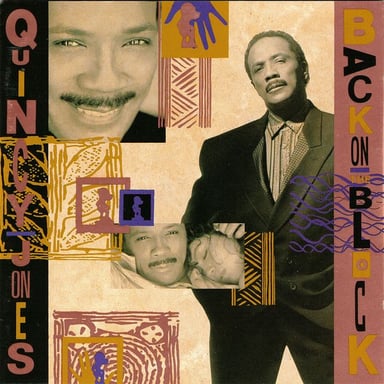
At 56, Jones made the album that ties his whole career together. Back on the Block placed Ella Fitzgerald, Sarah Vaughan, Miles Davis, and Dizzy Gillespie on the same record as Ice-T, Big Daddy Kane, Kool Moe Dee, and Melle Mel — the bebop generation he had arranged for in the 1950s alongside the rappers then reshaping Black American music. The album also introduced a 12-year-old singer named Tevin Campbell, launched on the ballad “Tomorrow (A Better You, Better Me).” At the 1991 ceremony, it won the Grammy for Album of the Year, one of six awards Jones collected that night — Producer of the Year among them — a haul that made the evening's theme unmistakable: the industry was honoring not a record so much as a working method, demonstrated one last time at full scale.
The album's manifesto moment is its reworking of Weather Report's “Birdland,” a jazz-fusion anthem itself named for the Manhattan bebop club of the era Jones came up in — four generations of Black music folded into a single arrangement. The approach was the one he had used since Lesley Gore: cast the voices, chart the entrances, and leave each element room to be heard. Twenty-six years after “It's My Party,” the album demonstrated that the method was never tied to an era or a genre — it worked on swing, on soul, and on hip-hop, because it was about judgment rather than fashion.
The purest casting exercise on the record is “The Secret Garden (Sweet Seduction Suite),” a slow-burn ballad Jones staffed like a repertory company: Barry White's basso, Al B. Sure!'s falsetto, El DeBarge's tenor, and James Ingram — the singer he had discovered on The Dude nine years earlier — each assigned a verse the way an arranger assigns a solo chair. Four lead singers from three generations of R&B, and the single still went to No. 1 on the R&B chart in 1990. No other producer of the era would have tried the combination; none had spent forty years learning which voices sit together.
Listen for: the title track's rappers entering on cue like sections of a big band — four decades of arranging applied to a genre younger than his career.
Ice-T, Big Daddy Kane, Kool Moe Dee, and Melle Mel trade verses on the title track.
The Blueprint Every Producer Still Follows
When Jackson chose new jack swing producer Teddy Riley for Dangerous (1991), the change in sound — longer tracks, denser arrangements, less open space — showed by contrast just how much of the earlier albums had been Jones's doing. Our review of Dangerous covers that transition in detail. Jones died in November 2024, at 91, by which point his way of working had long since become the industry standard.
The modern superproducer — assembling a specialist team, selecting the songs before touching a fader, keeping arrangements deliberately uncluttered — works from a template Jones established. Before him, pop producers were largely staff engineers or svengalis; after him, the producer was understood as a co-author of the record. The two most famous proofs, Off the Wall and Thriller, are covered in depth on this site. The method behind them was already sixteen years old when Off the Wall appeared.
Look at the credit list of any current blockbuster album and you are reading Jones's legacy: a dozen specialist writers and producers cast song by song, an executive ear deciding which tracks survive, arrangements pruned until the hook stands clear. What has changed is only the tooling. The casting calls happen over file transfers instead of at Westlake's coffee machine, and the space he insisted on is now carved out with mute buttons rather than an eraser on a horn chart. Jones kept casting until the end — in his last decade he managed and championed the young British polymath Jacob Collier, whose Grammy-winning one-man arrangements are the Jones method internalized by a single musician. The judgment — which song, which voice, how much silence — remains the entire job, and no one has described it better than the man who defined it: leave space for God to walk through the room.
“Your music can never be more or less than you are as a human being.”