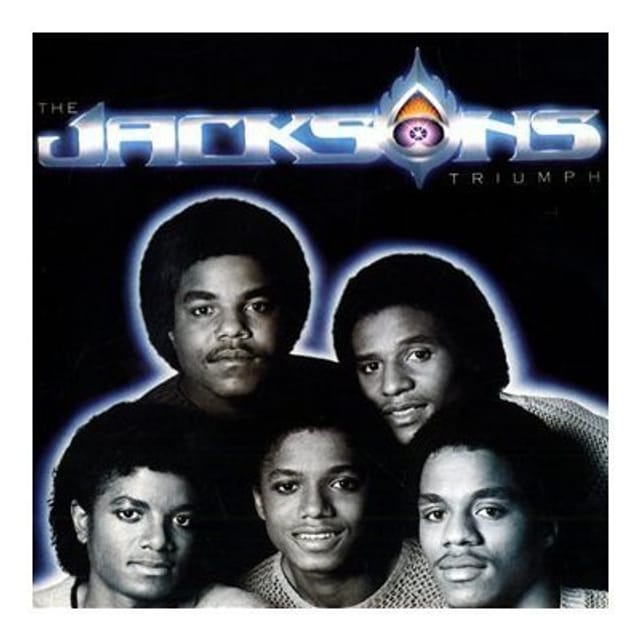

By September 1980, the Jacksons had something they had wanted for years: full artistic control. On Triumph, the five brothers from Gary, Indiana produced the record themselves.
It went platinum and showed they could match any production team of the day. It was also their last great album as a group, released just as Michael Jackson's solo career was taking off.
“More cluttered than Off the Wall, partly because Michael's brothers are butting in, partly because Quincy Jones isn't. But most of the clutter is sheer, joyous muscle-flexing—hated the chorale that opens 'Can You Feel It' at first, but now I chuckle at their audacity every time it comes on.”
The Studio Sessions: Six Months of Creative Revolution
The story of Triumph begins with an unusual phone call. One afternoon in 1980, engineer Tom Perry received a call from LaToya Jackson: “Are you Tom Perry?” When he confirmed, she simply said, “Hold on for Michael Jackson.” What followed was Michael’s distinctive voice asking Perry to engineer what would become their most ambitious project yet. Perry had already worked with Michael on various solo projects, including early demos of “Billie Jean,” but Triumph would be different—this was about proving The Jacksons could stand as equals to any production team in the industry.
Working primarily at Hollywood Sound Studios, the brothers embarked on a six-month odyssey of twelve-hour days and late-night sessions. Perry recalls Michael arriving earliest each day, often staying until 2 or 3 AM to perfect his vision. The other brothers would filter in throughout the afternoon, depending on whose song was being recorded. But there was one memorable exception: during a Jackie Jackson-led session, everyone left at 7 PM because Jackie had Lakers courtside tickets. Perry and his assistant sat there incredulous—it was still early evening in studio terms.
The album represented a watershed moment: the first time The Jacksons produced themselves entirely. They spared no expense, working across multiple Los Angeles studios including Capitol, Hollywood Sound, Sound City, and Westlake. Using cutting-edge technology, they synchronized two 24-track machines via timecode to create a 48-track recording setup—a sophisticated approach that rivaled major-label productions of the era.
Behind the Music: Michael's Production Genius
Engineer Tom Perry witnessed Michael’s creative process firsthand and was amazed by what he observed. “Michael Jackson was a genius producer,” Perry recalled. “He was a phenomenally talented human being. He wasn’t a schooled musician, but everything was in his head. He would have to try and convey his ideas to me, the arranger, and musicians. He wouldn’t stop until the music sounded the way it did in his head.”
This uncompromising perfectionism extended to every aspect of the production. Perry used his old-school engineering background, avoiding Dolby noise reduction in favor of running 30 IPS tape speed for cleaner high-frequency response. The brothers could afford to spread instruments across eight or ten tracks for drums alone, giving them unprecedented mixing flexibility. When something wasn't working, Michael would double his brothers' harmonies to add richness and polish—a technique that became a signature of the album's sound.
“The Jacksons parlayed their newfound artistic freedom into an album that, 30 years later, exemplifies the exciting possibilities of autonomy.”
The Infamous Scream: LaToya's Contribution to History
One of the album’s most memorable moments came about through pure inspiration. During the recording of “This Place Hotel,” Michael suddenly heard something in his head that wasn’t on tape yet. He called his sister LaToya down to the studio for what would become one of the most chilling vocal effects in R&B history—her piercing scream that appears in the song’s paranoid soundscape. Perry marveled at Michael’s intuitive understanding of how unexpected elements could elevate a production: “He’d hear something in his head and just make it happen.”
The anecdote reveals Michael's character in another way too. Perry recalls that Michael loved children and would light up whenever Perry's baby son Andrew visited the studio. Michael would "rip the baby away" from Perry's wife and parade him around to other studios, proudly showing him off to anyone who would listen. These human moments provided relief during the intense creative process that would yield their masterpiece.
Essential Tracks
“Can You Feel It”
The album's audacious opening statement remains one of the most ambitious productions in R&B history. Built around a 30-voice choir that Robert Christgau initially hated before coming to admire its "sheer, joyous muscle-flexing," the song establishes The Jacksons as sonic architects capable of matching any contemporary production. Michael and Jackie Jackson's composition transcends simple dance music, crafting a universal message of unity that would influence Michael's later humanitarian anthems.
The accompanying music video, directed by Robert Abel and Associates (the team behind Tron), cost $600,000 and became one of MTV's defining early clips. The 9-minute epic featured the brothers as giants in a rainbow-colored cosmic landscape, helping children across the universe. Perry admits he wishes he'd added more low-end warmth to the mix, but the track's crystalline production has ensured its endurance as a club standard for over four decades.
Robert Abel & Associates' $600,000 cosmic staging became one of MTV's earliest defining clips.
“This Place Hotel”
Originally titled "Heartbreak Hotel" before being renamed to avoid confusion with Elvis Presley's classic, this Michael Jackson composition represents the album's creative and emotional peak. Perry considered it the standout track, praising its groove, Michael's spectacular harmonies, and Jerry Hey's outstanding horn arrangements. The song's paranoid atmosphere and dark sonic textures directly anticipate the psychological complexity of Thriller-era material.
Michael's vocal performance showcases his complete range, from intimate verses to soaring harmonies, with every background vocal part performed by Michael himself and then doubled for richness. The track's sophisticated arrangement includes LaToya's chilling scream and demonstrates Michael's intuitive understanding of how unexpected elements can elevate a production. Its emotional depth and musical complexity establish it as a bridge between the group's dance-oriented past and Michael's emerging artistic maturity.
“Lovely One”
Released in September 1980 as the album's lead single, "Lovely One" set the tone for Triumph's self-produced sound before the LP itself even arrived. Written by Michael and Randy Jackson, the track is built on a driving funk bassline and a horn arrangement courtesy of Jerry Hey, announcing that the brothers' post-Motown identity would lean harder into uptempo dance-funk than anything since their Jackson 5 days.
Michael and his brothers trade lead lines throughout, a structural choice that doubled as a statement of purpose: no single voice would dominate a record credited to the group as a whole, even as Michael's own solo ambitions were becoming impossible to ignore.
Reaching #12 on the Billboard Hot 100 and #2 on the R&B chart, "Lovely One" gave Triumph early momentum and proved the brothers' self-production could deliver radio-ready singles without an outside hitmaker steering the sessions.
The renamed “Heartbreak Hotel” — this audio preserves LaToya's scream and Jerry Hey's horn arrangement in full.
Commercial Triumph and Critical Recognition
Triumph achieved both commercial and critical success that validated The Jacksons' decision to take creative control. The album peaked at #10 on the Billboard 200 and became their first #1 R&B album since 1971's Maybe Tomorrow. More importantly, it earned platinum certification, selling over three million copies worldwide—proving that family groups could compete with solo artists and superproducer-driven projects.
The critical reception was equally impressive. Rolling Stone praised the album's ambition, while Robert Palmer of The New York Times noted how the brothers had developed individual writing styles while maintaining their collective chemistry. Billboard highlighted the sophisticated production values that rivaled the era's most expensive recordings.
“I thought 'Heartbreak Hotel' was a phenomenal song. It should've been a bigger hit than it was. It may have been a little bit ahead of its time. I thought the song was really creative and interesting. It was a great, great record.”
The Tour That Changed Everything
The 1981 Triumph Tour transformed The Jacksons from recording artists into live performance legends. Grossing $5.5 million across 46 sold-out shows, the tour established new standards for concert production and staging. Michael's introduction of the sequined glove and the moonwalk during these performances created moments that would define his solo career. Rolling Stone would later name the Triumph Tour one of the 25 best tours between 1967 and 1987.
The tour's success also highlighted the album's enduring appeal. Songs like "Can You Feel It" and "This Place Hotel" translated powerfully to arena settings, with their sophisticated arrangements scaling up to fill massive venues. The brothers' collective chemistry was never more evident than during these live performances, where years of recording together paid off in seamless harmonies and intuitive musical communication.
The End of an Era
Triumph represents the last time The Jacksons operated as a genuinely unified creative unit—four years later, Victory would reunite all six brothers on paper, but as a fractured, multi-producer affair rather than a shared vision. Following this release, Michael's solo trajectory would increasingly dominate, making Triumph both a creative summit and a farewell to the group's collective identity. The musical and production innovations captured here would directly inform Thriller, making Triumph essential listening for understanding one of pop music's greatest artistic progressions.
The album's influence extends far beyond its immediate commercial success. Its sophisticated approach to R&B production established templates that defined the decade's sound. Michael's emerging role as primary creative force became a blueprint for artist autonomy, demonstrating how performers could transcend industry expectations through musical vision and technical excellence.
Perhaps most importantly, Triumph captured The Jacksons at their absolute peak—five brothers who had grown up in the spotlight and emerged as sophisticated artists capable of creating music that was both commercially viable and artistically ambitious. In an era when family groups often struggled to maintain relevance, The Jacksons proved that brotherhood, combined with genuine talent and unwavering creative vision, could produce truly transcendent art.