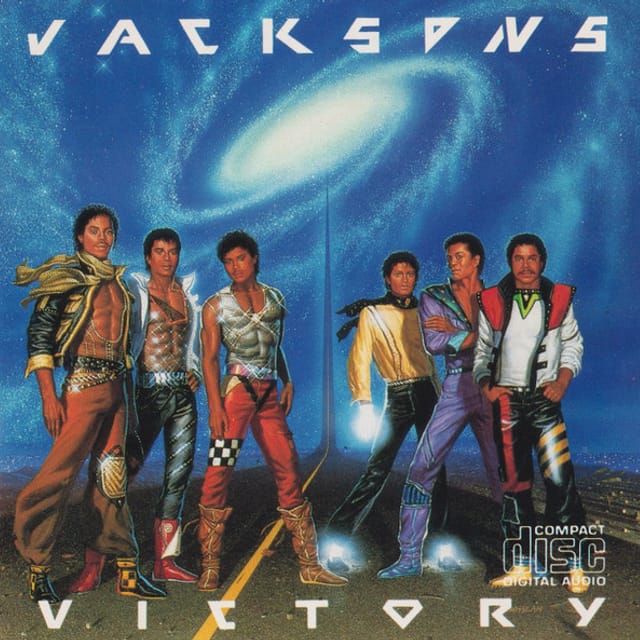

In 1984, Michael Jackson was the undisputed King of Pop, riding the unprecedented wave of Thriller's success. For his brothers, this created an impossible paradox: how do you reunite with someone who had transcended not just your group, but popular music itself? Victory, The Jacksons' final studio album, captured this tension brilliantly—a document of family obligation, creative friction, and the complex dynamics of fame that would define the end of an era.
“In retrospect, Victory is a competent album of slick contemporary R&B, occasionally goosed toward greatness by the appearance of one of pop music's most identifiable voices.”
From Thriller's Shadow to Family Reunion
By 1984, the Jackson family dynamics had shifted dramatically. Michael's solo career had exploded with Off the Wall and reached stratospheric heights with Thriller, which spent 37 weeks at number one and became the best-selling album of all time. Meanwhile, The Jacksons had continued as a quartet, releasing Triumph in 1980 and maintaining their reputation as a formidable live act, but they were operating in Michael's shadow.
The reunion wasn't entirely organic. CBS Records was eager to capitalize on Michael's success, while the Jackson brothers saw an opportunity to reclaim some of the spotlight that had shifted entirely to their youngest member. Pressure came from multiple directions at once—the label, management, and the pull of the family business itself.
What emerged was a compromise that satisfied no one completely but created something unexpectedly compelling. Victory would be credited to "The Jacksons," but Michael's involvement would be limited—he contributed to only four of the nine tracks, and his creative control was absolute on those songs. This fractured approach would define both the album's strengths and its ultimate limitations.
Studio Tensions: The Creative Process Unraveled
Recording sessions took place at Hayvenhurst, the family compound in Encino, but the familial setting couldn't mask the underlying tensions. Producer Quincy Jones, fresh from his Thriller triumph, was notably absent—a decision that spoke volumes about the project's priorities and Michael's level of investment. The magic that had characterized the Jackson 5's early recordings was replaced by a more businesslike approach.
Instead, the album featured multiple producers across different tracks. David Paich and Steve Porcaro from Toto handled production duties on several tracks, bringing the slick, radio-ready sound that had made Toto IV a massive success. Michael took personal control of "State of Shock" and "Be Not Always," while his brothers worked with various producers on their contributions.
Bruce Swedien, fresh off Thriller, engineered two of Michael's four tracks, but his presence didn't translate into the kind of unified vision that had defined the previous record. The result was an album that showcased individual talents rather than group chemistry—a collection of songs that happened to feature the same family name rather than a cohesive artistic statement.
Musical Architecture: The Toto Connection and 1980s Production
Victory's greatest achievement was its stylistic cohesion despite the fractured creative process. The album managed to bridge Michael's increasingly pop-oriented sensibility with his brothers' R&B foundations, creating a sound that felt both contemporary and rooted in the group's history. The key was the involvement of Toto's Steve Porcaro and David Paich, who had just dominated the charts with "Africa" and "Rosanna."
The Toto connection proved crucial in creating Victory's sonic identity. Their work on tracks like "Torture" demonstrated how to apply state-of-the-art studio techniques to R&B structures without losing the genre's essential groove. The production embraced the digital synthesizer technology that was defining mid-1980s pop music, with drum machines and programmed sequences creating a sleek, radio-ready sound.
Yet moments of organic instrumentation—particularly the horn arrangements and guitar work—provided warmth and texture that prevented the album from sounding too mechanical. The result was a sound that competed effectively with the era's biggest hits while maintaining enough Jackson family DNA to feel authentic to longtime fans.
“Torture” became the album's biggest hit, showcasing the family's ability to compete in the MTV era.
Four Michael Tracks: Quality Over Quantity
Michael's contributions, while limited in quantity, provided the album's commercial backbone. "State of Shock," originally intended as a duet with Freddie Mercury before Mick Jagger joined for the final version, retained its anthemic quality and proved The Jacksons could compete in the MTV era. The track's driving rock rhythm and Michael's commanding vocals demonstrated his ability to adapt the family sound to contemporary expectations.
"Torture," the album's biggest hit, paired Michael with Jermaine in a vocal dance that mirrored their complex relationship. The song's dark, synthesizer-driven production created an atmospheric tension that perfectly captured the album's underlying emotional currents. Meanwhile, "Be Not Always" showcased Michael's more experimental tendencies, featuring a complex arrangement that looked forward to his later solo work.
The fourth Michael track, his contributions to group vocals and arrangements, demonstrated his evolving role as the family's unofficial musical director. Even when he wasn't the lead vocalist, his influence was evident in the songs' sophisticated harmonies and production choices, proving that his artistic growth benefited the entire group.
Commercial Success Meets Critical Divide
Victory achieved significant commercial success, reaching #4 on the Billboard 200 and earning double-platinum certification. The album spawned four singles: "State of Shock" peaked at #3, "Torture" reached #17, and "Body" and "Wait" found more modest chart success. For many observers, this represented a triumph—The Jacksons had successfully adapted to the changing musical landscape without completely abandoning their identity.
Critics were more divided than fans. Reviewers generally praised the album's production values while flagging the uneven songwriting across nine tracks split among six writers with wildly different sensibilities—the inevitable result of a "reunion" that was, musically, closer to a compilation.
The album's success was inseparable from the massive Victory Tour that followed, which became one of the most successful tours of the 1980s despite numerous controversies and Michael's apparent reluctance to participate. The tour's success validated the album's commercial appeal while highlighting the tensions that would ultimately end The Jacksons as a recording unit.
The Victory Tour brought the album's songs to massive stadium audiences worldwide.
Essential Tracks
“Torture”
Opens the album with what became its biggest hit, pairing Michael with Jermaine in a vocal arrangement that mirrors their complex family dynamics. Built around Steve Porcaro's atmospheric synthesizer programming and a hypnotic drum machine pattern, the track creates a dark, nocturnal mood that was unusual for The Jacksons but perfectly suited to mid-1980s radio. The song's sophisticated production incorporates elements of new wave and electronic dance music while maintaining the group's R&B foundation.
The vocal interplay between Michael and Jermaine reveals the family's musical chemistry at its most complex—simultaneously competitive and collaborative. Michael's lead vocal showcases his evolving artistic maturity, while Jermaine's responses demonstrate his own growth as a songwriter and performer. The bridge features a stunning saxophone solo by session player that evokes Clarence Clemons' work with Bruce Springsteen, adding emotional depth to the electronic soundscape.
Peaking at #17 on the Billboard Hot 100, "Torture" proved The Jacksons could compete with the era's biggest acts while maintaining their distinctive identity. The accompanying music video, featuring elaborate stage effects and choreography, became an MTV staple and helped establish the group's visual presence in the video era—one of the clearest examples on the record of contemporary production values fused with the family's harmony-first vocal tradition.
“State of Shock”
Originally conceived as a duet between Michael Jackson and Freddie Mercury, "State of Shock" evolved into a showcase for the group's rock ambitions when Mick Jagger joined the project instead. The track features driving guitar riffs and aggressive vocals that demonstrated The Jacksons' willingness to experiment with harder-edged sounds. Michael's production work on the track reveals his growing sophistication as an arranger and his ability to adapt his style to different musical contexts.
The song's structure borrows from arena rock while maintaining R&B fundamentals, creating a hybrid that appealed to both pop and rock audiences. Jagger's guest appearance adds credibility and grit, while the Jackson brothers' harmonies provide melodic sophistication that elevates the track above typical rock fare. The rhythm section, anchored by a thunderous drum sound and prominent bass line, creates a foundation that supports both rock aggression and dance floor functionality.
Reaching #3 on the Billboard Hot 100—the last U.S. top-ten single The Jacksons would ever have—"State of Shock" became one of the group's most successful rock-oriented songs and proved their versatility beyond traditional R&B boundaries. Michael's hand in the production—balancing Jagger's swagger against the group's R&B foundation—previewed the rock-R&B hybrids he'd lean on again for Bad's harder-edged tracks a few years later.
“Be Not Always”
Stands as the album's most complex and experimental composition, featuring Michael Jackson in full creative control and showcasing his evolving artistic vision. The track's intricate arrangement incorporates elements of classical music, jazz fusion, and electronic experimentation, creating a sonic landscape that looks forward to his later solo work while honoring The Jacksons' legacy. The song's anti-war message, delivered through poetic lyrics and sophisticated musical metaphors, demonstrates Michael's growing social consciousness.
The production features layered synthesizers, programmed percussion, and live strings arranged by Michael himself, creating a dense but never cluttered sonic texture. His lead vocal performance is particularly nuanced, moving seamlessly between intimate verses and soaring chorus sections that showcase his expanding range and emotional depth. The bridge section features a stunning guitar solo that complements rather than competes with the song's complex harmonic structure.
While not released as a single, "Be Not Always" became a favorite among fans looking past the album's hit singles for evidence of where Michael's writing was headed next. The track's layered, socially conscious approach anticipates the more ambitious arrangements he'd bring to his own solo work later in the decade.
The End of an Era
Looking back four decades later, Victory stands as a fascinating document of a family and a musical era in transition. While it lacks the innocent joy of the Jackson 5's early hits or the cohesive artistic vision of The Jacksons' best work, it captures something equally valuable: the bittersweet reality of growing up in the spotlight and the complex dynamics that define both families and creative partnerships.
The album's commercial success proved that audiences were willing to follow The Jacksons into new musical territory, even as the group's internal dynamics made future collaboration unlikely. Michael's limited but crucial contributions demonstrated his continued commitment to his family while highlighting how much his artistic vision had evolved beyond the group context.
The tour that carried the album's name told the same story at far greater cost — a $75 million record-breaker that never performed a single Victory song, ended with a surprise announcement at Dodger Stadium, and ruined the promoter who financed it. We tell it in full here: The $120 Money Order: How the Victory Tour Ended the Jacksons →
Victory ultimately succeeds not as a unified artistic statement but as a snapshot of a moment when one of popular music's most important families attempted to reconcile individual ambitions with collective legacy. The tensions that made the album difficult to create also made it compelling to experience, proving that even fractured family dynamics can produce memorable music when filtered through exceptional talent and professional production.
“All in all, Victory isn't a bad album, it's just not the album we hoped for.”