
Late in the sessions at Jacobs Studios in Farnham, Johnny Marr was trying out a brand-new wah-wah pedal. He dug out a riff he had written as a teenager at his parents' house. Mike Joyce found a beat, Andy Rourke found a bass line, and the three of them played it for about 20 minutes.
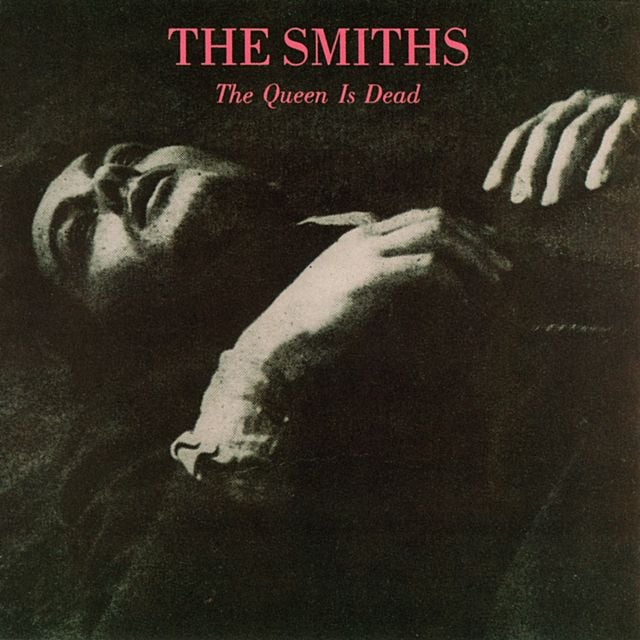
That jam became “The Queen Is Dead,” the title track and opening song of the Smiths' third album. It was released on June 16, 1986, after a legal fight with their own record label had held it up for six months.
The band had no manager. Marr was making himself ill with stress, and Rourke was briefly thrown out of the group over his heroin habit. Even so, the record reached No. 2 in Britain.
In 2013 the NME named it the greatest album of all time.
“It may not be, as the NME crowned it in 2013, the greatest album of all time, but it is a tour de force, far more dynamic and multifaceted than the sad-boy caricature to which the group has been reduced in the public imagination.”
No Manager and a Hostile Label
By 1985 the Smiths were the leading band of British independent music. Their 1984 debut and a run of singles, including “This Charming Man” and “How Soon Is Now?,” had built a passionate following. Their second album, Meat Is Murder, went to No. 1 in Britain, knocking Bruce Springsteen off the top.
Behind the success, things were coming apart. The band had no manager, so they relied on Marr for direction and energy, and he kept falling ill from stress and exhaustion. Morrissey was openly at odds with Rough Trade, the independent label that had signed them. Major labels, EMI among them, were circling.
The country around them was in a sour mood. Margaret Thatcher's Conservative government was well into its second term, privatization was in full swing, and the miners' strike of 1984–85 was fresh in people's minds. Live Aid had pulled rock toward the middle of the road, and Morrissey, a sharp critic of the era's self-important stars, struggled to fit in that world.
Engineer Stephen Street, who had worked with them since “Heaven Knows I'm Miserable Now,” remembered the business side as “a bit of a fiasco, with Rough Trade and EMI trying to sign up everything.” Inside the studio, he said, it didn't matter. “This didn't get in the way of recording because the atmosphere in the studio was very, very constructive.”
Street had come up through Island Records' basement studio, the Fallout Shelter. When the studio manager asked him in late 1983 whether he wanted to engineer a Smiths session, he had just seen them on Top of the Pops. “I nearly jumped out of my chair,” he said. By The Queen Is Dead he was effectively co-producing, his first real step into production.
The dispute ended up delaying the finished album by six months. It would be the band's last album for Rough Trade. Their next and final studio album, Strangeways, Here We Come, came out on EMI.
Soundchecks, RAK, and a Georgian Mansion
Marr wrote much of the music during soundchecks on tour in early 1985, using Rourke and Joyce to hammer the songs into shape. The album was a patchwork of those soundcheck ideas, older demos, and songs from long writing sessions with Morrissey in Manchester. As usual, Morrissey added his words and vocals once the backing tracks were done.
The recording was spread around. The basic track for “The Boy With the Thorn in His Side” was cut at a small eight-track studio in Manchester. “Bigmouth Strikes Again” and “Some Girls Are Bigger Than Others” were recorded at RAK in north-west London. The bulk of the album, and all the mixing, was done at Jacobs Studios, a residential studio in a Georgian mansion in Farnham, Surrey, in the winter of 1985.
Jacobs was handsome but awkward to record in. The live room was a former drawing room with a bay window big enough for a grand piano, and the converted stables had cobbled floors and oak beams. “The stables looked quite cool, but to be honest, the acoustics in there weren't all that brilliant,” Street said. The drums went in the brighter live room, which was a little too live, so some songs had to be built up piece by piece. Marr's guitar went through a Fender Twin or a Marshall stack, recorded with what Street called “the usual combination of cheap mic, good mic.”
Morrissey and Marr produced, with Street engineering and acting as a sounding board. “Morrissey, Johnny and I had a really good working relationship — we were all roughly the same age and into the same kind of things,” Street told Sound on Sound. Marr spent most of the time in the control room with him. Morrissey came and went.
When Morrissey did sing, he needed little time. He recorded in the live room, screened off so that no one could see him. “The guy could perform,” Street said. “He'd get himself vibed up and just go out there and do his takes.” Two or three takes were usually all it took from him.
Morrissey liked to experiment with his voice, and Street encouraged him. Street thought that willingness to treat the vocal as an instrument helped win Morrissey over. But the singer's patience for long studio days was limited. “His tolerance of being there non-stop is pretty limited,” Street said. “That's why Johnny was in the actual control room with me most of the time.”
'The Boy With the Thorn in His Side' was released as a single between Meat Is Murder and The Queen Is Dead, bridging the two albums.
A Drum Loop and a Wah-Wah Pedal
“The Queen Is Dead” was one of the last songs put on tape. Marr knew what he wanted. “I had an idea to do a song that had the aggression of the Detroit garage bands, ‘cos I'm such a Stooges fan,” he said in 1986. “And it's influenced by the Velvets too — it's The Smiths does The Stooges does The Velvet Underground.”
Street heard it for the first time the day they recorded it. He suggested sampling Joyce's tom-tom pattern so that it would stay “really, really strong and the same speed all the way through.” Jacobs was trying out a little sampler called the Window, with about a second and a half of sampling time. Joyce played the pattern, Street looped it, and the loop ran through the whole track. Joyce then recorded the bass drum and snare separately, with more room sound.
Me, Mike and Johnny were jamming on this heavy riff – we played it solidly for about 20 minutes, looking at each other thinking, ‘We've really got something here.’
Rourke laid down what Street called “a real killer bass line that pushed the track along.” Marr told Rourke it was one of the best bass lines he had ever heard. Then Marr added the howling feedback that weaves through the song, changing its pitch with the new wah pedal. “It was a really, really cool sound, and one of those happy accidents that can happen when you're in the studio,” Street said. They recorded about four minutes more of it than made the record.
The opening was Morrissey's idea: a snatch of the old song “Take Me Back to Dear Old Blighty,” sampled from the 1962 film The L-Shaped Room. “That's typical Morrissey — ‘Can we put this on?’” Street said. “In those days, it really was a case of just getting out the record deck and trying something until it felt right.”
Essential Tracks
“The Queen Is Dead”
The title track is the Smiths at their loudest: an attack on the monarchy, the state of the country, and the singer's own situation, all over Joyce's looped toms and Rourke's driving bass. Marr's wah-wah guitar owes something to the MC5's Wayne Kramer as much as to the Stooges. The toms drop out now and again, but that was Street cutting them on the desk during the mix to give the loop some sense of dynamics.
Morrissey later said he had not meant it as a crude attack on the Queen “in a sort of beer monster way.” He was writing about a loss of happiness “replaced by something that is wholly grey and wholly saddening,” and about a monarchy “being reinforced and made to seem more useful than it really is.”
Street credited two things with making the track: Morrissey's vocal and Marr's feedback. He cut and edited the long jam on tape with a razor blade, moving a drop-down section forward so that “something new was happening every few bars.”
“Frankly, Mr. Shankly”
The second track is a jaunty, music-hall-style resignation letter. It is widely heard as a joke at the expense of Rough Trade's boss, Geoff Travis, at a time when the band were fighting the label in court. Morrissey's narrator wants out of his job and into fame, whatever it costs. Christgau enjoyed the way Morrissey was “kissing off a day-job boss,” one of the moments that made him warm to a band he had previously disliked.
It nearly didn't make it. Jacobs recorded to a Mitsubishi 32-track digital machine, which occasionally produced clicks on playback. After the band recorded “Frankly, Mr. Shankly,” a massive dropout appeared halfway through the song. “What a nightmare,” Street said. They had to re-record the whole song from scratch.
The song still wasn't finished when the album sessions ended, and the band's earlier producer, John Porter, was brought in to record and mix Morrissey's vocal. Nobody would take responsibility. The tape-machine makers blamed the tape, and the tape makers blamed a power surge. “I've never used that machine ever since,” Street said.
“Bigmouth Strikes Again”
Recorded at RAK, “Bigmouth Strikes Again” was the lead single, a brash, Stones-like rock song about saying the wrong thing and being punished for it. Its mock-heroic lyric compares the singer's suffering to Joan of Arc's. Clash said its “brash Stones-esque rock and sharp guitar lines still sound vital today.”
The high, strange backing vocals are credited to “Ann Coates,” who did not exist. She was Morrissey run through a pitch-shifter. “I was experimenting one day, trying the AMS harmoniser with different pitch changes, and it kind of worked and he kind of liked it,” Street said. The same pitch-shifted effect appears on the title track too.
Morrissey's literary game extended to the vinyl itself. The run-out groove of the single carried a line attributed to Oscar Wilde: “Talent borrows, genius steals.” It was a reply to critics who accused him of lifting from his heroes, a theme he took on directly in “Cemetry Gates.”
'There Is a Light That Never Goes Out': one of the album's 'flawless, timeless pop songs,' as Clash put it.
Cemetery Gates and a Vicar in a Tutu
The album runs just 37 minutes, but it covers a remarkable range of mood. “I Know It's Over” is one of Morrissey's finest vocal performances, bare and slow-building, and Jeff Buckley later covered it live. “Never Had No One Ever” is just as bleak, while “Cemetry Gates,” name-checking Keats, Yeats, and Wilde, is close to the happiest-sounding thing they ever recorded.
“Vicar in a Tutu” is a barmy comic sketch with a quietly subversive take on gender. “There Is a Light That Never Goes Out” and “The Boy With the Thorn in His Side” are near-perfect pop songs. The closer, “Some Girls Are Bigger Than Others,” is among Marr's finest pieces of music, even if Morrissey's cheeky, Carry On-style lyric ends the record on an odd note.
The Boston Globe called Morrissey the Pope of Mope and described “I Know It's Over” and “Never Had No One Ever” as “his papal decrees,” but insisted the album holds “humor, anger, and pure, unbridled joy” too. The rhythm section deserves more credit than it usually gets. Rourke's melodic bass lines move under Marr's chiming arpeggios, and Joyce's quick fills give the louder songs a punk kick. The Boston Globe called them “the band's eternally underrated rhythm section,” and the album shows why.
Marr also stretched the band's sound with harmonium and guitar-synth arrangements. Not every idea worked out: an attempt to get Linda McCartney to play piano on the record came to nothing.
Number Two in Britain, a Cult in America
The Queen Is Dead came out on Rough Trade in Britain and Sire in America. It reached No. 2 in the UK and widened the band's cult following in the United States. That August, they opened an American tour at Great Woods, a large outdoor venue in Massachusetts, a sign of how far word of mouth had carried them.
The Boston Globe later described the crowd's screams when the band struck up “How Soon Is Now?” that night as “positively Beatles-esque in fervor.” For a British independent band, it was a remarkable welcome.
American critics were won over, if sometimes reluctantly. Robert Christgau admitted he had disliked their other albums, but gave this one a B-plus. “Here Morrissey wears his wit on his sleeve,” he wrote, “dishing the queen like Johnny Rotten never did.” Once Morrissey's wit had drawn him in, Christgau found he had time “to notice the tunes, the guitars, the backup munchkins,” presumably meaning the pitch-shifted voice of Ann Coates.
Spin's 1986 review was more cautious about Morrissey but not about Marr. “Johnny Marr's musical contribution is beautifully documented,” it said, praising arrangements that were “thematic,” “subtly shaded,” and “often exciting.” It called the record “a successful outing.”
The same review saw the album as a tribute to a peculiarly British kind of partnership. “There's something inspiring about these U.K. teams — Lennon and McCartney, Lennox and Stewart, Jagger and Richards, Godley and Creme — these bonded mates who seem to weather thick and thin for the sake of the song,” it said. A year later, Morrissey and Marr's partnership was over.
British Indie's Sacred Text
The Smiths lasted only another year. The Queen Is Dead became their defining album, widely cited by critics as their best, though the band members themselves have not always agreed. When the NME ranked the greatest albums ever made in 2013, it put this one first.
A decade after its release, it was a key influence on the Britpop bands. Street himself went on to produce Blur and the Cranberries, but he still counts these sessions among his proudest work. “I just feel chuffed to have been given the chance to work with them,” he said. “It was a case of being in the right place at the right time, and I'm just grateful that we were able to go on and make that record together.” Clash magazine summed up its appeal simply: it is an album with “drama, wit and pain throughout its thirty-seven minutes.”
The album's reputation even reached Downing Street: the Conservative prime minister David Cameron named it as his favorite album, to the public dismay of both Morrissey and Marr. For a record that opens by mocking the monarchy and the state of the nation, it was an unlikely fan, and a sign of how completely it had entered the British mainstream.
The Boston Globe, reviewing the 2017 reissue, put the record's reach best. What is most extraordinary about it, the paper wrote, is “how it translates the very specific interests of its creators into the universal adolescent grammar of longing, self-discovery, and the blessed reverie of losing oneself in music.”
Forty years on, the strains behind it are largely forgotten: the lawsuit, the missing manager, the bassist briefly out of the band. What remains is the sound of four people in a cold Surrey mansion, playing a riff for 20 minutes because they knew they had something.
“‘The Queen Is Dead’ is an album to lose yourself in; it has depth, focus and some great tunes.”