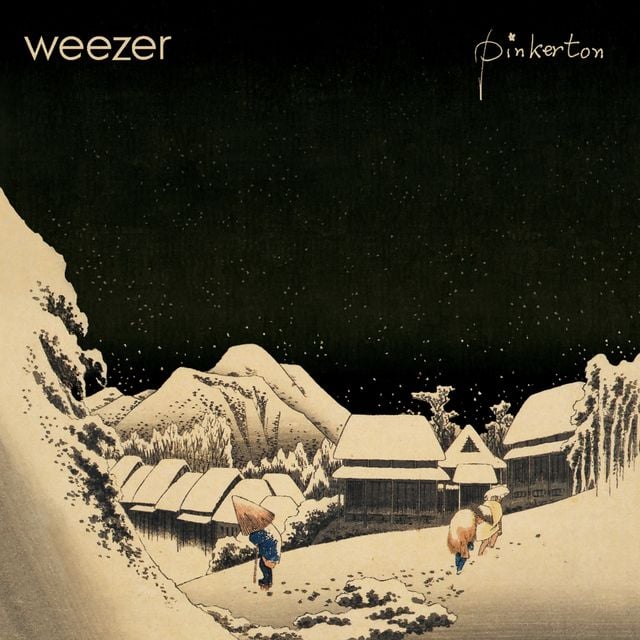

In the spring of 1996, Rivers Cuomo was a platinum-selling rock star sleeping in a Harvard dormitory, recovering from leg-lengthening surgery, and writing songs so nakedly personal that he would spend the next five years wishing he hadn't released them. Pinkerton was supposed to be a space-themed rock opera about the terror of fame. Instead it became a diary of groupie shame, unrequited crushes, and a pen-pal romance with a fan on the other side of the world — and when it came out that September, critics and longtime fans alike treated it as proof that Weezer had lost the plot. Rolling Stone's readers would vote it the third-worst album of the year. Thirty years later, it's the record most often credited with inventing an entire genre's emotional vocabulary.
“In this etiquette manual for today's sensitive young man, being in love means always having to say you're sorry.”
The Rock Opera Weezer Abandoned
Weezer's 1994 self-titled debut — produced with radio-ready gloss by Ric Ocasek and built around “Buddy Holly” and “Undone (The Sweater Song)” — had made the band unlikely MTV stars. The follow-up Rivers Cuomo actually started writing wasn't Pinkerton at all. It was Songs from the Black Hole, a space-themed concept album in which the four band members would play an intergalactic crew, with Cuomo's own character standing in for his mixed feelings about the fame the first record had brought him. The band demoed and rehearsed it through 1995, and several of its songs — reworked or salvaged as B-sides — would eventually surface in other forms.
The concept collapsed for reasons that had little to do with songwriting and everything to do with Cuomo's life falling apart in real time. In March 1995 he underwent an elective, intensely painful surgery to lengthen his left leg by breaking and stretching the bone, a procedure that left him on crutches and painkillers for months. That fall, still recovering, he enrolled at Harvard to study classical composition — a decision that read at the time as a rock star quietly stepping away from rock stardom. Guitarist Brian Bell remembered the physical toll clearly: “Rivers was on painkillers. … He had this painful contraption on his leg.”
Somewhere in that recovery, the space opera stopped making sense to him and a different reference point took over: Puccini's Madame Butterfly, the opera about an American naval officer, B.F. Pinkerton, who seduces and abandons a young Japanese woman. Cuomo recognized his own recent behavior toward women — groupies, girlfriends, a pen pal he'd never met — in Pinkerton's casual cruelty, and the album that emerged took the character's name as its title and his guilt as its organizing idea, loosely rather than literally, across ten songs written in the first person.
The opera connection extended to the cover. Rather than commission new artwork, the band chose Kambara Yoru no Yuki (“Night Snow at Kambara”), the sixteenth print in Hiroshige's Fifty-Three Stations of the Tōkaidō series — a nineteenth-century Japanese woodblock landscape of two travelers trudging through snow past a sleeping village, one of the most reproduced images in ukiyo-e after Hokusai's Great Wave. Paired with a title lifted from an Italian opera about doomed cross-cultural romance, the cover made the album's conceptual scaffolding visible before a single song had played, even if most listeners in 1996 had no reason to clock the reference.
Sessions Across Three Studios, on Painkillers
Weezer produced Pinkerton themselves, a deliberate break from the outside-producer polish of the debut. Recording stretched across three separate windows — September 1995, January 1996, and June 1996 — and five different rooms: Sound City in Van Nuys, Fort Apache in Boston, Hollywood Sound Recorders, Rumbo Recorders in Canoga Park, and Electric Lady in New York, with engineers including Jack Joseph Puig, Dave Fridmann, Joe Barresi, and Adam Kasper passing through different sessions. The band tracked “The Good Life,” “Across the Sea,” and “Falling for You” during one of Cuomo's spring breaks from Harvard, squeezing studio time between semesters before flying back for finals.
The self-production shows in exactly the way the band wanted it to. Where the debut had been sanded smooth, Pinkerton keeps the guitars raw and distorted, buries hooks under noise instead of polishing them forward, and mixes Cuomo's vocal so close and unguarded that studio chatter and vocal cracks survive into the final takes. It sounds, as later critics would note, like a live band playing songs that were never meant to be performed live — intensely personal lyrics wrapped in the loudest, least composed arrangements the band ever committed to tape.
Assembling a finished album from three disconnected recording windows, spread across the better part of a year and five different rooms, left its own mark on the sequencing: songs written for the abandoned space opera sit next to material Cuomo was still finishing between Harvard exams, and the record never quite smooths over the seams between them. The mix was finished at Ocean Way Recording in Hollywood and mastered at Sterling Sound in New York — conventional, high-end rooms for a record whose entire appeal rested on sounding like it hadn't been handled that carefully.
That contrast — confessional writing inside a deliberately messier record — became the album's defining tension. Cuomo has since described the whole undertaking in blunt, almost self-punishing terms: “It's like getting really drunk at a party and spilling your guts in front of everyone and feeling incredibly great and cathartic about it, and then waking up the next morning and realizing what a complete fool you made of yourself.” He meant it as regret. It also happens to be as accurate a description of the record's appeal as any critic has managed since.
The album's first single, built partly from lines Cuomo borrowed from a classmate's essay in his Harvard writing seminar.
Essential Tracks
“Tired of Sex”
Cuomo wrote the album's opening track even before the Blue Album came out, describing meaningless encounters with groupies over a barebones kick-snare pattern and a synth line that cuts through the mix like a warning siren. It sets the album's tone before a single other song has played: this is not going to be a record about the fun part of being in a famous band.
The performance matches the discomfort of the lyric. Cuomo sings the verses barely above a whisper — “I'm spread so thin, I don't know who I am” — before the post-chorus erupts into a screamed “Help!”, a dynamic swing that previews the loud-quiet swings running through the rest of the record.
As a scene-setter, it did exactly what Cuomo wanted and more than most listeners in 1996 were ready for: an album opener that read less like a rock song than a confession nobody had asked to hear, front-loading the record with the discomfort that would define its reception for years afterward.
“El Scorcho”
Released as the album's first single, “El Scorcho” turns a crush on a girl in an Attention Deficit Disorder support group into one of the catchiest choruses Cuomo ever wrote. In a 2006 interview with The Harvard Crimson, he revealed that two of the song's lines were lifted directly from an essay a classmate wrote for his expository writing class — a detail that fits an album built almost entirely from real, uncomfortably specific material.
Musically, it's the closest Pinkerton comes to the power-pop hooks of the debut, which is exactly why it became the lead single — and exactly why its commercial failure (it barely dented the charts) was read at the time as a verdict on the whole album rather than as one data point in a rollout that never found its footing.
Decades on, it's the song most cited by later emo and pop-punk songwriters as proof that specific, embarrassing detail could be a chorus hook rather than something to edit out, a lesson plenty of bands would spend the next decade putting into practice.
“Across the Sea”
The album's most-discussed deep cut began as an actual letter from a Japanese fan asking Cuomo questions about his life. “When I got the letter, I fell in love with her,” he said afterward. “I was very lonely at the time, but at the same time I was very depressed that I would never meet her.” He lifted lines directly from her letter into the lyric, turning fan mail into a love song about a person he'd never met and, by his own account, never expected to.
The arrangement matches the confession's discomfort with itself — a quiet verse that keeps threatening to break into noise, and does, repeatedly, building to a swelling coda before settling nowhere near resolution.
It's the track that best explains why Pinkerton unnerved so many listeners in 1996 and why so many came back to it later: nothing on it is invented, none of it is flattering to the person singing, and the song never once asks to be forgiven for either fact.
The album's second single, tracked at Sound City during one of Cuomo's spring breaks from Harvard.
A Flop, By Every Chart and Critic's Measure
Pinkerton arrived September 24, 1996, on DGC Records and debuted at a modest No. 19 on the Billboard 200 — a sharp comedown from the multi-platinum run of the debut, which had spent nearly two years climbing the charts on the strength of “Buddy Holly” and “Undone (The Sweater Song)” before it was through. Rolling Stone's Rob O'Connor reviewed it as juvenile and insincere, and the magazine's own year-end readers' poll went further, naming it the third-worst album of 1996; a separate critics' poll that year ranked it second-worst, sandwiched between Bush's Razorblade Suitcase and DJ Spooky's Songs of a Dead Dreamer.
Part of what the reviews were reacting to was simply unfamiliarity. Mid-'90s alternative rock had plenty of angst, but most of it arrived filtered through irony, metaphor, or Cobain-style oblique imagery; Pinkerton named names, described specific bodies and specific letters, and did it inside choruses built to be sung along to at full volume. Critics used to reading confession as a genre marker for singer-songwriters didn't have a ready framework for hearing it inside what still sounded, structurally, like a pop-metal record.
Cuomo took the reception harder than the band's label rollout suggested he would. “Everybody hated it,” he said in 2001. “Critics, the majority of our fans, most of my friends and family, the other band members … Everyone thought it was an embarrassment.” He went further in the same interview, calling the finished album “a hideous record” and “such a hugely painful mistake that happened in front of hundreds of thousands of people.” For years afterward, Weezer's own live shows avoided Pinkerton material almost entirely, treating an entire album as something closer to public embarrassment than back catalog.
Gold certification didn't arrive until 2001, five years after release; platinum status took until 2016, twenty years on. Bassist Matt Sharp, who left the band in April 1998, has stayed characteristically guarded about how the album's reception affected the band internally: “I don't really know how to speak on this because I don't know what should be kept private and what should be shared.”
The Slowest Vindication in Rock
The reassessment of Pinkerton happened gradually, through fans rather than critics at first, as a generation of teenagers discovered the album on file-sharing networks and message boards in the early 2000s and heard something the original reviewers hadn't: a rock star writing about loneliness and sexual frustration without any of the usual cool distance. AllMusic's Stephen Thomas Erlewine later argued that this was precisely what the initial wave of critics had missed, writing that “many critics and much of the band's casual fans didn't notice Cuomo's significant growth as a songwriter” because the record's surface — still built from the same power-pop-meets-heavy-metal vocabulary as the debut — disguised how much further the writing had gone underneath it.
Cuomo's own position moved just as far, just more slowly. The man who called the album “hideous” in 2001 was, by a 2008 conversation with Pitchfork, describing it as “super-deep, brave, and authentic” — nearly the opposite verdict on the same record, seven years apart. PopMatters' twenty-fifth-anniversary retrospective traced the same arc from the band's side: Matt Sharp's eventual departure, it argued, effectively “excised the Pinkerton influence” from Weezer's later, more polished records, leaving this one album as the sole document of a version of the band that never fully returned.
Super-deep, brave, and authentic.
By 2002, Rolling Stone's own readers had reversed themselves entirely, voting Pinkerton the sixteenth-best album of all time in a poll conducted just six years after the magazine's critics had named it one of the worst releases of its year — one of the fastest and most complete critical reversals in the magazine's history, and proof that the original verdict had measured the record against the wrong expectations rather than against what it was actually trying to do.
The 2010 deluxe reissue closed the loop the original sessions had opened: alongside a remaster, it collected demos and outtakes from Songs from the Black Hole, the space opera Pinkerton had grown out of, letting listeners hear for the first time how directly some of the album's bleakest material had started life as science fiction before Cuomo's own year turned it into autobiography.
Emo's Unlikely Blueprint
Pinkerton's influence on the emo and pop-punk that followed is now treated as settled fact rather than critical opinion. The album's wall of distortion and Cuomo's strained, cracking vocal delivery gave an entire generation of bands a template for turning private embarrassment into a shared vocabulary of scream-sung choruses. By the early 2000s, acts including Jimmy Eat World, Saves the Day, Dashboard Confessional, and Motion City Soundtrack were citing it directly as a foundational influence, and its DNA is audible in everything from basement-show emo to arena-scale pop-punk that came a decade later.
What makes the influence unusual is that it flows from a record its own creator spent years disowning. Most foundational albums are recognized as such close to release; Pinkerton spent its first several years as a cautionary tale about creative overexposure before becoming, for an entire subsequent generation of songwriters, the proof that overexposure was the point. Weezer itself never fully returned to this version of the band — the records that followed traded the rawness back in for the polish of the debut — which only sharpened Pinkerton's status as a one-off: a document of exactly how far Cuomo was willing to go, exactly once.
Some of that rawness traces back to Sound City itself. The Van Nuys room where Weezer tracked part of Pinkerton in 1995 and 1996 was the same studio, and the same aging Neve board, where Nirvana had cut Nevermind just a few years earlier — two records that arrived sounding almost nothing alike, made in the same building by bands chasing the opposite of what had just made them famous.
Thirty years after a September release that its own songwriter wished he could take back, Pinkerton stands as one of the rare albums whose initial failure and eventual canonization are both, in retrospect, completely understandable — a record too raw for 1996's rock radio, and exactly raw enough for everyone who found it afterward.
“In retrospect, many critics and much of the band's casual fans didn't notice Cuomo's significant growth as a songwriter.”