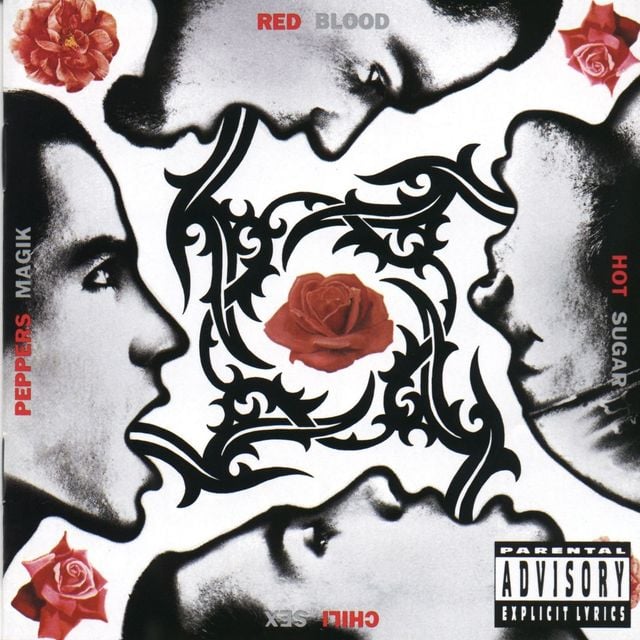

In 1991, three of the four Red Hot Chili Peppers moved into a ramshackle 1920s mansion in the Hollywood Hills that hadn't been lived in for years. They built a makeshift studio inside it and lived there while they made the album.
Until then the band was best known for novelty funk-punk and a sock worn in an unlikely place. On Blood Sugar Sex Magik they found something closer to songwriting. The same sessions produced “Give It Away,” a stomping mantra about generosity built on a single Flea bassline. They also produced “Under the Bridge,” a confession of heroin-addicted loneliness that Anthony Kiedis never meant anyone to hear.
The album came out on September 24, 1991, the same day as Nirvana's Nevermind. It went on to sell more than 14 million copies. A band critics had mostly filed under jokes became one of the defining rock acts of the decade.
“The Red Hot Chili Peppers' best album, Blood Sugar Sex Magik benefits immensely from Rick Rubin's production — John Frusciante's guitar is less overpoweringly noisy, leaving room for differing textures and clearer lines, while the band overall is more focused and less indulgent.”
A Def Jam Producer for a Funk-Punk Band
By 1990, Red Hot Chili Peppers had built a cult following on the strength of slap-bass funk, shock-rock stage antics, and 1989's Mother's Milk, a breakthrough that still leaned hard on novelty and noise. For the follow-up, the band turned to Rick Rubin, the Def Jam co-founder whose recent work with Slayer and Danzig made him an odd fit on paper for a band built around bass slaps and stage-diving. Kiedis admitted his own skepticism to BAM magazine in 1991: “Wow, Rick Rubin, I don't know. He's into all of those negative bands like Slayer and Danzig. The Red Hot Chili Peppers have always been totally into positive energy. It'll never work.” The pairing worked well enough that Rubin would go on to produce the band's next five albums.
What Rubin offered wasn't a new sound so much as room to find one. Flea later described the result in terms that stood in sharp contrast to the band's earlier, more chaotic records: “With that album, we really grew into being the band that we always wanted to be,” he told Guitar World. Guitarist John Frusciante, only twenty years old and two years into the band, pushed the material away from the metal-adjacent riffing of Mother's Milk and toward a more textured, dynamically varied version of funk-rock — a shift AllMusic's Steve Huey would later credit, along with Rubin's production, for making it the band's best album.
Rubin's biggest structural contribution was a refusal to trim. The band recorded between twenty-five and twenty-seven songs during the sessions, and Rubin pushed to release the whole batch as a double CD. Warner Bros. balked at the higher retail price a double album would carry, and the band compromised on a single, seventy-four-minute, seventeen-track disc — still unusually long for a rock record aimed at radio, and a decision that let nearly every mood the band could produce fit onto one album.
Seven Weeks Inside The Mansion
Rather than book a conventional studio, the band recorded in a house in the Hollywood Hills that came to be known simply as The Mansion. “It was this big, ghostly abandoned structure that we readily moved into and built a makeshift studio [in],” Kiedis told Entertainment Weekly. The band had been warned early on that the building could never give them a good drum sound. They solved it by trying different rooms and hallways until one worked, and the finished record proved the doubters wrong.
Kiedis, Flea, and Frusciante lived in the house for the two months of basic tracking; only drummer Chad Smith declined to stay overnight, riding his motorcycle back and forth rather than sleep in a building rumored to be haunted by a woman murdered there in the 1930s. Frusciante took the opposite view, embracing the mansion's reputation as part of the creative atmosphere rather than something to avoid. The making of the album was documented on film by director Gerry Kramer, whose footage became the 1992 documentary Funky Monks — a rare visual record of a rock album's writing and tracking process as it happened rather than reconstructed after the fact.
The domestic setup changed how the band worked as much as where. They jammed most of the songs live and let Rubin assemble the pieces, and engineer Brendan O'Brien did more than run the board: he played Mellotron on “Breaking the Girl” and “Sir Psycho Sexy,” B3 organ on “Suck My Kiss” and “Give It Away,” and toy celeste on “Apache Rose Peacock” — an engineer folded into the record's actual instrumentation, in keeping with a session that blurred the line between recording an album and simply living inside one.
Directed by Stéphane Sednaoui and shot in the Mojave Desert, the video for the album's lead single matched its themes of generosity with a stripped-down, sun-bleached aesthetic.
Essential Tracks
“Give It Away”
Built from one of Flea's most instantly recognizable basslines, “Give It Away” grew out of a philosophy Kiedis took from the German singer Nina Hagen. “It's always important to give things away,” she once told him. “It creates good energy.” Kiedis wrote a verse honoring his friend River Phoenix, whom he had met through actress Ione Skye, folding a real relationship into a song that otherwise reads as pure exuberant abstraction.
Flea's playing on the track marked a deliberate retreat from the band's earlier slap-bass showmanship. He later explained the shift: “Instead of me trying to prove myself as like, ‘Hey, I'm the bitchin' bass player, and I can do this and I can do that and I'm the fastest and the hardest,’ was to not think of playing, but just to think about listening. And to just play what was right for the song to make the song good.”
Despite becoming the band's signature anthem, the single barely dented the Billboard Hot 100, peaking at only No. 73, even as it topped modern rock and alternative charts and reached the UK Top 10. It remains the clearest distillation of the album's two halves — restraint in the rhythm section, total abandon everywhere else.
“Under the Bridge”
Kiedis never wrote the song's lyrics with the band in mind. He composed them as a private poem, looking back on a period of heroin addiction and isolation in Los Angeles. Rubin found it by accident while going through Kiedis's notebooks to discuss lyrics. “I found ‘Under the Bridge’ and asked, ‘What's this?’” he recalled, and he pushed Kiedis to bring it to the band.
Frusciante's Hendrix-inflected guitar figure gave the confession a melodic frame it hadn't had as text alone, turning private shame into one of the most recognizable rock ballads of the decade. The song became the album's commercial engine, peaking at No. 2 on the Hot 100 and pulling the rest of the record along with it on radio and MTV well into 1992.
Its success also reframed how the band was heard: a group best known until then for costume-free stage nudity and joke-rap funk had produced one of the era's most nakedly sincere rock singles, and the contrast did as much as the song itself to establish the record's range.
“Breaking the Girl”
Built in 6/8 time over acoustic guitar, percussion, and a swirling Mellotron courtesy of Brendan O'Brien, “Breaking the Girl” was as far from the band's funk-punk reputation as anything on the record — a genuinely delicate arrangement from a band that had built its name on the opposite.
Its lilting triple meter made it a genuine outlier in the band's catalog, the kind of song Rolling Stone's Tom Moon would later single out, alongside “Under the Bridge,” as the material that “revealed new dimensions” in the band.
That gap between the song's studio polish and its live fragility says something true about the whole album: a record built slowly, in a house, with no crowd watching, produced moments of precision the band couldn't always reproduce once an audience was back in the room.
Directed by Gus Van Sant, the video for the album's biggest hit turned a private confession about addiction into one of MTV's most-played clips of 1992.
Sinéad O'Connor and a Song Written in One Night
Not every song on the record traced back to old wounds. Kiedis had a brief, intense friendship with Sinéad O'Connor, “the most wonderful nonsexual relationship,” as he described it, until she abruptly ended things with an answering-machine message. He wrote “I Could Have Lied” about it.
The song sits among the album's more overlooked tracks, but it captures something the record does consistently: turning specific, often embarrassing personal material into songs without smoothing off the rough edges first. The same directness runs through “Sir Psycho Sexy” and the title track, both of which trade in blunt sexual frankness that drew the album a Parental Advisory sticker on release, alongside gentler, more melodic material like “My Lovely Man,” Kiedis's tribute to the band's late original guitarist Hillel Slovak.
That range — a breakup song sitting next to funk workouts, a grief tribute, and outright sexual comedy across 17 tracks — is exactly what critics meant when they described the album as sprawling rather than merely long. Huey, for one, loved the ballads but conceded that “some of the grooves drag on too long.”
A Mixed Contemporary Reception
Reviews at the time of release were respectful rather than rapturous. Robert Christgau, writing in The Village Voice, gave the record a two-star honorable mention and a backhanded verdict that still amounted to praise: “they've grown up, they've learned to write, they've got a right to be sex mystiks.” It did not suggest a band about to become one of the decade's defining rock acts.
The fuller appreciation came later. Looking back in 2003, Rolling Stone's Tom Moon wrote that Rubin, “insisting on airborne melodies, filtering the rhythmic rumble down to a brutal essence,” had “changed the Chilis' dynamic,” and that the rhythm section “displayed a growing curiosity about studio texture and nuance.” Frusciante's departure after the supporting tour, and his later return, would make the record look even more like a singular moment.
I could just tell that he was opening his heart. And they were beautiful words. And it wasn't sung yet, all it was was words on the page.
Commercially, the album took its time. It entered the Billboard 200 modestly before climbing steadily on the strength of MTV rotation for “Give It Away” and then “Under the Bridge,” eventually peaking at No. 3 nearly a year after release — an unusually slow-building trajectory for an album that would go on to outsell almost everything else the band had made before it.
Released the Same Week as Nevermind
Blood Sugar Sex Magik hit stores on September 24, 1991 — the exact same day as Nirvana's Nevermind, just weeks after Pearl Jam's Ten and Metallica's self-titled “Black Album.” It was, in retrospect, one of the most stacked release weeks in rock history, and the Chili Peppers' entry sold on its own terms rather than riding grunge's coattails: where Nirvana and Pearl Jam pointed rock toward the Pacific Northwest, Rubin and the band pointed it toward Los Angeles funk, blending it with the alternative era's new appetite for emotional directness.
The album's reach extended well beyond the US. It topped the charts in Australia, Canada, and New Zealand, and eventually achieved multi-platinum status across all three markets alongside triple-platinum certification in the UK — a genuinely global commercial breakthrough for a band whose prior international footprint had been modest. Steve Huey's retrospective AllMusic assessment would later go further than any contemporary review dared, calling it “probably the best album the Chili Peppers will ever make,” a claim that three subsequent decades of the band's catalog have done little to disprove.
Flea himself endorsed that reading decades later, naming it his favorite Red Hot Chili Peppers album in a 2023 interview — a rare instance of a band member ranking an early, formative record above the multi-platinum work that followed it, including the even bigger-selling Californication.
The Template for Everything After
Blood Sugar Sex Magik set the pattern the band would return to for the rest of its career: Rubin's production, wide dynamic range within a single album, and a willingness to place a raw confessional ballad next to outright funk-rap comedy without either undercutting the other. Frusciante would leave the band in 1992, partway through the album's own touring cycle, overwhelmed by the sudden scale of the group's success — a departure that makes this record, in hindsight, the only Chili Peppers album to capture that specific lineup at the exact moment its chemistry peaked.
The Mansion itself outlived the sessions that made it famous: Rick Rubin eventually bought the property outright and continued recording albums there with other artists for years afterward, turning what had been an improvised, haunted-house experiment into a fixture of his own production career.
Thirty-five years on, the album's split identity — sincere confession and unfiltered id, recorded in the same house during the same sessions — still reads as the moment Red Hot Chili Peppers stopped being a novelty act with a cult following and became a band capable of writing a song as unguarded as “Under the Bridge.” Few bands manage that kind of range on one record; fewer still manage it while living inside a supposedly haunted mansion to make it.
“It was like we took what was great about us and just gave a lot more depth to the instruments and structure. The album really captured a space and a time that was exciting and fun.”