
In late 1974, Mick Fleetwood went to Sound City Studios in Los Angeles to look for a place to record. The engineer Keith Olsen played him “Frozen Love,” a song by an unknown duo called Buckingham Nicks. On New Year's Eve, Lindsey Buckingham and Stevie Nicks joined Fleetwood Mac.
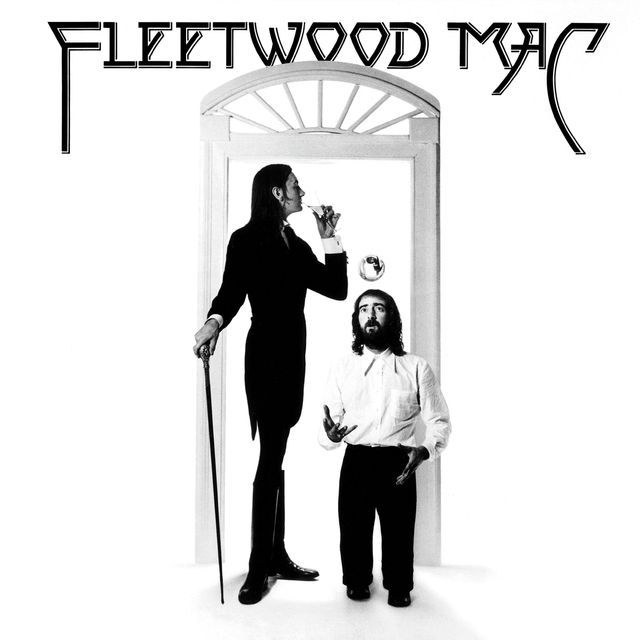
The new lineup's first album, simply called Fleetwood Mac, came out on July 11, 1975. It was the band's tenth album, but it sounded like a debut. It included “Rhiannon,” “Landslide,” “Say You Love Me” and “Over My Head.”
It was not an instant hit. The band toured for more than a year before it reached No. 1 in America, in September 1976. By its 50th anniversary it had been certified nine times platinum.
“After five years of struggling for a consistency that became their hobgoblin, they make it sound easy. In fact, they come up with this year's easy listening classic. Roll on.”
A Blues Band Running Out of Members
Fleetwood Mac started in London in the late 1960s as a blues band led by guitarist Peter Green. By the mid-1970s only drummer Mick Fleetwood and bassist John McVie were left from the original band. John's wife, Christine McVie, joined on keyboards and vocals in 1970. Guitarists and singers came and went around them.
In 1973 the band fell apart in the middle of an American tour. Their manager, Clifford Davis, then sent a band with no Fleetwood Mac members on the road under the name. That story is told in The Fake Fleetwood Mac. Fleetwood and McVie won back the name in an out-of-court settlement and moved the band from London to Los Angeles.
Their 1974 album, Heroes Are Hard to Find, did not reach the Billboard Top 30. Christgau gave it a B-minus and called it “their worst.” Guitarist Bob Welch was worn out. “I was totally exhausted by writing, singing, touring, negotiating, moving, and frankly so were Mick, John, and Chris,” he said. In December 1974 he left to form a new band, Paris.
“Frozen Love” at Sound City
Fleetwood needed a guitarist and a studio. Speaking to Melody Maker in 1976, he said a man he ran into at a supermarket told him about Sound City in Van Nuys. When he went to look, Olsen played him tracks from Buckingham Nicks, a 1973 album Olsen had produced. Fleetwood was struck by the guitar on “Frozen Love.”
Olsen was not trying to sell the duo. Welch was still in the band at that point. “Keith put on ‘Frozen Love’ from the Buckingham Nicks album to show him what the studio sounded like and what his work was like,” Buckingham told Guitar Player in a 1977 interview. “A week later Welch decided to leave the group, and Mick just acted intuitively and called up Keith to get in touch with us.”
Fleetwood told Mojo he had heard something familiar in the guitar. “I'd heard something in Lindsey's playing that reminded me of Peter Green,” he said. “Straight away, I said, I need to find those people.” Olsen did the persuading. “So, I took my date for New Year's, drove over to Lindsey and Stevie's place, and spent four hours sat in their bedroom convincing them to join Fleetwood Mac,” he recalled.
Buckingham and Nicks had been playing together since a San Francisco Bay Area band called Fritz in the late 1960s. Buckingham could not read music and had learned on a toy Mickey Mouse guitar. The couple made their first demos on a four-track tape machine at his father's coffee-roasting plant in Daly City, then moved to Los Angeles to find a record deal. Polydor signed them, but their album flopped, and the label dropped them. Nicks supported them both by waiting tables and cleaning houses, including Olsen's. Buckingham was earning money touring as a guitarist in Don Everly's backing band.
When Fleetwood offered Buckingham the job, Buckingham said he would only join with Nicks. “He was standing there grooving to this searing guitar solo and he needed a guitar player,” Buckingham told Uncut in 2003. “That was as far as his thinking went. I had to explain we came as a duo. Stupid me, eh?” Nicks put the change in her life more simply. “I said, ‘That's it, I'm never looking at another price tag,’” she said in 2015.
Dinner at El Carmen
There was one more hurdle. Fleetwood and John McVie agreed that Christine McVie would decide whether a second woman should join the band. On New Year's Eve 1974 they all met at El Carmen, a Mexican restaurant on West 3rd Street in Los Angeles. Nicks arrived first, still wearing the flapper dress from her waitressing shift.
The two women got on at once. “We met and I instantly liked her,” Christine McVie told Rolling Stone in 2014. “She and I are not competitive in any way at all. We're totally different but totally sympathetic with each other.”
When the three singers first tried harmonizing together, Fleetwood felt what he later called an “undeniable sensation of rightness.” He added: “It was if Merlin himself could not have concocted a spell more perfect.” Nicks has said that without the call, she might have gone back to school and never had a music career.
“I'm the Mac. And I Play the Bass.”
The band went into Sound City early in 1975 with Olsen producing, and recorded the album in about two months. Olsen was an unusual choice. He was trained as a cellist and had only a handful of album credits. But he knew what he wanted. When John McVie wondered whether Buckingham's bright opener, “Monday Morning,” was right for Fleetwood Mac, Olsen answered: “We're doing pop rock now. It's a much faster way to the bank.”
Buckingham knew the band's history. “Peter Green, oddly enough, had a little bit of influence on me,” he told Guitar Player. “I really liked his style of playing where a few notes mean a lot — even one note.” But he did not try to copy the old records. “I've never felt any need to try to fit into anyone else's shoes. I just do what I do,” he said. “Maybe one of the reasons Fleetwood Mac has been able to survive for so long is that they've been able to change.” He played a Fender Stratocaster on most of the album's electric parts.
Buckingham arrived full of ideas and started telling the others what to play. McVie pushed back. Buckingham later admitted he “came in as the new kid on the block, but I was also the kid with the ideas – and so John and I used to butt heads quite a bit. It took me a long time to appreciate his approach.”
The band you're in is Fleetwood Mac. I'm the Mac. And I play the bass.
Buckingham said everything he and Nicks brought had been demoed before they met Fleetwood. His “Monday Morning” was about their own on-off relationship. “Maybe on Monday everything was great, but by Friday things weren't so great,” he explained. He called it “very reflective of the early dynamic that was later to become a hallmark of Fleetwood Mac, which was couples breaking up, the angst of having to push forward.”
Many of the new members' songs had been written for a second Buckingham Nicks album that never happened, including “Rhiannon,” “Monday Morning” and “I'm So Afraid.” They re-recorded their earlier “Crystal” with the new band. “Blue Letter,” the only song not written by a band member, came from the brothers Rick and Michael Curtis. Christine McVie wrote four songs on her own and co-wrote “World Turning” with Buckingham. It is loosely based on a track from the band's 1968 debut and features Fleetwood on a West African talking drum.
Fleetwood Mac perform “Rhiannon” at Studio Instrument Rentals in 1976, the year the song turned Stevie Nicks into the band's focal point on stage.
Essential Tracks
“Rhiannon”
Nicks wrote “Rhiannon” in 1974 after picking up a paperback novel at a friend's house. “It was just a stupid little paperback that I found somewhere at somebody's house, lying on the couch,” she told Classic Rock. “It was called Triad and it was all about this girl who becomes possessed by a spirit named Rhiannon.” She was taken with the name and wrote the song at the piano.
Only later did she learn that Rhiannon is a figure from Welsh mythology, a goddess connected with horses and birds. On the record, the band built her piano sketch into something bigger, with Buckingham's finger-picked guitar and an offbeat groove from Fleetwood and McVie. “They arrange right underneath my little skeleton,” Nicks said. According to Paste, Olsen spliced together 14 or 15 takes to make the finished track.
Released as a single in 1976, it reached No. 11 in America. On stage it grew to six minutes, with Nicks whirling in a top hat and chiffon. Fleetwood said the ending “was like an exorcism.” “There's something to that song that touches people,” Nicks said in 1976. “I don't know what it is but I'm really glad it happened.”
“Landslide”
Nicks wrote “Landslide” in Aspen, Colorado, at the low point before Fleetwood Mac called. In a 1998 VH1 Storytellers appearance she described a deal with her father around September 1974. He suggested she give music “six more months,” and said that if she wanted to go back to school, the family would pay. Buckingham Nicks had flopped, Buckingham was away playing in Don Everly's band, and she was staying in a borrowed house. “I wrote this song in Aspen, Colorado, when I was deciding whether or not Lindsey and I should continue,” she said in October 2026.
She wrote it looking out over snow-covered hills, on a guitar she could barely play. “I'm like, OK, because I'm so poor that just sitting in this house when you're looking out at this view is so fantastic, I'm going to write a fantastic song,” she remembered. “I just happened to bring my Goya, which I could hardly play, but I thought it looked good.”
The recording is spare, built on acoustic guitar under Nicks's voice. It was not one of the album's singles, but it became one of the band's most-loved songs. The Harvard Crimson noted in 2025 that it has found a new life online as the soundtrack to countless reflective video montages on TikTok and Instagram.
“Over My Head”
Christine McVie's “Over My Head” was chosen as the first American single. Nobody expected much. Fleetwood Mac had not had a song on the Billboard chart since “Oh Well” in 1969.
It became the band's first US Top 20 hit. McVie herself was surprised. “I've never written with the intention of writing hits,” she said in 1980. “‘Over My Head’ was a very unpredictable hit, as far as I'm concerned. The fact that it was bigger than ‘Say You Love Me’ surprised everyone.”
It set a pattern. All four singles from the album were written by the band's two women: McVie's “Warm Ways,” “Over My Head” and “Say You Love Me,” and Nicks's “Rhiannon.” Three of them reached the US Top 20. Paste called “Over My Head” “one of the most-inspired lead single choices of its time.”
“Landslide” at Warner Bros. Studios in Burbank in May 1997, more than 20 years after Nicks wrote it in Aspen.
Fifteen Months to No. 1
The new lineup played its first show on May 15, 1975, at the Civic Center Theater in El Paso, Texas, two months before the album came out. The set mixed old Fleetwood Mac songs like “Oh Well” and “The Green Manalishi” with new ones, including “Rhiannon,” “Landslide” and “I'm So Afraid.”
The cover did not show the new members. Herbert Worthington's photograph featured only Fleetwood and John McVie, standing in a doorway. Fans came to call the record the “white album,” partly because of its plain look and partly to tell it apart from the band's first self-titled LP in 1968.
The album sold slowly at first. The band toured hard, the singles kept it on the radio, and in September 1976, about 15 months after its release, it reached No. 1 on the Billboard 200. “We just played everywhere and we sold that record,” Nicks told Uncut. “We kicked that album in the ass.” By the time of its 50th anniversary in 2025, the RIAA had certified it nine times platinum.
“Beyond My Wildest Expectations”
In June 1976 the writer Harvey Kubernik interviewed the band for Melody Maker. Christine McVie admitted the hits had not been their choice. “We would never have picked ‘Over My Head’ as a single,” she said. “But the radio stations did.” Kubernik wrote that “Rhiannon,” the next single, won the band the AM-radio audience it had been chasing in America for years.
Fleetwood was candid about how small the band had been. “In the States our albums pretty much sold in the 200-250,000 range,” he said. “The success of the last album went beyond my wildest expectations.” John McVie said the move to Los Angeles had followed “nine months in a lawyer's office” fighting over the band's name. “We had to get out of England ’cause we were going crazy,” he said.
Nicks was already the band's focal point on stage. “People come up to me every place we play and tell me what an effect ‘Rhiannon’ has had on their lives,” she said. And the band was already in the studio making Rumours. Fleetwood described the new songs to Kubernik: “We realized every track was written about someone in the band. Introspective and interesting, kind of like a soap opera.”
The Album Before Rumours
The success came just as the band's private lives were coming apart. By the time they began the next album, the McVies' marriage had ended and Buckingham and Nicks had split up. They wrote about it on Rumours, released in February 1977, which became one of the best-selling albums ever made. Buckingham's experimental follow-up to that, Tusk, came out in 1979.
Critics now see the 1975 album as the start of all that. Paste called it “maybe the best imperfect album of the 1970s, and the only 10th album in a band's discography to sound like a debut.” The writer praised Christine McVie's “Say You Love Me” and “Warm Ways” but felt the last two songs, “Sugar Daddy” and “I'm So Afraid,” “peter out rather than climactically resolve.” The same writer argued the new pair and the old members needed each other. Buckingham and Nicks gave the band new life, and the band gave Buckingham and Nicks a career their own album had not.
This lineup played its last full concert together in July 2017. The band fired Buckingham in 2018, and Christine McVie died in November 2022. Olsen, who went on to produce Foreigner, Heart, Santana and many others, died in 2020. A documentary, Fleetwood Mac: The Chain, directed by Frank Marshall, premieres on Apple TV on January 29, 2027.
Fifty years on, Fleetwood marked the anniversary by playing “Frozen Love,” the song that started it all, on his headphones for an Instagram video. “The marriage of Stevie and Lindsey, the marriage of coming into Fleetwood Mac when they did, it's all in the song,” he said.
“It's in the music that played on for so many years. It's magic then, it's magic now.”