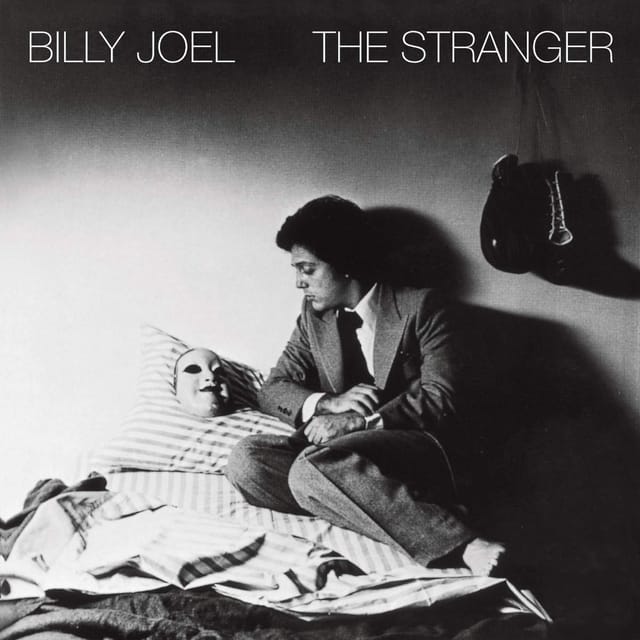

By September 1977, Billy Joel was at a crossroads. Critics liked his earlier records, but he hadn't had the commercial success to match, and his career was in the balance.
The answer was producer Phil Ramone. Together they made The Stranger, recorded mainly at A&R Studios in New York. Its nine songs combined Joel's classical training with rock instincts and a new attention to how every sound was recorded.
It sold more than 10 million copies and made Joel one of America's leading singer-songwriters.
“Billy achieved success when he uncloseted the spoiled brat behind those bulging eyes… on The Stranger, that persona surfaces only in the nominally metaphorical guise of ‘the stranger.’ The rest of Billy has more or less grown up.”
The Phil Ramone Revolution
The transformation of Billy Joel from struggling troubadour to mainstream superstar began with a crucial decision: partnering with producer Phil Ramone. After the lukewarm reception of Turnstiles (1976), Joel needed a producer who could translate his sophisticated songwriting into radio-friendly gold. Ramone, fresh from his work with Paul Simon on Still Crazy After All These Years, brought a meticulous attention to sonic detail that perfectly complemented Joel's ambitious compositions.
Recording began in earnest at A&R Studios in New York during the spring of 1977, with sessions that would stretch across several months. Ramone's production philosophy centered on capturing the live energy of Joel's performances while layering subtle orchestrations that enhanced rather than overwhelmed the songs, working alongside engineer Jim Boyer—who got his start at A&R under Ramone before becoming a fixture on Joel's records for years afterward.
The collaboration extended beyond mere technical prowess. Ramone pushed Joel to dig deeper into his emotions, particularly on ballads like "Just the Way You Are" and "She's Always a Woman." The producer's classical background—he had studied violin at Juilliard—resonated with Joel's own conservatory training, creating a shared language that elevated the material to new heights. The result was an album that sounded both immediate and timeless, contemporary yet rooted in the grand tradition of American popular song.
“I look at [Phil Ramone] and I said, ‘So what instrument should that be?’ And he looks at me and he goes, ‘You just did it.’”
Why Joel turned down George Martin to keep his band, and how a placeholder whistle ended up opening the album, is its own story: The Whistled Intro: How Phil Ramone Heard Billy Joel's Breakthrough Before Billy Did →
Chronicles of Urban Life
What set The Stranger apart from its contemporaries was Joel's ability to craft vivid narratives that captured the essence of 1970s American life. Songs like "Movin' Out (Anthony's Song)" and "Scenes from an Italian Restaurant" functioned as musical short stories, complete with fully realized characters and authentic emotional arcs. Joel's Long Island upbringing provided him with an authentic voice for middle-class American experiences that resonated with millions of listeners.
The album's lyrical sophistication extended beyond mere storytelling. Joel demonstrated an almost cinematic ability to zoom in on specific details—the "bottle of white, bottle of red" in "Scenes from an Italian Restaurant," or the "hackneyed sax solo" in "Movin' Out"—that transformed simple observations into profound statements about American culture. This attention to detail, combined with his melodic gifts, created songs that functioned equally well as radio singles and artistic statements.
What made these songs resonate beyond their specific setting was Joel's instinct for the telling detail—a wine order, a sax solo, a diner conversation—that let listeners who'd never set foot on Long Island still recognize the people in the story.
Classical Training Meets Rock Sensibility
Joel's conservatory training at Hicksville High School provided him with a harmonic sophistication that set him apart from his singer-songwriter peers. The Stranger showcased this classical influence while remaining firmly rooted in rock and pop traditions. The album's arrangements, crafted with Ramone's guidance, demonstrated an understanding of both traditional song forms and contemporary production techniques that few artists possessed.
The album's musical diversity proved equally impressive. "Vienna" drew from European classical traditions, while "Only the Good Die Young" channeled early rock and roll energy. "Just the Way You Are" embodied the sophisticated pop of the era, and "The Stranger" itself showcased Joel's ability to create atmospheric, almost cinematic soundscapes. This stylistic range, unified by Joel's distinctive voice and Ramone's cohesive production, created an album that rewarded both casual listening and detailed analysis.
The rhythm section, anchored by bassist Doug Stegmeyer and drummer Liberty DeVitto, provided the perfect foundation for Joel's melodic explorations. Their intuitive understanding of Joel's compositional style—developed through extensive touring—allowed for performances that felt both spontaneous and precisely crafted. The addition of saxophonist Richie Cannata and guitarist Russell Javors completed an ensemble that would define Joel's sound for the next decade.
Essential Tracks
“Just the Way You Are”
The album's most enduring ballad began as a simple expression of unconditional love, but evolved into something far more sophisticated under Ramone's guidance. The song's deceptively simple structure—built around a descending chord progression that Joel had adapted from jazz standards—provided the perfect framework for one of his most emotionally direct vocal performances. Phil Woods' saxophone solo, added during the final overdub sessions, became an integral part of the song's identity.
The track's commercial success was unprecedented for Joel—it reached #3 on the Billboard Hot 100 and won Grammy Awards for Record of the Year and Song of the Year. More importantly, it established Joel as a serious contender in the adult contemporary market, proving that his appeal extended far beyond the rock audience. The song's influence can be heard in countless wedding playlists and romantic ballads that followed, cementing its place as a modern standard.
Watch: Just the Way You Are (Official Video)
“Movin' Out (Anthony's Song)”
Perhaps the album's most perfectly realized character study, "Movin' Out" showcased Joel's ability to create fully dimensional protagonists within the confines of a four-minute pop song. The track's driving rhythm and memorable hook masked a sophisticated social commentary about blue-collar aspirations and the American Dream. Joel's decision to name the protagonist "Anthony" rather than using a more generic character name demonstrated his commitment to authentic storytelling.
The song's musical arrangement perfectly supported its narrative thrust. The insistent piano riff, doubled by guitar, created a sense of urgency that mirrored Anthony's desire to escape his circumstances. Liberty DeVitto's drumming provided a relentless forward momentum that never let up, while the horn section added a touch of sophistication that elevated the track beyond simple rock. The result was a song that worked equally well as a driving anthem and a thoughtful social observation.
Watch: Movin' Out (Anthony's Song) (Official Video)
“Scenes from an Italian Restaurant”
The album's epic centerpiece demonstrated Joel's ability to construct complex narrative structures within popular song formats. At over seven minutes, "Scenes from an Italian Restaurant" functioned as a multi-part suite that traced the relationship between Brenda and Eddie from high school romance to inevitable disappointment. The song's structure—beginning with intimate conversation, building to nostalgic reminiscence, then exploding into energetic rock before returning to quiet reflection—provided a template for ambitious pop songwriting.
Phil Ramone's production on this track was particularly masterful, creating distinct sonic environments for each section while maintaining overall cohesion. The intimate opening, featuring Joel's voice and piano in close-up, gradually expanded to include full orchestration during the rock section, before contracting back to the original intimate setting. This dynamic approach to arrangement became a hallmark of Joel's work and influenced countless artists who attempted similar narrative ambitions.
Commercial Triumph and Critical Acclaim
The Stranger achieved the rare feat of massive commercial success coupled with widespread critical acclaim. The album reached #2 on the Billboard 200 and remained on the charts for over two years, eventually selling more than 10 million copies worldwide. More significantly, it generated four Top 40 singles, establishing Joel as a consistent hitmaker capable of appealing to both pop and rock audiences simultaneously.
Critical reaction was warmer than skeptics expected, if not universally glowing—Robert Christgau's Village Voice review landed at a measured B−, an upgrade from the C grades he'd given Joel's three previous albums, crediting the record with the sense that "the rest of Billy has more or less grown up." Even critics who withheld a full rave recognized a genuine leap from Joel's earlier work, and that grudging respect proved to be a turning point in how the press covered him going forward.
Chart Performance & Recognition
Album Performance
- Billboard 200: #2 (Multi-Platinum)
- UK Albums Chart: #25
- Worldwide Sales: 10+ million copies
- Grammy Wins: Record of the Year, Song of the Year
- Grammy Nominations: Album of the Year
Key Singles Performance
- "Just the Way You Are": #3 US, #19 UK
- "Movin' Out (Anthony's Song)": #17 US
- "Only the Good Die Young": #24 US
- "She's Always a Woman": #17 US, #53 UK
- "Vienna": never released as a single in 1977 — became a streaming-era hit decades later
Critics who'd been skeptical of Joel's earlier work came around specifically because The Stranger didn't sacrifice emotional directness for polish—the songcraft and the sentiment worked in service of each other rather than against it.
Grammy Success and Industry Recognition
The 1979 Grammy Awards ceremony marked a career-defining moment for Billy Joel, with "Just the Way You Are" winning both Record of the Year and Song of the Year. The double victory represented unprecedented recognition for a piano-driven pop song, proving that sophisticated craftsmanship could compete with disco and punk for mainstream attention. Joel wasn't even at the ceremony—Phil Ramone accepted both awards on his behalf, a fitting coda to a partnership built on Ramone translating Joel's songs into finished records rather than sharing the spotlight for them.
The Grammy recognition extended beyond mere commercial validation. Industry professionals recognized The Stranger as a masterpiece of studio craftsmanship, with particular praise for Phil Ramone's production work. The album's success opened doors for other piano-based artists and demonstrated that audiences were hungry for sophisticated pop music that didn't sacrifice intelligence for accessibility. This recognition would prove crucial in establishing Joel's long-term career trajectory.
Studio Innovation and Technical Mastery
Phil Ramone's production approach on The Stranger established new standards for pop recording that influenced countless albums that followed. His use of close-miking techniques on Joel's piano, combined with carefully placed ambient microphones, created an intimate yet spacious sound that perfectly complemented the material's emotional range. The producer's classical training informed his approach to orchestration, resulting in arrangements that enhanced rather than overwhelmed the songs.
The album's technical innovations extended beyond basic recording techniques. Ramone's use of tape delay and reverb created distinctive sonic signatures for individual songs, while his meticulous attention to vocal placement ensured that Joel's lyrics remained clear and comprehensible. The producer's collaboration with engineer Jim Boyer resulted in a cohesive sonic palette that unified the album's diverse musical styles without sacrificing individual character.
Cultural Impact and Lasting Influence
The Stranger established Billy Joel as the premier chronicler of American middle-class life, a role that would define his career for decades. The album's detailed character studies and authentic emotional landscapes provided a template for narrative songwriting that influenced artists from Bruce Springsteen to John Mellencamp. Joel's ability to find universal themes in specific situations became a hallmark of intelligent pop songwriting.
The album's influence extended beyond music into broader cultural conversations about American identity and aspiration. Songs like "Movin' Out" and "Scenes from an Italian Restaurant" became cultural touchstones, referenced in films, television shows, and literature as shorthand for certain types of American experience. The album's success proved that audiences were hungry for sophisticated pop music that addressed real-world concerns with both intelligence and empathy.
Most significantly, The Stranger demonstrated that an artist could achieve massive commercial success without sacrificing artistic integrity. The album's combination of accessible melodies, sophisticated arrangements, and emotionally honest lyrics created a blueprint for intelligent pop music that remains relevant today. It stands as Joel's masterpiece—a perfect synthesis of classical training, rock sensibility, and American storytelling that captured the spirit of its era while transcending temporal boundaries.