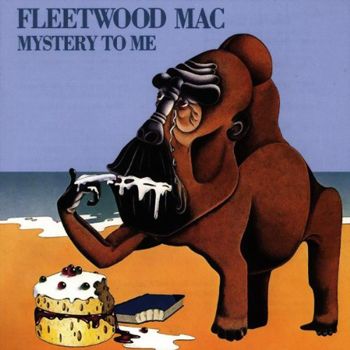
The Fake Fleetwood Mac
In January 1974 a band billed as Fleetwood Mac toured America with none of Fleetwood Mac in it. The fight over the name pushed the real band toward California and Rumours.
 Trevor Fortune•🎵 Fleetwood Mac - Mystery to Me•6 min read•October 15, 2026
In January 1974, a band calling itself Fleetwood Mac played a run of American concerts. None of its members had ever been in Fleetwood Mac. Their manager, Clifford Davis, had put the group together after the real band cancelled a tour, and he insisted the name was his to use. The drummer Mick Fleetwood, who the stand-ins say had promised to join them, never turned up.
The tour lasted about 15 shows before Davis called it off. The legal fight that followed took around two years, and it changed where Fleetwood Mac lived, who ran it, and who would join it next.
A Band Falling Apart, Again
Fleetwood Mac had been losing people for years. Peter Green left in 1970 and Jeremy Spencer in 1971. By 1973 John and Christine McVie's marriage had broken down. Then, in the middle of another American tour that autumn, Mick Fleetwood found out that his wife, Jenny Boyd, had been having an affair with the band's new guitarist, Bob Weston. Fleetwood cancelled the rest of the tour.
That didn't suit Davis, who had concert dates to fill. He approached two musicians he already managed: singer Elmer Gantry, a veteran of the London blues scene, and Kirby Gregory, a young guitarist who had played with Curved Air. With bassist Paul Martinez, a stand-in drummer named Craig Collinge, and a pianist, they became the new Fleetwood Mac.
The Drummer Who Never Came
What Mick Fleetwood agreed to is still disputed. Gantry says Fleetwood came to the musicians' flat in Tooting, south London, to talk through the new lineup and the songs. “Mick later asked to be excused rehearsals as he was going through heavy personal issues,” Gantry told Classic Rock, “but he knew the songs inside out and would join at the start of the tour.”
Fleetwood later testified that he had been “non-committal.” In his 1990 memoir he wrote: “To this day, I don't know the names of the musicians involved and I don't wanna know.” But a judge's note in the 1974 court case recorded that on November 13, by the band's own evidence, Fleetwood had gone to see Gantry and Gregory, discussed the plan, “and did not object.”
Both sides agree on one thing: Fleetwood never rehearsed with them. The new band flew to America expecting him to appear at the first show.
“They're Here”
The tour opened in Pittsburgh on January 16, 1974. Promoter Rich Engler had worked with Fleetwood Mac before and knew Mick Fleetwood. When a group he didn't recognize walked in, he took them for the road crew. Davis introduced himself and Engler asked when the band would arrive. “He said, ‘They're here,’” Engler recalled in 2022. “Well, no, they weren't.”
Engler refused to let them play, Davis took a swing at him, and security separated them. The band went on anyway. Engler admitted they were good. “Unless you were a big fan of Fleetwood Mac, and if you only knew them from the radio, you might not know that this wasn't them,” he said.
At each show the musicians were told Fleetwood would be at the next one. By the time they reached the Academy of Music in New York on January 26, with Kiss and Silverhead opening, the band had worked out what was happening. Backstage, Davis argued with the promoter, then walked onstage, took a microphone, and announced: “I am Fleetwood Mac!”
“This Band Is My Band”
The real Fleetwood Mac went public. “It is a rip-off,” guitarist Bob Welch told Rolling Stone. “The manager put together a group real fast using the name Fleetwood Mac before we had a chance to do anything about it.” Davis gave the magazine his side bluntly.
"I want to get this out of the public's mind as far as the band being Mick Fleetwood's band. This band is my band. This band has always been my band."
The stand-ins were stuck. They believed that if they walked off the tour they would be sued, so they kept playing. Some nights went well; bassist Paul Martinez remembered Joe Walsh telling him at a Florida show that they were “rockin' with the best of 'em.” But the press was calling them impostors.
The tour reached Idaho in February. The band played a college gym in Twin Falls on February 6, and the next night about 3,000 people paid around $5 each to see them at the fairgrounds in Boise. On February 17, Idaho's attorney general sued the tour's promoters for refunds, saying the show had been advertised as the “publicly popular entertainment group, Fleetwood Mac, but showing up with a group of unknown and unidentified musicians.”
“We were receiving encores and ovations, but it felt bad,” Gantry said. “Kirby and I were getting really depressed and stoned all the time. We even sacked the pianist on stage one night as he was too drunk to play. Two gigs later, mercifully, Cliff pulled the plug.”
What It Led To
The case between Fleetwood Mac and Davis went to court in 1974, and the fallout took about two years to settle. The stand-in musicians were never required to appear. “Davis split with the original band, of course, and I believe an ‘accommodation’ was reached,” Gantry said. “Cliff certainly didn't seem to be any poorer for the experience.”
For the real band, the fight forced a change. Welch persuaded the others to set up their own company to run their affairs and to move the operation to the United States, where the court cases were. That move put Mick Fleetwood and the McVies in Los Angeles, which is where they found Lindsey Buckingham and Stevie Nicks. The lineup that made Rumours came together soon after.
Gantry, Gregory, and Martinez formed a band of their own in 1975 called Stretch, still managed by Davis. Their first single, “Why Did You Do It,” was aimed squarely at Mick Fleetwood, and Gregory said one line referred to the meeting in the Tooting flat. It reached No. 16 in the UK.
Related Review
Read our comprehensive analysis of Fleetwood Mac's Mystery to Me
Mystery to Me Review →