
Black Sabbath needed one more song. It was June 1970, and the band had just finished their second album in a cramped London studio. Then producer Rodger Bain told them the record was too short.
Tony Iommi played a riff on the spot. Geezer Butler wrote lyrics about the depression he was struggling with. The band cut it almost immediately. “Paranoid” became the title track and the band's only UK Top 10 single.
The album around it was thrown together almost as an afterthought. It went on to define heavy metal as a recognizable genre.
“We finished the record and then the producer told us we needed one more song to finish up the album, so we just came up with ‘Paranoid’ on the spot. Tony just played this riff and we all went along with it.”
Back to a Four-Track Room
Black Sabbath's self-titled debut had come out only four months earlier, recorded in a single day for less than a thousand pounds. There was no time to rest on that momentum. Producer Rodger Bain booked the band into Regent Sound Studios in London's West End starting June 16, 1970 — the same small four-track room where they'd tracked the first record — before the sessions shifted to the more capable Island Studios on Basing Street for overdubs and mixing.
Unlike the debut, which leaned partly on cover material and songs the band had road-tested for months in Hamburg and Birmingham clubs, Paranoid needed to be almost entirely original. Bassist and primary lyricist Geezer Butler later credited the first album's success with giving the band room to trust their own writing. “Success gave us confidence in our writing,” Butler said. “It meant we could go ahead and write all original material for Paranoid.”
The whole album came together in a matter of days, a pace that would be unthinkable for a record of this eventual stature. Much of the material had been shaped on the road rather than in rehearsal rooms — Iommi later described gigs so sparsely attended that the band effectively used the stage as a writing session. “There would be about three people in the audience,” he said. “So we'd just make things up.”
From “Walpurgis” to War Pigs
The album's opening epic started life under a different name entirely. Butler had written it as “Walpurgis,” a reference to the witches' sabbath of European folklore, drawing a direct line between organized religious evil and what he considered the real evil of the era. “Walpurgis is sort of like Christmas for Satanists,” Butler explained. “And to me, war was the big Satan.” When the song reached the record company, executives balked at a title that sounded overtly satanic and pushed for a change. The lyrics stayed untouched; only the title became “War Pigs.”
Butler has been explicit that the song was never really about geopolitics in the narrow sense. “It wasn't about politics or government or anything,” he told Noisecreep in 2010. “It was evil.” The lyric's generals and black masses were an analogy, not a manifesto. But the context was inescapable: Britain in 1970 was living under the shadow of possible involvement in Vietnam, and the song's imagery of powerful men sending the poor to die landed as a direct protest regardless of its occult framing. “War is the real Satanism,” Butler told Mojo in 2017. “Politicians are the real Satanists. That's what I was trying to say.”
The song's staying power surprised even its author. Revisiting the lyrics decades on, Butler noted how little updating they required to remain relevant to any subsequent conflict. “Substitute any Vietnam reference with any current war and the lyrics still stand up,” he said. “I think the lyrics on Paranoid are timeless.”
Listen: War Pigs — Official Audio
A Cover That Never Got the Memo
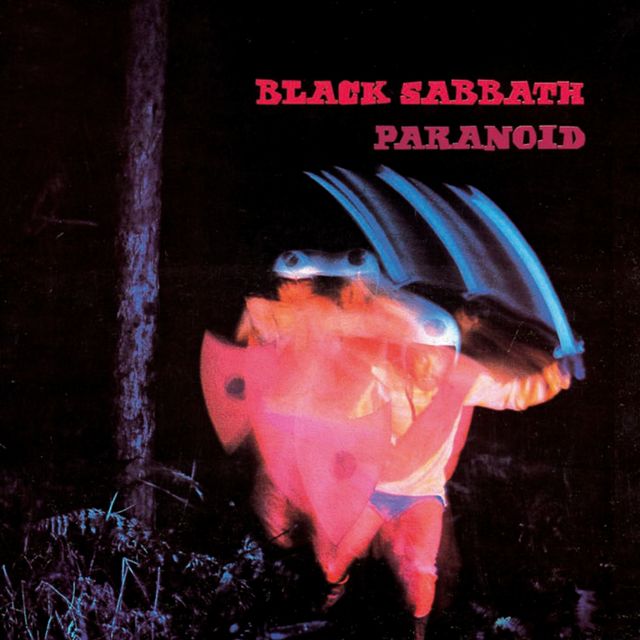
When the record company decided the album needed a title track with obvious single potential, they seized on the song written to fill the runtime gap and renamed the entire LP after it — from War Pigs to Paranoid. There was just one problem: the cover art, shot by photographer Keith McMillan in Black Park, Buckinghamshire, and featuring model Roger Brown brandishing a sword in medieval-adjacent battle gear, had been designed around the original war-themed title. Nobody reshot it.
Ozzy Osbourne has never let the mismatch go unremarked. “What the fuck does a bloke dressed as a pig with a sword in his hand got to do with being paranoid?” he said. “I don't know, but they decided to change the album title without changing the artwork.” Geezer Butler was similarly unimpressed with the finished sleeve: “I hated the album sleeve,” he told Classic Rock. As he put it to Noisecreep, “The cover was bad enough when the album was going to be ‘War Pigs,’ but when it was ‘Paranoid’ it didn't even make sense.” The mismatched image and title became, almost by accident, one of the most recognizable covers in rock — a warrior with a sword advertising an album that never mentions one.
Butler had his own reservations about the title track fitting the record at all, on musical rather than visual grounds. “I thought the song was too commercial-sounding compared to the rest of the album,” he admitted. “How wrong I was!” That commercial sound is precisely what turned “Paranoid” into the band's breakout single, reaching Number 4 on the UK chart in the autumn of 1970 and giving Black Sabbath the mainstream foothold their heavier, doomier material never could have managed alone.
Essential Tracks
“War Pigs”
The album's eight-minute opener sets the template for everything heavy metal would become: a slow, doom-laden riff, air-raid siren guitar effects, and lyrics that treat war profiteers as the era's real monsters. Structurally, the song moves through distinct sections rather than a conventional verse-chorus form, closer to a mini-suite than a single.
Its journey from “Walpurgis” to “War Pigs” left an odd fingerprint on the finished track — occult imagery and anti-war protest fused into one lyric sheet, never fully resolved into either genre. That tension between the satanic and the political became one of Black Sabbath's defining traits, and “War Pigs” remains the clearest statement of it on the record.
The track's closing section, often singled out separately as “Luke's Wall,” accelerates into a faster instrumental coda that gives Bill Ward room to drive the song to its finish rather than fading out. It set a structural precedent metal bands would return to for decades: the extended, multi-part opener that functions less like a single than a statement of intent for the record that follows it.
“Paranoid”
Written to pad out a runtime that was still short an album's worth of material, “Paranoid” is barely three minutes long and built on a riff Tony Iommi found almost instantly. Butler wrote the lyrics just as fast, describing a depressive, anxious mental state with a directness the band's more elaborate songs rarely attempted.
The speed of its creation belied its impact. It became the only UK Top 10 single of Black Sabbath's career, reaching Number 4, and forced a rename of the entire album around a song nobody had planned to write. More than half a century later, its central riff remains one of the most immediately recognizable in rock, decades after Butler himself doubted it belonged on the record at all.
“Iron Man”
The song's signature riff came first, with Ozzy Osbourne reacting to its lumbering, bent two-note structure by suggesting it sounded like a “big iron bloke” walking. Geezer Butler took that offhand image and built a full science-fiction narrative around it: a man who travels into the future, witnesses the apocalypse, and is transformed into metal trying and failing to warn humanity, only to become the very destroyer he foresaw.
The song has no connection to the Marvel Comics character of the same name, who was a minor figure known mostly to comic readers when Sabbath recorded this in 1970, decades before the character became a household name. “Iron Man” never charted as a single in the UK, but it became one of the band's most enduring live staples and one of the most sampled and covered riffs in metal history.
Watch: Paranoid — Official Video
Number One at Home, a Slow Burn in America
Released in the UK on September 18, 1970, on Vertigo Records, Paranoid went straight to Number One on the UK Albums Chart, displacing more commercially conventional competition and confirming that the debut's success hadn't been a fluke. The US release followed in January 1971 on Warner Bros., where it eventually peaked at Number 12 on the Billboard 200 and was certified four-times platinum — slower to build than in Britain, but ultimately Black Sabbath's best-selling studio album in America.
The British rock press had savaged the debut, and its response to Paranoid was not much kinder. Radio airplay stayed minimal too. The album's commercial success came almost entirely from word of mouth, the hit single, and relentless touring rather than any embrace from critics or programmers.
That critical uncertainty didn't survive contact with history. Decades later, Steve Huey of AllMusic wrote that Paranoid “defined the sound and style of heavy metal more than any other record in rock history,” and Rolling Stone placed it at Number One on its list of the 100 Greatest Metal Albums of All Time in 2017 — not a bad outcome for a record built partly around a song written to fill a runtime shortfall.
Paranoid still stands up today. Because it was recorded ‘raw’; there aren't any gimmicks or tricks that date the album.
The Blueprint No One Knew They Were Drawing
None of the band members set out to invent a genre. Black Sabbath in 1970 were a working-class Birmingham group playing loud, downtuned blues-rock shaped as much by the industrial clang of the city's factories as by any conscious artistic manifesto. But Paranoid's combination of doom-laden tempos, occult-adjacent lyrical imagery, and Iommi's heavily distorted, minor-key riffing — developed partly to compensate for the fingertip injury that had cost him two finger-ends in a sheet-metal factory accident before the band formed — became the vocabulary every subsequent metal band would draw from, whether they knew the album's specific history or not.
The album's influence is difficult to overstate precisely because it's so thoroughly absorbed into the genre's DNA. Slow, heavy riffs paired with lyrics about war, madness, or apocalypse; song structures built around a central riff rather than pop songcraft; a willingness to sound genuinely bleak rather than merely aggressive — all of it traces back through Paranoid even in bands that never cite Sabbath directly as an influence.
Fifty-six years on, the record's two best-known songs still occupy opposite ends of what heavy metal can be: “War Pigs,” sprawling and doom-laden, versus “Paranoid,” compact and urgent. That the same few days of recording produced both, almost by accident, is the part of the story that still seems less like careful design than pure luck — the kind that only makes sense in retrospect.
“Paranoid defined the sound and style of heavy metal more than any other record in rock history.”