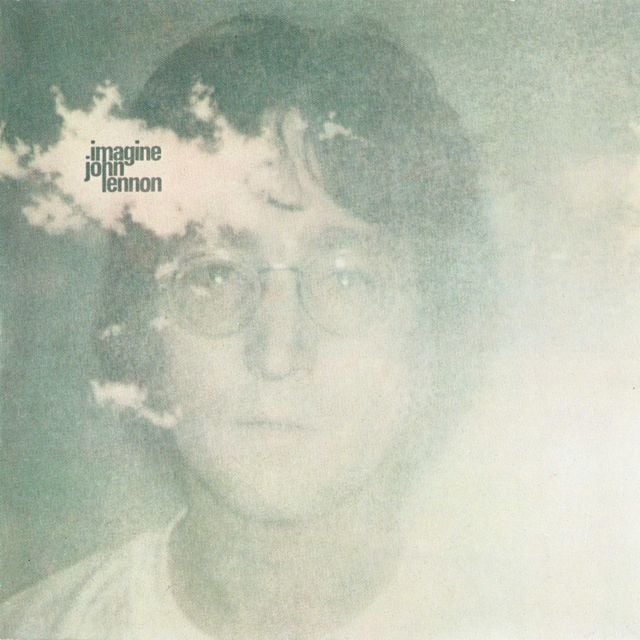

John Lennon recorded “Imagine” at Tittenhurst Park, his 72-acre estate in Berkshire, in a home studio he had built with his own money. Yet the song asks listeners to imagine a world with no possessions.
Critics pointed out the contradiction within a month of the album's release. It never hurt the song. Imagine became Lennon's best-selling solo album. The title track became an unofficial anthem, played after assassinations and terrorist attacks, and in Times Square every New Year's Eve.
“Primal goes pop — personal and useful. The title cut is both a hymn for the Movement and a love song for his wife, celebrating a Yokoism and a Marcusianism simultaneously.”
A Home Studio in a Mansion
Lennon built Ascot Sound Studios on the grounds of Tittenhurst Park specifically so he could record without the formality — or the schedule — of a commercial studio. The room ran on modest gear for what a former Beatle could afford: eight-track tape, closer to a well-equipped project studio than the cavernous rooms Phil Spector was used to. The first session came in February 1971, but most of the basic tracking happened there in late May, with the whole band, including Lennon, playing live in the room together.
The session lineup drew from Lennon's widening post-Beatles circle: Klaus Voormann on bass, Alan White, Jim Keltner, and Jim Gordon sharing drum duties, Nicky Hopkins on piano, and King Curtis on saxophone for “It's So Hard” and “I Don't Wanna Be a Soldier.” George Harrison played guitar on several tracks. The title track itself was barely a production challenge at all: cut on May 27, 1971, with Phil McDonald engineering, it took ten takes, and the last one became the master.
Phil Spector and Yoko Ono share the production credit with Lennon, but Spector's reputation for cavernous, layered “Wall of Sound” arrangements overstates his footprint here. Most of what listeners hear as orchestral polish came later, at the Record Plant in New York, where arranger Torrie Zito scored strings for the Flux Fiddlers over tracks Lennon had already cut live at home. The album's basic character — a man and a piano, captured plainly — was set before Spector's involvement began.
'Imagine' — cut live at Lennon's own home studio in a handful of takes, before any string arrangement was added.
The Possessions Problem
The charge that “Imagine” was written by a man with a 23-bedroom mansion singing about owning nothing followed the song almost immediately, and Lennon addressed it directly rather than deny it: the song's politics, he argued, were real, but he'd deliberately made them easy to swallow. “Put your political message across with a little honey,” he explained, describing the song as anti-religious, anti-nationalistic, and anti-capitalist dressed in a melody gentle enough that listeners would accept it without noticing how much they'd agreed to.
The irony has resurfaced every few years since. Elvis Costello needled it directly on his 1991 single “The Other Side of Summer,” asking in song whether it was a millionaire who told us to imagine no possessions. And in March 2020, when Gal Gadot and a group of wealthy celebrities filmed themselves singing the song from their own homes during the early pandemic, the backlash was immediate. Gadot conceded the point to InStyle nearly two years later: “It wasn't the right timing, and it wasn't the right thing. It was in poor taste.”
A separate irony took decades to correct. Lennon drew significant lyrical inspiration from Yoko Ono's 1964 book of conceptual instructions, Grapefruit, but didn't credit her as a co-writer on release. He admitted as much in a 1980 BBC interview: the song “should be credited as a Lennon-Ono song, because a lot of it, the lyric and the concept, came from Yoko.” The National Music Publishers' Association formally announced the corrected credit in June 2017 — forty-six years after the song's release.
How a 1963 instruction poem became Lennon's best-known song, and why the credit took so long, is its own story: Cloud Piece: How Yoko Ono Waited 46 Years for Her Credit on ‘Imagine’ →
Essential Tracks
“Imagine”
The song began as little more than piano chords and a vocal, tracked live at Ascot with the full band in the room, and the finished record barely disguises that simplicity: no verse-chorus fireworks, no key change, just a repeated melodic idea patient enough to let the lyric carry the weight, with the string overdubs added weeks later never once crowding the arrangement.
Lennon was explicit that the song's target was division, not belief itself. He later described the vision as a world with “no denominations of religion – not without religion but without this my-God-is-bigger-than-your-God thing.” That distinction helps explain the song's strange durability among listeners who might be expected to reject it outright.
Oddly, it wasn't even released as a UK single until 1975, reaching No. 6. After Lennon's murder in December 1980, Britain sent it back out and it spent four weeks at No. 1 in January 1981 — a chart-topping run the song never managed while its writer was alive to see it, and a delay that makes its eventual status as an unofficial national anthem stranger still.
How Do You Sleep? and the End of the Beatles
Buried in the middle of an album largely about peace is one of the nastiest songs Lennon ever released: “How Do You Sleep?,” a direct attack on Paul McCartney, written in response to what Lennon heard as veiled digs at him on McCartney's Ram track “Too Many People.” McCartney has since described his own song as comparatively mild — “I was basically saying, 'let's be sensible'… let's try and be peaceful” — but Lennon's response left no room for ambiguity, accusing his former partner of coasting on borrowed talent and dead momentum.
What makes the track stranger in hindsight is who played on it: George Harrison contributed the slide guitar solo, meaning one Beatle backed Lennon's takedown of another, recorded at Ascot in May 1971 and finished in New York that July. “George and I both think that the best guitar solo he's ever done is on the record 'How Do You Sleep,'” Lennon said afterward.
Lennon was characteristically unsentimental about his own motives. “It was like Dylan doing 'Like a Rolling Stone,' one of his nasty songs,” he said. “It's using somebody as an object to create something. I wasn't really feeling that vicious at the time, but I was using my resentment towards Paul to create a song.” He softened, but never fully retracted, the sentiment later: “It's not about Paul, it's about me. I'm really attacking myself.” The two reconciled in the late 1970s, bonding over ordinary domestic life after the birth of Lennon's son Sean — including, McCartney has said, swapping notes on baking bread. Decades later he was still relieved the feud hadn't had the last word: “Thank God we got it back together. I don't know what I would have thought if we hadn't and we were still warring.”
“How Do You Sleep?”
Where “Imagine” is deliberately spare, “How Do You Sleep?” is dense and grinding — a slow, bluesy stomp built for Spector's more layered production instincts, with strings pushed into a genuinely aggressive register rather than the gentle cushioning heard elsewhere on the record, and Lennon's vocal mixed close and dry so every line of the attack lands clearly.
Harrison's slide solo is the track's clearest musical statement, cutting through the arrangement with a tone as biting as the lyric itself — a rare instance of one Beatle's guitar work directly amplifying another's attack on a third, played by a man who would spend the rest of his career avoiding exactly this kind of public score-settling.
Its lasting significance has less to do with the music than with what it documents: the exact moment the Lennon-McCartney partnership curdled into open hostility in public, on record, before either man had fully processed the Beatles' end, and years before either was ready to speak about that breakup without bitterness.
Contemporary Critics Split
Reaction on release was sharply divided. Rolling Stone's Ben Gerson delivered the harshest major review, comparing the record unfavorably to Lennon's raw, confessional Plastic Ono Band: “In its technical sloppiness and self-absorption, Imagine is John's Self-Portrait.” He allowed just three songs real credit — “Jealous Guy,” “Gimme Some Truth,” and “How Do You Sleep?” — and warned that Lennon's “posturings will soon seem not merely dull but irrelevant.”
British critics heard something different. NME's Alan Smith was unequivocal: “The album is superb. Beautiful. One step away from the chill of his recent total self-revelation, and yet a giant leap towards commerciality without compromise.” In his Consumer Guide, Robert Christgau gave it a straight A.
Commercially, the split didn't matter. Imagine reached No. 1 on both the Billboard 200 and the UK Albums Chart, went gold in the US less than a month after its September 9, 1971 release, and eventually earned double-platinum certification. The US single of “Imagine” peaked at No. 3 on the Hot 100 that fall.
“Jealous Guy”
“Jealous Guy” began years earlier as “Child of Nature,” a song Lennon wrote during the Beatles' 1968 trip to Rishikesh that went unused until he reworked its melody with new, more confessional lyrics for this album, trading a lyric about transcendental meditation for one about his own insecurity and temper.
The session brought in an unlikely pair of acoustic guitarists: Joey Molland and Tom Evans of Badfinger, credited on the sleeve rather than hidden as ghost players. Molland later described the atmosphere as unforced: “John came into the studio and played us 'Jealous Guy.' We had brought our acoustics…We ran through the song once or twice, all very simple and natural.”
Its whistled bridge and unguarded lyric about possessive insecurity became one of the album's most covered songs, later reinterpreted by Roxy Music into a UK No. 1 single in 1981 — released, pointedly, as a tribute in the weeks after Lennon's death, and now arguably as well known in Bryan Ferry's voice as in Lennon's own.
'Jealous Guy' — reworked from an unused 1968 Beatles-era song, with Badfinger's Joey Molland and Tom Evans on acoustic guitar.
A Peace Anthem With No Off Switch
“Imagine” has spent five decades attaching itself to grief it wasn't written for. When Rolling Stone ranked it No. 3 on its 2004 list of the 500 Greatest Songs of All Time, the magazine called it “an enduring hymn of solace and promise that has carried us through extreme grief, from the shock of Lennon's own death in 1980 to the unspeakable horror of September 11th.” Jimmy Carter once observed that in the roughly 125 countries he and his wife had visited, the song was “used almost equally with national anthems.”
The song is now a fixture of the Times Square New Year's Eve broadcast in the minutes before the ball drop, and it has been claimed just as readily across the political spectrum by people who agree on little else. Lennon himself never pretended it was apolitical.
One of the album's quieter tragedies sits inside its personnel. King Curtis overdubbed his saxophone parts for “It's So Hard” and “I Don't Wanna Be a Soldier” in New York in early July 1971 — about six weeks before he was fatally stabbed outside his own New York apartment building. Imagine hadn't even been released yet; his contributions to it are among the last things he ever recorded.
If Imagine doesn't have the thematic sweep of Plastic Ono Band, it is nevertheless a remarkable collection of songs that Lennon would never be able to better again.
Best-Selling, Most Argued-Over
Imagine remains Lennon's best-selling solo album, and its critical standing has moved in the opposite direction of its commercial one. Rolling Stone's own 500 Greatest Albums list ranked it No. 76 in 2003, No. 80 in the 2012 revision, and dropped it to No. 223 in the fully reshuffled 2020 list — a slide that says as much about changing critical fashions as it does about the record itself.
What hasn't moved is the title track's cultural gravity. It remains one of the most covered songs in popular music, sung at memorials, protests, and celebrations by people who agree on almost nothing else about the world Lennon imagined. That elasticity is either the song's greatest achievement or its central flaw, depending on who's asked — a hymn vague enough that everyone can hear their own politics inside it.
Fifty-five years on, the contradiction that critics spotted within weeks of release — a wealthy man's ballad against wealth — has never been resolved, only absorbed. The song outgrew the argument about its writer's sincerity a long time ago, which may be the clearest evidence that Lennon's theory about “a little honey” making hard truths easier to swallow was, whatever its ironies, correct.
“[Imagine is] anti-religious, anti-nationalistic, anti-conventional, anti-capitalistic, but because it is sugar-coated it is accepted. Now I understand what you have to do: put your political message across with a little honey.”