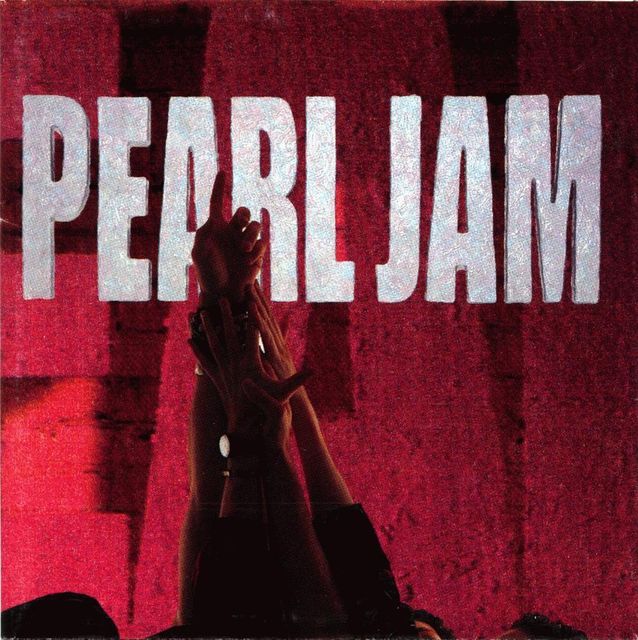

In September 1990, guitarist Stone Gossard mailed a cassette of five unfinished instrumentals to Eddie Vedder, a gas station attendant and part-time surfer in San Diego. Vedder had never met him.
Five months earlier, Gossard and bassist Jeff Ament had buried their friend and singer Andrew Wood. Their band, Mother Love Bone, fell apart just as its debut album was supposed to make them famous. Almost on reflex, they were trying again.
Vedder listened to the tape once, went surfing the next morning, and came back with lyrics for three songs. Two of them, “Alive” and “Once,” anchored Pearl Jam's debut, Ten, released on Epic Records on August 27, 1991. It took nearly a year of college radio and word of mouth to become a hit. It went on to sell more than 13 million copies in the United States alone, outlasting the scene it came from to become one of the best-selling debut albums in rock history.
“On Ten, Pearl Jam … hurtles into the mystic at warp speed. … They wring a lot of drama out of a few declarative power chords swimming in echo.”
A Death in Seattle
Mother Love Bone formed in 1988 out of the wreckage of Green River, the band whose 1987 split famously sent its members down two very different roads — Mark Arm and Steve Turner toward the sludgy garage-punk of Mudhoney, Gossard and Ament toward something glossier and more theatrical. Singer Andrew Wood, who performed under the glam alter ego “Landrew the Love Child” in his earlier band Malfunkshun, brought a larger-than-life presence that set Mother Love Bone apart from Seattle's grimier guitar bands. The group signed with PolyGram, released the Shine EP in 1989, and recorded a debut album, Apple, that industry insiders were already calling a breakout record.
Wood had struggled with heroin addiction for years, cycling through rehab in 1985 and again in 1989. On March 16, 1990, his fiancée found him comatose from an overdose; he was placed on life support at Harborview Medical Center and, three days later, taken off it. He was 24. Apple was released posthumously that July, and the band that might have made Wood Seattle's first big-league rock star was over.
Chris Cornell, Wood's former roommate and the singer for Soundgarden, responded by writing two tribute songs, “Reach Down” and “Say Hello 2 Heaven.” He brought them to Gossard and Ament, who joined with guitarist Mike McCready and drummer Matt Cameron to record what became Temple of the Dog, a memorial album released in April 1991. Gossard later told Total Guitar it was “the easiest and most beautiful record that we've ever been involved with” — grief, for once, moving directly into music without resistance.
Andrew Wood's death, the Temple of the Dog sessions, and the “Hunger Strike” duet that introduced Eddie Vedder are their own story: Temple of the Dog: How Grief for Andrew Wood Built Pearl Jam →
I was compelled to write them and there they were — written in a vacuum as a tribute to Andy.
A Demo Tape Called Momma-Son
Temple of the Dog didn't answer the question of what Gossard and Ament would do next as a full-time band. That summer, working with McCready, they recorded a five-song instrumental demo that came to be known as “Stone Gossard Demos '91.” Through Jack Irons, the former Red Hot Chili Peppers drummer, the tape reached Vedder, a stranger three states away who had no connection to Seattle, Mother Love Bone, or the grief that had produced the music.
Vedder had his own version of that grief waiting to surface. He had grown up believing Peter Mueller, his mother's second husband, was his biological father, only to learn later that his real father, Edward Severson Jr., had died of multiple sclerosis without Vedder ever knowing the truth. Writing overnight to the instrumental tracks, he turned that discovery into a “mini-opera” he called Momma-Son — a young man learning his father is dead, then unraveling. The songs that emerged, “Alive,” “Once,” and “Footsteps,” carried his own history inside someone else's music. He wrote a fourth set of lyrics that same week for a track that became “Black.”
Vedder flew to Seattle and auditioned on October 13, 1990, joining Gossard, Ament, McCready, and drummer Dave Krusen for a week of rehearsals that produced eleven songs. What had started as a mailed cassette to a stranger had become, in a matter of weeks, a full band with a shared catalog and a name: Pearl Jam.
Krusen would not stay long. He left the band in May 1991, just as the record was headed to England to be mixed, and soon entered rehab for alcohol addiction of his own. Matt Chamberlain filled in for a handful of shows before recommending Dave Abbruzzese, who took over as the band's touring drummer for the next several years — meaning the musician who played on Ten never toured behind it, and the one who spent years touring it never recorded a note.
A Month at London Bridge
Pearl Jam entered London Bridge Studio in Seattle in March 1991 with Rick Parashar, who had engineered Temple of the Dog and now co-produced the band's debut. Because most of the material had already been written during the October rehearsals, the sessions moved fast, wrapping in about a month. Parashar did more than run the board: he played piano, organ, and percussion on the record and co-wrote the album's brief instrumental intro and outro.
The album was mixed that June at Ridge Farm Studio in Dorking, England, with engineer Tim Palmer — who also contributed percussion on “Oceans,” played on a fire extinguisher and a pepper shaker — and mastered by Bob Ludwig in New York.
The band itself had briefly performed under the name Mookie Blaylock, after the NBA guard, before Epic Records required a change ahead of release. Rather than drop the reference entirely, they named the finished album Ten — Blaylock's jersey number — keeping a private tribute to their original name buried inside the title of the record that replaced it.
The band would later have complicated feelings about how it all sounded. Ament told Spin in 2001: “I'd love to remix Ten. Ed, for sure, would agree with me. … It wouldn't be like changing performances; just pull some of the reverb off it.” The cover, meanwhile, needed no second-guessing — Ament built a wooden cutout of the band's name and the group photographed themselves in front of it with hands raised together, a picture of a band rather than a singer and his backing players.
'Alive' — the first song Eddie Vedder wrote to the demo tape, built from the discovery of his own father's death.
Essential Tracks
“Alive”
The first song Vedder wrote to the Gossard demo grew directly out of his own life — the belated discovery that the man he'd believed was a family friend was in fact his biological father, already dead by the time he learned the truth. He turned that revelation into the opening chapter of the Momma-Son story he'd later trace across three songs on the album.
Musically, it announced the interplay that would define Pearl Jam's sound: Gossard's rhythm guitar setting up a slow-building verse before McCready's lead guitar takes over for an extended, almost classic-rock solo, a structure closer to Led Zeppelin than to anything else coming out of Seattle in 1991.
Released as an import-only single that July, “Alive” peaked modestly at No. 16 on the Album Rock Tracks chart, but it became the song audiences misread as a triumphant anthem rather than the story of inherited grief it actually told. Vedder has spent decades trying to correct that reading in interviews, and the gap between the crowd's fist-pumping response and the song's actual subject has become part of its legend. Decades on, it remains the song Pearl Jam has played live more than any other in its catalog.
“Black”
Written to an instrumental originally labeled “E Ballad,” “Black” is the album's most restrained and personal track, built around a loss Vedder never named publicly in interviews at the time. The band has never reproduced its lyrics on official releases, treating the song as too raw to package.
The arrangement holds back for most of its five minutes before McCready's guitar solo finally breaks the song open in its final stretch, a release that mirrors the lyric's own delayed reckoning. It's the clearest example on Ten of the band using dynamics, rather than volume, to build tension.
Never issued as a commercial single by the band's own choice, “Black” still reached No. 3 on the Mainstream Rock chart on airplay alone, and radio and licensing offers for it have been turned down for more than three decades — a rare instance of a band protecting a song from its own popularity.
“Jeremy”
Vedder wrote “Jeremy” after reading a brief newspaper item about Jeremy Wade Delle, a 15-year-old in Richardson, Texas, who shot himself in front of his English class on January 8, 1991. “I totally related because I had a very similar experience with a kid who I grew with,” Vedder told Billboard, recalling a classmate who had once fired a gun into a fish tank during a geography class.
Director Mark Pellington's video, built around Vedder's intense close-up performance, was edited down for MTV rotation because of its suicide imagery; the uncensored cut wasn't made public until 2020. Even in its edited form, it won four MTV Video Music Awards in 1993, including Video of the Year.
The song's afterlife has never been simple. A former classmate of Delle's, Brittany King, told Dallas station WFAA years later, “I was angry at them for writing that song. I thought, you don't know. You weren't there.” Delle's mother, Wanda Crane, offered a different kind of correction to the same station: “That day that he died did not define his life. He was a son, a brother, a nephew, a cousin, a grandson.” The band itself has acknowledged that tension directly, noting in a 2020 statement that gun violence in American schools has only worsened in the decades since the song became a hit.
'Jeremy' — Mark Pellington's video won four MTV VMAs in 1993, including Video of the Year.
A Slow Climb to No. 2
Critics were split from the start. David Fricke praised the record in Rolling Stone, and Kerrang! was warmer still. Others heard a band arriving late to a scene that had already been named. Robert Christgau gave it only a two-star honorable mention in his Consumer Guide, with a one-line verdict: “in life, abuse justifies melodrama; in music, riffs work better.”
Commercially, the album took its time. “Alive” came out as an import-only single in July 1991 and barely registered in the US; “Even Flow” followed in March 1992, by which point constant touring — not radio — was doing the real work of building an audience. Ten didn't crack the Billboard 200's Top 10 until May 30, 1992, nine months after release, entering at No. 8. “Jeremy” arrived that August and pushed the momentum further, followed by “Oceans” that December. The album eventually climbed to No. 2, held off the top spot only by Billy Ray Cyrus's Some Gave All.
By the time its chart run ended, Ten had spent 264 weeks on the Billboard 200 and sold more than 13 million copies in the United States, a slow-burn trajectory that outlasted almost every album released alongside it in 1991.
Grunge's Reluctant Classic-Rock Giant
Ten arrived a month before Nirvana's Nevermind, and the two albums were quickly lumped together as the twin pillars of Seattle's breakout. But where Nirvana's roots ran through punk, Pearl Jam's dual-guitar interplay between Gossard and McCready owed more to Led Zeppelin and the Rolling Stones — a classic-rock lineage that made the band an outlier within its own scene, and a target for accusations that it was chasing a trend rather than embodying one.
Kurt Cobain was among the accusers, telling Flipside in 1992 that Pearl Jam and Alice in Chains were “obviously just corporate puppets that are just trying to jump on the alternative bandwagon.” He later walked it back in a Rolling Stone interview: “It was my fault; I should have been slagging off the record company instead of them. They were marketed — not probably against their will — but without them realizing they were being pushed into the grunge bandwagon.”
Vedder had built “Jeremy” partly from his own school memories, and its run to Video of the Year at the 1993 VMAs kept a teenager's death on MTV for months. It was the album's starkest reminder that the grief running through Ten was never abstract — not Wood's, not Vedder's, and not the strangers' whose stories found their way into the songs.
Thirty-Five Years On
Ten was inducted into the Grammy Hall of Fame in December 2020, and Rolling Stone has kept it on every edition of its 500 Greatest Albums list, from No. 207 in 2003 to No. 160 in the magazine's 2020 revision. AllMusic's Steve Huey has called it “a flawlessly crafted hard rock masterpiece.”
Pearl Jam was inducted into the Rock and Roll Hall of Fame in April 2017, and for the performance of “Alive” at the ceremony, the band brought Dave Krusen back behind the kit — the drummer who recorded Ten but had never toured it, reunited with the song a quarter-century after leaving the band for rehab. It was the kind of quiet closure the album's original making never got.
The band's own ambivalence about the original mix led to a 2009 reissue built around a full remix by Brendan O'Brien, released alongside the original as Ten Redux. O'Brien had produced Vs. and several later Pearl Jam albums, and the remix stripped back much of the reverb Ament had complained about. Packaging both mixes together let listeners decide which Ten they preferred.
What has aged best about Ten isn't the reverb the band spent years disowning, but the material it was built from — a demo tape sent to a stranger, written in the wake of a friend's death, that turned out to carry enough grief and craft to survive both a genre's rise and its collapse. Thirty-five years later, it's still the record most other Seattle bands of the era are measured against.
“Ten is a moody, evocative album, introspective and charged with a quiet emotional force that's more subtle and perhaps richer than Love Bone's starstruck flashiness.”