
In 1974, Columbia Records was close to dropping Bruce Springsteen. His first two albums had sold poorly. On May 9 the critic Jon Landau saw him play in Cambridge, Massachusetts, and wrote a review that changed both their lives. “I saw rock and roll future and its name is Bruce Springsteen,” Landau wrote.
Springsteen was already working on his third album. It took him from January 1974 to July 1975, and he spent six months of that on the title song alone. Landau ended up as his co-producer.
Born to Run came out on August 25, 1975. It reached No. 3 in America. In October, Springsteen appeared on the covers of Time and Newsweek in the same week. The album has since gone six times platinum in the United States.
“It is a magnificent album that pays off on every bet ever placed on him—a ’57 Chevy running on melted down Crystals records that shuts down every claim that has been made. And it should crack his future wide open.”
One Last Chance at Columbia
Springsteen's first two albums, Greetings from Asbury Park, N.J. and The Wild, the Innocent & the E Street Shuffle, both came out in 1973. Critics liked them, but few people bought them. Columbia was turning its attention to more profitable artists such as Billy Joel. His co-producer Jim Cretecos quit.
The band knew what was at stake. “We were ready to be booted from the label,” bassist Garry Tallent told the historian Louis Masur. Steven Van Zandt said that if the third record “didn't make it, it seemed obvious that it was going to be the end of the record career.” Springsteen did not aim low. “I wanted to make the greatest rock record that I'd ever heard,” he told Rolling Stone in 2005. “I wanted it to sound enormous, to grab you by your throat and insist that you take that ride.”
The words “born to run” came to him lying in bed one night. He wrote most of the album on an old upright piano in a rented house in Long Branch, New Jersey. The whole E Street Band later signed the inside of that piano. When the owner sold the house in the early 1990s, she told the last tenants to put the piano out on the curb for the trash.
Landau saw Springsteen open for Bonnie Raitt at the Harvard Square Theater. His column in Boston's Real Paper described a night when he was feeling old. “I saw my rock 'n' roll past flash before my eyes,” he wrote. After the line about rock and roll future, he added that Springsteen had made him “feel like I was hearing music for the very first time.” Columbia now had the quote it needed for its ads. Springsteen was wary, having just escaped being called the new Bob Dylan. “I'm sitting home thinking thank God people seem to be letting that lie go, and phwoooeee!” he told NME. “‘I have seen.’ No! It can't be.” Still, he and Landau soon became close friends.
Six Months on One Song
Recording began in January 1974 at 914 Sound Studios in Blauvelt, New York, where Springsteen had made his first two albums. His manager, Mike Appel, co-produced. The engineer was Louis Lahav, a young Israeli who had once assisted at sessions with Phil Spector. Springsteen wanted the title song to sound like Spector's Wall of Sound, with many instruments stacked into one huge noise.
“On the song ‘Born to Run’ alone we had been working six months!” Lahav told Tape Op. Springsteen kept rewriting the words. Meanwhile the band added strings, glockenspiel, piano, electric guitars, horns and “about four or five acoustic guitars.” The studio had only 16 tracks, so Lahav had to keep mixing parts together to make room. “There are probably thousands of parts and instruments in it, all bounced down to sixteen tracks,” he said.
Some of the work was slow by hand. Clarence Clemons's sax solo was edited together from about seven different takes. The studio had no noise gates, so Lahav cut off the reverb after every single snare hit by hand. “That's the reason why the reverb on the snare sounds different throughout the song,” he said. Appel later said much of what they recorded is barely audible. “We just want a hint of it,” he remembered them deciding.
The early live versions of the song were darker, about loneliness and violence rather than escape. Masur found that Springsteen changed the lyrics through the summer of 1974. Pianist David Sancious and drummer Ernest “Boom” Carter played on the finished track, then left to form their own band. Roy Bittan and Max Weinberg replaced them and played on the rest of the album.
Anytime you spend six months on a song, there's something not exactly going right. A song should take about three hours.
On the Radio Before the Album
The rest of the album was still nowhere near done, so Appel took a risk. On November 3, 1974, Springsteen appeared on WMMR in Philadelphia, and the DJ Ed Sciaky played “Born to Run” on air for the first time. Within weeks Appel had sent tapes to rock stations in New York, Boston and Cleveland.
Cleveland's Kid Leo played it every Friday at 5:55 p.m. to start the weekend. “‘Born to Run’ was the essence of everything I loved about rock ’n’ roll,” he told Masur. Nearly two dozen more stations had it by the new year. Columbia was nervous about radio play with no record to sell. Springsteen thought it helped. “What made the album have a buzz on it was the fact that ‘Born to Run,’ the cut, had been played for quite a while on the FM radio stations,” he said.
When it was finally released as a single in 1975, it reached only No. 23 on the Billboard Hot 100. Springsteen did not have a Top 10 single until “Hungry Heart” in 1980.
The title song took six months to record, with dozens of parts squeezed onto a 16-track tape.
Jon Landau Moves the Sessions
By early 1975 the band had worked for more than a year and had one finished song. Springsteen asked Landau for help. One of Landau's first suggestions was to leave 914, which he later called “a beat-up old funky studio,” for the Record Plant in Manhattan. Springsteen made him co-producer. The new engineer was a young Jimmy Iovine.
The Record Plant sessions ran into July and were still grueling. “We were recording epics at the time,” Bittan told Masur. “It's like trying to drive a Grand Prix course: Every time you go around one turn, there's another.” To stay awake through the long nights, Iovine would throw away his chewing gum and chew on the aluminum wrapper instead.
Help also came from an old friend. For “Tenth Avenue Freeze-Out,” Springsteen hired some of New York's best horn players, but the part they had been given was not working. Van Zandt, who happened to be in the studio, quickly worked out a new horn riff that fit. He did not play guitar on the album, but he soon joined the E Street Band.
Essential Tracks
“Thunder Road”
The album opens with harmonica and Bittan's piano, then a story. The narrator makes a last plea to a woman named Mary to run away with him. Springsteen first played the song live at the Main Point near Philadelphia on February 5, 1975. That early version only partly resembled the record.
The song keeps building as more of the band comes in, and it ends with a long instrumental coda. Springsteen designed each side of the record to begin hopefully and end sorrowfully, as Grammy.com has noted. “Thunder Road” is the hope at the start of side one, and “Backstreets” is the heartbreak at its end.
Greil Marcus named “the opening of ‘Thunder Road’” among the moments that were “what rock & roll is supposed to sound like.” Treble's Hubert Vigilla pointed out that Springsteen sets the scene with Roy Orbison's “Only the Lonely” playing in the background, a nod to one of his biggest influences.
“Tenth Avenue Freeze-Out”
“Tenth Avenue Freeze-Out” is a funky R&B song driven by horns. It tells a short legend of the band itself. A character called Bad Scooter is down on his luck until the Big Man joins the band. Listeners have always taken Scooter to be Springsteen and the Big Man to be Clemons.
The horns came close to not working at all. Springsteen had hired top New York session players, but the parts were not right, and Van Zandt worked out a new riff for them in the studio. It was his biggest contribution to the album and the start of his long run in the E Street Band.
Fans have argued for decades about what the title means. Springsteen has never settled it. “I still have no idea,” he said in 2005. “But it's important.” As Vigilla noted, Clemons gets a sax fill at the exact moment the Big Man is mentioned, which tells listeners who the song is about.
“Jungleland”
At nine minutes and 36 seconds, “Jungleland” is the album's longest song and its ending. Springsteen premiered it live in July 1974, the same night as an early version of “Born to Run.” It follows a street gang over one night, and it moves from a quiet piano opening to a full-band storm and back.
The center is Clemons's saxophone solo, which runs for more than two minutes. It took 16 hours on the last day of the sessions, with Springsteen guiding Clemons phrase by phrase. Marcus singled out “the astonishing chords that follow each verse of ‘Jungleland’” as part of what made the record sound new.
The solo stayed Clemons's highlight on stage until his death in 2011. His nephew, Jake Clemons, took over his role in the band, and PopMatters called Jake's first performance of the solo a powerful tribute.
Filmed at London's Hammersmith Odeon in 1975, the year the album came out, with Clarence Clemons playing the solo that took 16 hours to record.
Sixteen Hours on a Sax Solo
The last job was the sax solo in “Jungleland.” Springsteen and Clemons worked on it for 16 hours on the final day of the sessions, note by note. “That was a nightmare,” Landau told The New York Times. “He had a vision in his head. And the only way he could work it out was through a certain amount of trial and error with Clarence.”
There was no time to rest. The band went straight from the studio onto a tour. “At 7 o'clock, 8 o'clock in the morning they just rolled out of the studio, got in a van and drove up to Providence and began the tour,” Landau said.
Later that month, in Kutztown, Pennsylvania, Springsteen heard a test pressing of the finished album. According to his biographer Peter Ames Carlin, he decided the whole thing had been a waste of time and threw the record into the hotel pool. “I lost the ability to hear it clearly,” he said in 2005. “I could only hear what was wrong with it or what I thought was weak with it.” He later remembered hating it. “I thought it was the worst piece of garbage I'd ever heard,” he said.
Landau talked him out of scrapping it. According to the writer Dave Marsh, Landau told him he was not supposed to like it. “You think Chuck Berry sits around listening to ‘Maybellene’?” he asked. “Now c'mon, it's time to put the record out.”
The Cover Shot That “Just Sort of Popped”
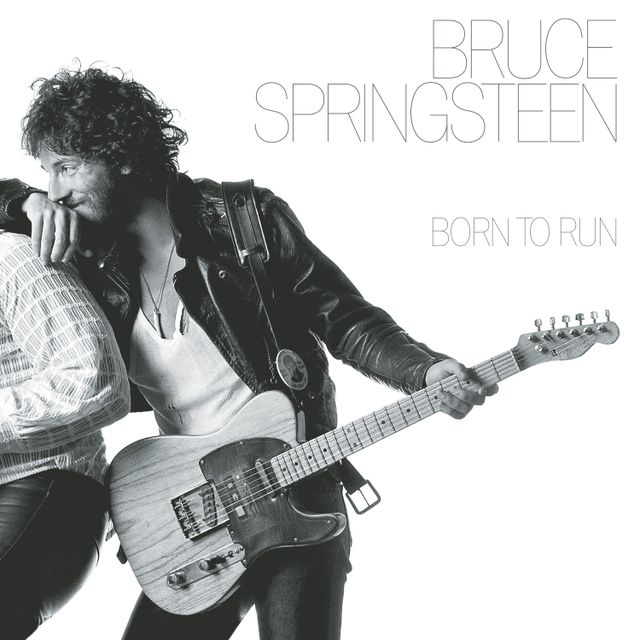
Appel had booked the photographer Eric Meola, but Springsteen kept missing the shoots because he was in the studio. Meola finally told Appel it was “next time or never.” Springsteen came to the next one and brought Clemons, whom he wanted on the cover.
Meola shot about 900 frames, with Springsteen under a fire escape, tuning a radio and holding his guitar. Then Springsteen leaned on Clemons's shoulder. “That one just sort of popped,” Meola said. Columbia's art director, John Berg, spread the photo across the front and back of the sleeve. He said it took a week of arguing, because a fold-out sleeve cost 50 cents instead of 25. “It was breaking the code; we didn't do that unless we had two records,” Berg said.
Springsteen thought it was worth it. “It was one of those records that you didn't have to hear,” he said. “When you saw the cover, you said: ‘I want that one.’”
The Covers of Time and Newsweek
Columbia spent about $250,000 promoting the album, a huge sum at the time. In August 1975 Springsteen played a run of shows at the Bottom Line club in New York that won over much of the music industry. The album climbed to No. 3 on the Billboard chart.
On October 27, 1975, he became the first rock star to appear on the covers of Time and Newsweek in the same week. It was not a coincidence. Jay Cocks of Time heard that Maureen Orth of Newsweek was writing about Springsteen and persuaded his editors not to be beaten. Cocks was a fan. His story, “Rock's New Sensation,” called the music “primal.”
Newsweek's story, “The Making of a Rock Star,” looked at Columbia's marketing campaign instead. It concluded that “hypes are as American as Coca-Cola so perhaps — in one way or another — Bruce Springsteen ‘is’ the Real Thing.” Springsteen worried the attention would backfire. By the following spring he was joking about it on stage, adding a line about the magazine covers to “Rosalita.”
Rave Reviews, With a Few Doubters
Most critics loved it. Greil Marcus, who admitted he had not been impressed by the first two albums, wrote that the title song's guitar figure was “the finest compression of the rock & roll thrill since the opening riffs of ‘Layla.’” Lester Bangs in Creem predicted it would “probably be the finest record released this year.” John Rockwell of The New York Times wrote, “You owe it to yourself to buy this record.”
Robert Christgau gave it an A in the Village Voice, with reservations. He thought Springsteen's “operettic pomposity insults the Ronettes” but said the man “avoids these quibbles at his best and simply runs them over the rest of the time.” He added that the title song “is the fulfillment of everything ‘Be My Baby’ was about and lots more.”
The harshest review appeared in Landau's old paper. In The Real Paper, Langdon Winner wrote that Springsteen “threatens to become the consummate bore,” and called the album “the complete monument to rock and roll orthodoxy.” Bangs had seen that backlash coming. He blamed “one of the biggest hypes in recent memory” for making people suspicious of a record that deserved better.
From Rock and Roll Future to The Boss
Born to Run was the last album Mike Appel co-produced. Landau later became Springsteen's manager, a job he still holds. The next album, Darkness on the Edge of Town, came three years later and was darker and more downbeat. Springsteen's commercial peak came in 1984 with Born in the U.S.A.
Masur, who wrote a book about the album, argues it worked because it fused the pop of the 1950s and 1960s with the restless mood of the 1970s. It was made while Richard Nixon resigned and the Vietnam War ended. Its characters want to escape small towns and dead-end jobs, and many listeners recognized themselves in them.
Springsteen eventually made peace with the record he once threw in a pool. By its 30th anniversary in 2005, he could joke about where it belonged.
“It's embarrassing to want so much, and to expect so much from music, except sometimes it happens—the Sun Sessions, Highway 61, Sgt. Peppers, the Band, Robert Johnson, Exile on Main Street, Born to Run—whoops, I meant to leave that one out.”