
In the autumn of 1976, at Criteria Studios in Miami, Bill Szymczyk pulled five complete takes of a six-and-a-half-minute song onto a single master reel. He cued it up and listened to all five intros and picked one. Then all five first verses. Then he reached for a razor blade. Thirty-three splices later, the two-inch master of “Hotel California” existed in a form no band had ever actually played. The man holding the blade grew up in Muskegon, Michigan, spent four years as a U.S. Navy sonar operator, and never learned to play an instrument — he called himself a professional listener. Between 1969 and 1981 those ears carried B.B. King onto pop radio, built Joe Walsh's solo career from the drum tracks up, and turned a country-rock harmony band into the biggest American rock act of the decade. This feature follows the razor blade.
“The console was my weapon.”
The Method: Ears Before Instruments
Szymczyk is the rare major producer with no background as a musician. The Navy taught him to tell one submarine from another by sound alone, and a Navy course in radio and television production pointed him toward studios. After his discharge he worked his way through New York — cutting demos for Brill Building songwriters, assisting producers including Quincy Jones and Jerry Ragovoy, and rising to chief engineer at Ragovoy's Hit Factory — before taking a pay cut at ABC Records to become a producer.
The missing musicianship became the method. A producer who reads charts hears what the arrangement is supposed to do; Szymczyk could only hear what the record actually did, the way a listener in a car would. He described himself as a professional listener, approaching sessions without preconceived prejudices about how a genre was supposed to sound — which is precisely why a blues label handed him its biggest legend, and why a country-rock band trusted him to make them loud.
Because he couldn't demonstrate a part on piano or guitar, his instrument became the machinery itself. Three habits mark every record he made. First, he recorded complete take after complete take, then composed the master afterward with a razor blade — comping, years before digital audio made it a button. Second, he pushed roots musicians toward the radio without sanding off what made them distinctive: strings behind a bluesman, rock guitars under a country-rock band. Third, he kept the room loose. “I just try to keep the whole situation as light as possible,” he told Tape Op — a skill that would be tested by bands whose members could no longer stand to be in the same building.
1969: Strings at Two in the Morning
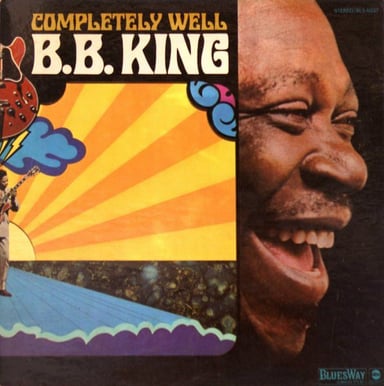
At ABC, the 26-year-old staff producer was handed one of the label's most respected and least commercial artists: B.B. King, then two decades into a career confined to the chitlin' circuit and the R&B charts. Across Live & Well and Completely Well, both released in 1969, Szymczyk paired King with young New York session players. In June 1969 they cut a slow minor-key blues King had been carrying around for years: “The Thrill Is Gone.”
The plan unfolded in two stages. Live & Well hedged its bet in its very construction: one side taped live at the Village Gate — engineered by a young Phil Ramone, later the producer of Billy Joel's The Stranger — and one side cut at the Hit Factory with the new session cast, bassist Jerry Jemmott among them. It became the first B.B. King album ever to crack the Billboard Top 100. Having proved the concept, Completely Well went all in on the studio side, stretching the songs into long, simmering grooves that gave King's guitar room to talk.
Listening back after the session, Szymczyk heard something bigger than a blues record and telephoned King at two in the morning to ask permission to add strings. “What? Well, okay. I'll try it,” King answered, as Szymczyk retold it to Tape Op. Arranger Bert de Coteaux draped the track in dark violins and stabbing cellos, and Szymczyk watched King hear the result: “When he started smiling, I thought, ‘Okay, I'm good now.’” Released as a single that December, it reached No. 15 on the Billboard Hot 100 in February 1970 and won King a Grammy for Best Male R&B Vocal Performance — the crossover hit of his career, on his own terms.
Listen for: how the strings enter only after King's guitar has stated its case — modernization layered around the blues, never on top of it.
The June 1969 recording that Szymczyk heard as a pop record at two in the morning.
1971–1973: A Talk Box in the Rockies
King's success bought Szymczyk the freedom to sign his own acts, and through Cleveland connections he found a power trio called the James Gang, fronted by a guitarist named Joe Walsh. He produced their first three albums, including James Gang Rides Again (1970) and its FM staple “Funk #49.” When ABC's merger with Dunhill moved him to Los Angeles, an earthquake in early 1971 made the decision to leave easy — he resettled in Denver, co-founded the short-lived Tumbleweed Records, and kept working. Walsh, quitting the James Gang, followed him to Colorado.
Denver was a strange base for a hitmaker — Tumbleweed struggled financially, and Szymczyk filled some of the gap with a disc-jockey shift at the free-form radio station KFML — but the freelance work kept coming to him. Chief among it was the J. Geils Band, the hardest-working bar band in America, for whom he produced six albums between 1971 and 1976, from The Morning After through the full-tilt live document Blow Your Face Out. The Geils records taught a lesson the Eagles would soon depend on: how to make a band sound bigger on tape than it did in the room, without losing the sweat.
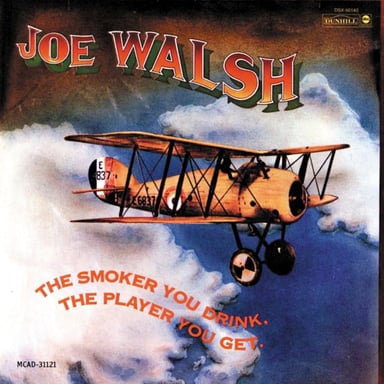
The record that defined the partnership was “Rocky Mountain Way,” from The Smoker You Drink, the Player You Get (1973). It began as an instrumental blues shuffle cut at Criteria; as Szymczyk described in the book Behind the Boards II, they stripped it to the drums alone at Caribou Ranch, high in the Rockies, and rebuilt everything above them — bass, keyboards, slide guitars, and a gadget Walsh had borrowed from Nashville steel player Pete Drake that piped the guitar signal through a tube into his mouth. The talk box solo helped push the single to No. 23 and into permanent classic-rock rotation. The habit of demolishing a take down to its best element and rebuilding it would soon be applied to an entire band.
“He said, ‘Put this in your mouth.’ Smelled terrible. But I did it, and then I used it on ‘Rocky Mountain Way.’”
Listen for: the drum track that survived the demolition — everything else on the record was rebuilt around it, one overdub at a time.
Cut in Florida, stripped to drums in Colorado, finished through a plastic tube.
1974: “Better You Than Me, Mate”
The Eagles came to Szymczyk in open revolt against their producer. Glyn Johns, who had shaped their first two albums, heard them as a harmony group; Don Henley and Glenn Frey wanted to be a rock band. They had already started their third album with Johns in London when they asked Szymczyk to take over. He agreed on one condition — that Johns give his blessing. The Englishman's reply became studio legend: “Better you than me, mate!”
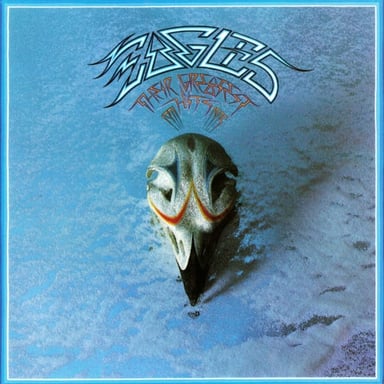
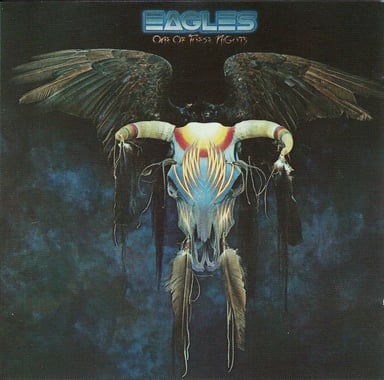
Szymczyk cut On the Border (1974) at Criteria in three weeks, turning the guitars up and encouraging Frey's playing where Johns had discouraged it. The album opened with “Already Gone,” a swaggering Frey rocker that announced the new policy from its first bars — though its biggest hit told a more complicated story. “Best of My Love,” the ballad that became the band's first No. 1 single in early 1975, was one of the tracks salvaged from the abandoned Glyn Johns sessions in London. The new producer's rock band scored its breakthrough with the old producer's recording, and Szymczyk kept it on the record anyway: the professional listener heard a hit and did not care whose console it came from. One of These Nights (1975) finished the transformation and became the band's first No. 1 album. When founding member Bernie Leadon left at the end of that year, the Eagles hired Joe Walsh — Szymczyk's client of seven years — completing the move from country-rock to rock that their producer had been engineering all along. The hits from this era were gathered on Their Greatest Hits 1971–1975, which in February 1976 became the first album ever certified platinum by the RIAA — the industry invented the award, and a Szymczyk-era band collected it first. Our review tells that compilation's full story.
The ear kept freelancing through the Eagles years, and its judgment calls made other people's careers. Producing Rick Derringer's All American Boy (1973) and Wishbone Ash's There's the Rub (1974) kept the calendar full, but the telling story is Elvin Bishop's Struttin' My Stuff: Szymczyk pushed for the inclusion of a ballad called “Fooled Around and Fell in Love,” sung not by Bishop but by his backup vocalist Mickey Thomas. It climbed to No. 3 in May 1976 — the biggest hit of Bishop's career, secured by a producer's insistence on the right song with the right voice, whoever's name was on the sleeve.
Listen for: the title track of One of These Nights — a disco-adjacent groove under country harmonies, the exact midpoint of the transformation Szymczyk was hired to produce.
The first No. 1 album of the Szymczyk era — the harmony band learning to swagger.
1976: Thirty-Three Splices
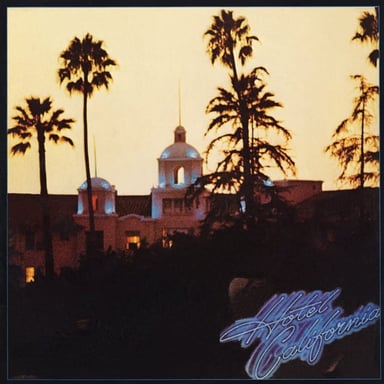
Hotel California is covered in depth in our review, so what belongs here is the production story. The album was made over nine months in 1976, alternating between Record Plant in Los Angeles and Criteria in Miami. The title track — born as a four-track demo Don Felder called in from his home studio, with a working title of “Mexican Reggae” — was recorded three separate times, because once Henley began singing the finished lyric, the key sat wrong for his voice. The keeper master was assembled from five complete takes with those 33 razor-blade edits, and the famous twin-guitar coda was punched in over two days, invented at the console as tape rolled.
The two studios were as different as the two coasts: Record Plant's Studio C ran an API console, Criteria's Studio C a custom MCI desk, and the band worked month-long blocks in each. The editing itself Szymczyk described to Sound on Sound with the calm of a man narrating carpentry: “I'd pull all five takes off however many reels there were, and I'd put them all on a master reel. Then I'd cue it up and listen to all five intros and pick one; listen to all five verses and pick one.” Each pick meant a physical cut through the only copy of the performance.
Felder and Walsh were in the control room with me, one to the right, one to the left, like gunfighters! Felder was the ultimate technician. Walsh was the ultimate ‘feel’ guy. Together they were phenomenal.
The rest of the album was assembled with the same patience. “Life in the Fast Lane” grew out of a lick Joe Walsh played as a warm-up exercise until the tape-rolling habit caught it, and “New Kid in Town” gave the album a second No. 1 single. This is Szymczyk's method at full power: the performance treated as raw material, the record composed afterward at the desk. No band played “Hotel California” top to bottom the way the world knows it; the producer built it. In February 1978 the track won the Grammy for Record of the Year — an award that goes to the producer as well as the artist, and the sharpest recognition a professional listener ever received. In a perfectly Eagles coda to the triumph, the band skipped the ceremony: manager Irving Azoff would not commit them to attend without a guaranteed win, so the most celebrated production of the decade collected its Grammy in absentia.
Listen for: the coda's trade-off between Felder's precise, on-top-of-the-beat lines and Walsh's lagging, behind-the-beat phrases — two opposite clocks, spliced into one.
Five takes, 33 edits, one master — the most famous splice job in American rock.
1979–1981: The Hardest Records
Between Eagles albums, the ear kept picking winners for smaller names. Jay Ferguson, the former Spirit and Jo Jo Gunne frontman, cut his solo records with Szymczyk in the same Miami rooms as Hotel California, and the producer brought Joe Walsh in to play slide guitar on a breezy, piano-driven track called “Thunder Island.” It reached No. 9 on the Hot 100 in the spring of 1978 — the biggest hit of Ferguson's career, and another entry in the catalog of singles Szymczyk heard before anyone else did.
Success made the sessions harder, not easier. The Long Run (1979) was cut largely at Bayshore Recording, Szymczyk's own Miami studio, with a band whose members increasingly worked apart. The craft still held: the album held No. 1 on the Billboard 200 for nine weeks, all three of its singles reached the top ten, and the lead single, “Heartache Tonight,” went to No. 1 on the Hot 100 in November 1979 — the band's fifth and final chart-topping single, and the fourth produced by Szymczyk. But by Eagles Live (1980) Henley and Frey were overdubbing their parts on opposite coasts, with the producer shuttling tapes between them. The band broke up before the live album shipped. Szymczyk's response to the era was characteristic: keep it light, keep the tape rolling, and let the console do the diplomacy. In the same stretch he produced Bob Seger's Against the Wind (1980), proof the heartland-rock sound he built for the Eagles traveled — Seger had co-written “Heartache Tonight” with the band the year before, and by 1980 Szymczyk's Miami room was a crossroads where American rock's biggest acts intersected.
Then came the assignment he never romanticized. The Who, recording Face Dances (1981) — their first album after Keith Moon's death, with Kenney Jones on drums — arrived at the studio grieving and fractious, the members avoiding one another during tracking. “That was the hardest record I ever had to produce,” Szymczyk told Tape Op, and decades later he remained unhappy with the mix. The album still delivered “You Better You Bet,” which reached No. 18 on the Billboard Hot 100 — a hit single pulled out of a band at its lowest ebb, which is its own kind of production credit.
Listen for: the punch and separation of the drums on “You Better You Bet” — a new drummer in Moon's seat, mixed with nowhere to hide.
The single Szymczyk pulled from the hardest sessions of his career.
The Razor Blade in Every Laptop
Szymczyk largely retired from production in 1990, and the retirement mostly held — a 2005 album for the alternative-rock band Dishwalla and two records with singer-songwriter Brian Vander Ark were the quiet exceptions. The loud one came when the Eagles reconvened for 2007's Long Road Out of Eden, made the way the band now coexisted: Frey working from his studio in West Los Angeles, Henley from Malibu, contributions traveling by email, with their old producer as the connective tissue between camps. Henley and Frey had long since learned to produce themselves; what they still needed was the man in the middle. Colorado, where the second act of his career began, inducted him into its Music Hall of Fame. He lives today in Little Switzerland, North Carolina, still selective about the projects he takes.
His real legacy is a working method so completely absorbed that nobody credits it anymore. Comping — assembling a master performance from the best moments of many takes — is now a default workflow in every digital audio workstation, a drag-and-click operation performed on every modern vocal. Szymczyk did it with a grease pencil and a razor blade, on two-inch tape, where every cut was irreversible, and he did it so well that the seams in “Hotel California” have gone unheard for five decades.
It would be easy to file Szymczyk as the man who got lucky with one great band. The catalog argues otherwise. The same ears heard a pop crossover hiding inside a B.B. King blues, a No. 3 single buried in an Elvin Bishop track sung by the backup vocalist, and a hit record in a band its own producer had given up on. What connected them was never an instrument — it was the judgment about which two seconds of tape deserved to survive. The proof is on our review of Hotel California and Their Greatest Hits 1971–1975 — records built by a man who never played a note on them.
“More of a mediator, a consigliere, a ringmaster, if you will.”