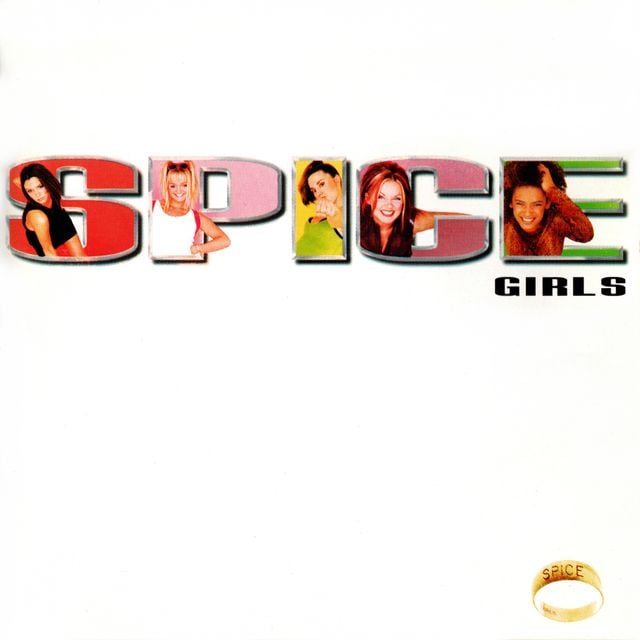

On Valentine's Day 1994, a management outfit called Heart placed a classified ad in the trade paper The Stage: “WANTED: R.U. 18–23 with the ability to sing/dance? R.U. streetwise, outgoing, ambitious and dedicated?” Four hundred young women answered it at a dance studio in central London. Two and a half years later, five of them — a group first called Touch, then renamed Spice — released a debut album built almost entirely inside two London studios, its signature song written in the time it takes to boil a kettle. Along the way, the five fired the managers who'd discovered them, signed with a bigger one, and turned a marketing slogan — Girl Power — into a genuine cultural export. Spice went on to sell more than 31 million copies worldwide, more than any album ever released by a female group, and did it while sending its first four singles to No. 1 in Britain, a run no act had managed before them. What started as an audition-room experiment in manufactured pop became one of the defining pop records of the decade.
“Irresistible, immaculately crafted pop that gets by on the skills of the producers and the charisma of the five Spices.”
R.U. 18–23? The Manufactured Beginning
The father-and-son management team of Bob and Chris Herbert, backed by financier Chic Murphy, placed their ad hoping to build a female answer to Take That. Auditions were held at Danceworks Studios on March 4, 1994, and from roughly 400 hopefuls the Herberts assembled five: Melanie Brown, Melanie Chisholm, Emma Bunton, Geri Halliwell and Victoria Adams. They called the group Touch, moved the five into a shared house to rehearse, and eventually settled on a punchier name: Spice.
The arrangement didn't last. By March 1995 — a year into rehearsals, with a handful of demos to their name — the five had decided the Herberts weren't listening to what they wanted the group to be, and dismissed them. It was an unusual move for five unsigned singers with no record deal and no income to speak of, betting their entire venture on the belief that they, not their managers, understood what the act should sound like. They found new management in Simon Fuller, whose company 19 Management took over and pushed the group toward the songwriting partnerships that would define the album.
That instinct for control turned out to be the through-line of the whole project. Where most manufactured pop acts of the era were handed finished songs by writing teams and told to sing them, the five Spice Girls insisted on being in the room for every session, co-writing nearly every track on the album that would carry their name.
Fifteen Minutes at Strongroom
Fuller connected the group with songwriter-producers Matt Rowe and Richard “Biff” Stannard, who began writing with them at Strongroom Studios in Shoreditch in January 1995. Stannard has told the story of meeting the group for the first time at a different studio session entirely: Melanie Brown approached him, jumped on his back, and demanded, “Who are you?” As a gay man working with five young women who'd been sold to labels as sex appeal, Stannard found the dynamic unexpectedly refreshing — “it wasn't sexual,” he said, and that distinction shaped how he and Rowe worked with them from the start.
“Wannabe” came together almost by accident. Rowe and Stannard had a backing track ready before the group arrived, and once the Spice Girls wanted something more uptempo than the ballad they'd already written that day, Brown and Bunton started chanting a nonsense hook — “zig-a-zig-ah” — that became the song's chorus. Bunton later put the writing time at fifteen or twenty minutes; Stannard, with a little more distance, called it “not bad for an hour or two's work.” Either way, the session produced the fastest hit of his career and, eventually, the biggest-selling single ever released by a girl group.
The rest of the album was split between Rowe and Stannard's Strongroom sessions and work with the production duo Absolute — Andy Watkins and Paul Wilson — at Olympic Studios in Barnes, with mixer Mark “Spike” Stent brought in to finish several tracks including “Wannabe” itself. The whole record was written and recorded across roughly a year and a half, a pace closer to a singles act racing a release date than a group being carefully sculpted into stars.
Shot in one continuous take at the Midland Grand Hotel, St Pancras — the song itself was written in under half an hour.
Sugar, Spice, and a Safe-Sex Hook
Musically, Spice refuses to sit still. “Wannabe” stomps in on a chant and a horn stab; “Say You'll Be There” leans on a smoky saxophone line borrowed from quiet-storm R&B; “2 Become 1” slows everything down into an adult-contemporary ballad. The record moves through dance-pop, hip-hop-inflected beats and radio balladry inside eleven tracks without ever feeling like a compilation, which is largely down to Rowe and Stannard's ear for a hook and the group's insistence on singing all of it in character as themselves rather than as interchangeable voices.
“2 Become 1” was the second song the group wrote with Rowe and Stannard, reportedly inspired by a real relationship developing between Geri Halliwell and Rowe during the sessions. The group has said that once they committed to writing a ballad, they wanted it to carry more weight than the genre usually allowed — which is how a Christmas-season No. 1 single ended up built around a direct plea for safe sex: “Be a little bit wiser, baby, put it on, put it on.” It is a strange thing to hear on daytime radio in 1996, and it is also the clearest evidence that the group had opinions about what they wanted their songs to say.
That level of authorial input was unusual for the genre at the time. Most of the era's manufactured pop acts had no writing credits at all; every one of the Spice Girls is credited as a co-writer on nearly every track here, a detail that undercuts the easy dismissal of the album as five interchangeable mouthpieces for a production team.
Essential Tracks
“Wannabe”
Written and demoed in under an hour at Strongroom Studios, “Wannabe” opens the album the same way it opened the group's career — with a spoken-word dare (“So, here's the story from A to Z”) and a chorus built from a chant Mel B and Emma Bunton improvised on the spot after Richard Stannard and Matt Rowe had already laid down the backing track. The production, finished by mixer Mark “Spike” Stent, stacks five distinct voices and personalities into two and a half minutes without ever losing the plot, cutting between rapped verses, a shouted bridge and that nonsense chorus hook without any of it feeling stitched together.
Its lyric about not compromising a friendship for a partner — “if you wanna be my lover, you gotta get with my friends” — gave Girl Power its first concrete example rather than just a slogan, turning an abstract marketing phrase into an actual, singable demand. Released as the lead single in July 1996, it topped the UK chart for seven weeks, the second-longest run by an all-female act in British chart history, and became the first record ever released by the group.
It remains the best-selling single ever released by a girl group and the song that both launched and defined the album around it — loud, chaotic, and built by five people who clearly wrote it for themselves rather than for a focus group. Three decades on, “zig-a-zig-ah” is still one of the most instantly recognizable nonsense phrases in pop history, which is a strange kind of immortality for a lyric nobody involved in writing it could fully explain afterward.
“Say You'll Be There”
The second single traded “Wannabe”'s chaos for a harmonica hook and a slinkier, more R&B-leaning groove built by the production duo Absolute, proof the group and its producers had range beyond the debut single's stomp. It gave all five members a genuine vocal showcase, including Melanie Chisholm's belted bridge, in a way the first single, built more around chant and personality than melody, hadn't.
Its video reframed the group entirely: shot in the Mojave Desert and directed by Vaughan Arnell, it cast the five as leather-clad action heroines dispatching a would-be attacker with martial-arts choreography, a deliberate departure from girl-group cuteness toward something closer to a pop version of a spy film. Emma Bunton helped work out its Goju-influenced moves, and the imagery borrowed openly from 1960s action cinema rather than from any existing girl-group template.
It became the group's second UK No. 1 in a row, and the combination of song and image — capable, armed, uninterested in being rescued — did more to define Girl Power as an idea than any interview the group gave that year. Where “Wannabe” stated the philosophy, “Say You'll Be There” dramatized it.
“2 Become 1”
The album's ballad, and the group's third consecutive UK No. 1, arrived as the 1996 Christmas single — traditionally the UK's highest-profile chart slot — built on a slow-jam arrangement that owed more to Motown balladry than to anything else on the record. It was reportedly the second song the group wrote with Rowe and Stannard, and by most accounts was shaped in part by a real romance developing between Geri Halliwell and Rowe during the sessions.
What separates it from a standard slushy ballad is its lyric, which folds a direct safe-sex message into its chorus — “be a little bit wiser, baby, put it on, put it on” — rather than leaving romance vague. For a song aimed squarely at a teenage audience and playing on family radio through the holidays, that specificity was a genuinely unusual choice, and one the group has said was deliberate: if they were going to write a ballad, they wanted it to say something.
Alongside “Wannabe” and “Say You'll Be There,” it made the group the first act in UK chart history to send each of their first three singles straight to No. 1 — a run a fourth single, “Mama”/“Who Do You Think You Are,” would extend to four, a record still unmatched by any act that followed them.
Filmed in California's Mojave Desert, the video recast the group as leather-clad action heroines.
Four for Four: A Chart Record No One's Matched
Spice was released in Japan on September 19, 1996, then in Britain on November 4, where it debuted at No. 1 on sales of 114,000 copies in its first week. Within seven weeks it had sold 1.8 million copies across the UK — making the Spice Girls, by Billboard's framing, the fastest-selling British act since the Beatles.
The US release followed on February 4, 1997, and the album eventually topped the Billboard 200 on the chart dated May 24, 1997 — the first all-female group to reach No. 1 on that chart since the Go-Go's Beauty and the Beat in 1982. By the end of 1997 it had sold 5.3 million copies in America alone, making it the best-selling album of the year in the US.
The RIAA certified the album 7× Platinum, with Nielsen SoundScan tallying 7.45 million US copies as of 2013. Worldwide sales have passed 31 million according to the group's label, Universal — making Spice the best-selling album ever released by a female group, and earning the Spice Girls the Guinness World Record for best-selling debut album by a UK group.
Manufactured Pop, Real Phenomenon
Contemporary critics were more receptive than the group's manufactured origins might have suggested. Reviewing Spice for Melody Maker, Simon Price concluded that the group's “crayon-simple, girl-power self-sufficiency” made them “infinitely more useful than anything that's come from the indie sector” that year — a pointed jab at the Britpop guitar bands that dominated UK music press coverage at the time.
Retrospective assessment has settled into something similar. AllMusic's Stephen Thomas Erlewine, reviewing the album years later, wrote that “none of the girls have great voices, but they do exude personality and charisma,” and that the record's tracks — from “Wannabe”'s guilty-pleasure stomp to “2 Become 1”'s “perfect adult contemporary” balladry — add up to pop that “doesn't need to be original to be entertaining.”
The word that follows the group everywhere is “manufactured,” and it isn't wrong — a classified ad and a management company built the group from nothing. But the ad only produced five strangers in a room; everything the album became was decided afterward, by songwriters who let those five people write about what they actually wanted to say.
Girl Power and Its Discontents
“Girl Power” began as press shorthand for the group's attitude and became the most successful piece of pop branding of the decade — and, almost immediately, a target. Academic and feminist critics were largely unimpressed: the slogan was widely dismissed as “all mouth and no substance,” a brand of empowerment sold through consumerism rather than any engagement with structural inequality, in the words of critics writing in the feminist journal Trouble & Strife around the time the record broke.
Feminism has become a dirty word. Girl Power is just a Nineties way of saying it.
The group's own line on the subject, delivered repeatedly in interviews, was blunter than most of their critics: feminism had become unfashionable, and Girl Power was simply a way of repackaging the same idea for an audience that would otherwise tune it out. Whether that repackaging counted as progress or dilution depended entirely on who was asked — but the same Trouble & Strife researchers who scorned the branding also found something real underneath it, interviewing young girls who defined Girl Power in their own words as, simply, sticking up for yourself and not doing what boys expected of you.
Billboard's later assessment of the moment cut through the argument more plainly than either side managed at the time: in the mid-1990s, with riot grrrl treated as too abrasive for the mainstream and few pop figures willing to call themselves feminists at all, “the Spice Girls took all of that fear and made feminism—popularized as Girl Power—fun.” Fun was, in fact, the entire delivery mechanism: a Spice World feature film, a merchandising empire that put the group's faces on everything from crisps to lunchboxes, and a slogan simple enough for an eight-year-old to repeat back word for word.
Legacy: The Blueprint Every Girl Group Copied
Every major girl group that followed operated somewhere in the shadow of the model Spice set: distinct personalities over interchangeable voices, a slogan simple enough to fit on merchandise, and pop songs with enough personal input from the singers to survive the “manufactured” label intact. Destiny's Child, Girls Aloud and, later, Little Mix have all been described as walking through a door the Spice Girls kicked open first.
The group has reunited repeatedly in the three decades since — a 2007–08 world tour, a performance at the closing ceremony of the 2012 London Olympics, and periodic tours since, most without Victoria Beckham. Thirty years on, the anniversary is being marked with a singles-collection box set and a UK Royal Mint commemorative coin, official recognition of a record that critics spent 1996 treating as a novelty.
What's held up is not the manufactured origin story but what came out of it: an album where a fifteen-minute writing session, a safe-sex lyric buried in a Christmas ballad, and five distinct personalities turned an audition-room experiment into a genuine, still-unmatched chart record.
“The Spice Girls took all of that fear and made feminism—popularized as Girl Power—fun.”