Our Turntables Only Rotate One Way
In 1982, a California Assembly committee played Led Zeppelin's most famous song backwards, looking for messages from Satan. Here is where the claim came from and why people still hear it.
 Trevor Fortune•🎵 Led Zeppelin - Led Zeppelin IV•5 min read•November 18, 2026
On Tuesday, April 27, 1982, a committee of the California State Assembly met in Sacramento and listened to Led Zeppelin's “Stairway to Heaven” played backwards on a small cassette machine. Assemblyman Phillip Wyman wanted warning labels on records that he said hid messages from Satan. His expert witness told the committee that a teenager only had to hear the song three times for those messages to take hold.
There was nothing hidden in “Stairway to Heaven.” Nobody has ever shown that Led Zeppelin reversed a single word on it. But for most of the 1980s, millions of Americans believed rock records were full of backwards messages, and this song was the most famous example.
A Preacher, a TV Show and a Cassette Player
The idea began on Christian radio. In his book on Led Zeppelin IV, the writer Erik Davis traces the “Stairway” claim to a Michigan minister, Michael Mills. In 1981 Mills argued that the subconscious mind could pick up phrases that sinful rock musicians had planted backwards in their songs.
In January 1982 the claim reached a national audience. Paul Crouch, host of Praise the Lord on the Trinity Broadcasting Network, presented the idea of “backward masking” on air and used “Stairway to Heaven” as his example.
One viewer was Monika Wilfley, a 20-year-old from Lancaster, California. She went home and played her records backwards, and said she could hear the offending words. “I threw away a lot of albums, and a lot of them were new,” she told United Press International. Then she took her concerns to Assemblyman Phillip Wyman.
The Hearing in Sacramento
Wyman's bill, A.B. 3741, would have required record companies to print warnings on album covers about “backward maskings.” It went before the Assembly's Consumer Protection and Toxics Committee. Before playing the tape, Wyman and his witness handed out pamphlets with the supposed backwards words spelled out. Then they played the relevant part of “Stairway” forwards, and then in reverse.
According to Wyman, the reversed vocal included the line “Here's to my sweet Satan.” His witness, William H. Yarroll II of Aurora, Colorado, described himself as a “neuroscientist.” “With backward masking a teenager listening to this three times has stored it as truth,” he told the committee.
Led Zeppelin were not the only target. Wyman also claimed the Beatles had hidden “Paul McCartney is dead” on “Revolution 9” to boost sales, and cited Styx's “Snowblind.” The day after the hearing, he explained his worry to CBS Evening News.
"Suppose young people have heard ‘Stairway to Heaven’ two or three hundred times and there has been implanted in their subconscious mind pro satanic messages or incantations?"
The committee's chairwoman, Sally Tanner, called the subject “exciting and interesting.” She delayed a vote until musicians and the record industry could testify at later hearings. That day never came, and the bill did not pass.
“Our Turntables Only Rotate in One Direction”
Led Zeppelin had broken up in 1980, after the death of drummer John Bonham, so there was no band to defend the song. Their label, Swan Song Records, issued a single line through a spokesman: “Our turntables only rotate in one direction.”
Others in the industry were just as dismissive. Styx's James Young called the idea “just a bunch of rubbish.” Bob Garcia of A&M Records joked that it must be the devil putting the messages on the records, “because no one here knows how to do it.” Wyman felt he had to defend himself. “I am not a kook,” he said, pointing out that his constituents had raised the issue.
The idea spread anyway. Two weeks after the Sacramento hearing, California congressman Robert Dornan introduced a similar bill in Washington, H.R. 6363. It was sent to a subcommittee and died there. A year later, Arkansas lawmakers passed a warning-label bill unanimously in both houses. Governor Bill Clinton vetoed it.
What Two Psychologists Found
In Alberta, Canada, a skeptical radio DJ asked two psychologists at the University of Lethbridge, John Vokey and Don Read, whether any of it was true. They recorded readings from Lewis Carroll and the 23rd Psalm, reversed them, and played them to 65 test subjects.
Listeners could tell whether a reversed voice was male or female almost every time, with 98.9 percent accuracy. But when asked whether a backwards passage was a nursery rhyme, a Christian text, a satanic text or something pornographic, they did no better than chance. The meaning did not get through at any level.
Then the researchers listened to the reversed recordings themselves and invented “messages” that fit the sounds, including “I saw Satan.” “It wasn't as easy as it sounds,” Vokey said later. “We had to drink a lot of beer to create those messages.” Once subjects were told what to listen for, they heard the planted phrases 84.6 percent of the time.
Their paper, published in American Psychologist in 1985, concluded that backwards messages in pop songs were mostly built by the listener. That matched how the claims were always presented. At the Sacramento hearing, as at church seminars, people were handed the words first and then played the tape. Psychologists call this kind of effect pareidolia, the same habit that makes people see faces in clouds.
Bands Started Hiding Real Messages
Erik Davis points out that reversed singing naturally produces word-like sounds by accident. One Led Zeppelin fan proved it by reversing the same verse from twelve different live recordings of “Stairway.” He got a dozen similar-sounding “messages,” from performances the band could not have doctored in advance.
Real backwards messages do exist, but they are jokes rather than spells. Electric Light Orchestra's “Fire on High” opens with one. Pink Floyd hid a reversed message from Roger Waters in “Empty Spaces,” on The Wall, congratulating anyone who found it. After the panic, Atlas Obscura notes, more bands added them on purpose to mock the whole idea.
The scare faded by the end of the 1980s. Atlas Obscura's history of the panic suggests the science had less to do with it than the switch from records and cassettes to CDs, which made it much harder to play a song backwards at home.
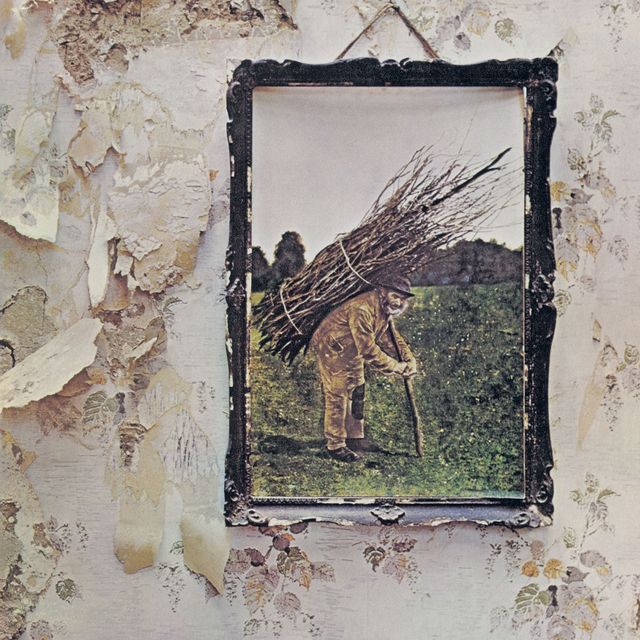
“Stairway to Heaven” came through it intact. It comes from an album that had sold millions with no band name on the cover, a story told in Four Symbols, No Name. The song went on to become a fixture of American rock radio, and it is still played far more often forwards than backwards.
Related Review
Read our comprehensive analysis of Led Zeppelin's Led Zeppelin IV
Led Zeppelin IV Review →