The Third-Worst Album of 1996
Weezer's second record flopped, and Rivers Cuomo spent years wishing he'd never made it. The emo bands of the early 2000s treated it as the album to copy.
 Trevor Fortune•🎵 Weezer - Pinkerton•6 min read•October 15, 2026
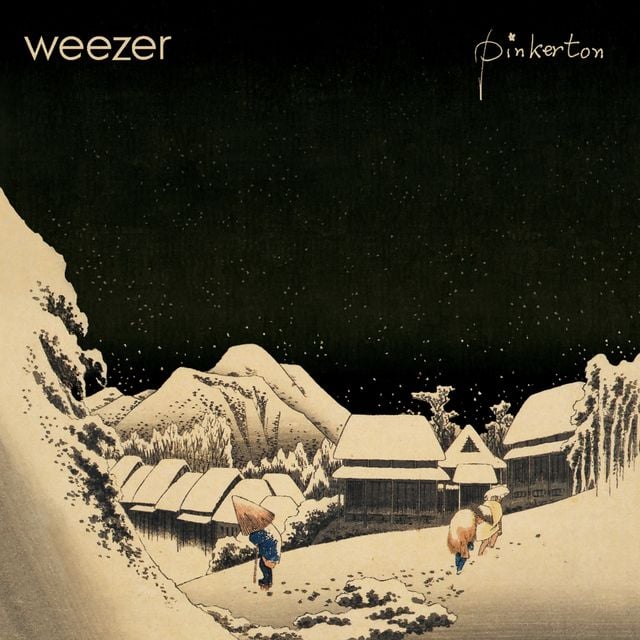
When Weezer released Pinkerton in September 1996, it sold poorly and Rolling Stone's readers voted it the third-worst album of the year. Rivers Cuomo later called it “a hideous record.” A few years after that, the bands leading emo's move into the mainstream were naming Weezer as their biggest influence, and Pinkerton was the record their fans passed around.
Weezer didn't invent emo, and Cuomo never wanted any part of it. But the album he tried to bury became the one that shaped how a generation of bands wrote about their own lives. It took twenty years to go platinum.
From Space Opera to Diary
Weezer's 1994 debut, the Blue Album, went triple platinum on the back of “Buddy Holly” and “Undone (The Sweater Song).” The band were not all comfortable with what came with it. “We saw our audiences change from intelligent, hip-looking people to complete jocks who just came because they saw the video,” guitarist Brian Bell told the Toronto Star in 1996.
Cuomo's first idea for the follow-up was Songs from the Black Hole, a science-fiction rock opera loosely modeled on Madame Butterfly. Then his life went sideways. In 1995 he had surgery to lengthen his left leg, which left him in constant pain, and he enrolled at Harvard to study classical composition. The space opera turned into something much more personal, with lyrics taken straight from his journals.
Bell watched it happen. “Rivers was on painkillers… He had this painful contraption on his leg,” he told Rolling Stone in 2001. “It was painful for him to hold his guitar up a certain way, so most of those songs are written in the first position. I would almost have to egg the songs out of him.”
Loud, Rough, and Too Honest
Weezer produced the album themselves, aiming for the sound of their live shows rather than the polish Ric Ocasek had given the debut. Sessions moved between Electric Lady in New York, Fort Apache in Boston, and Sound City in Van Nuys, fitted around Cuomo's semesters. The result was noisier and darker. The songs were about groupies, crushes that went nowhere, and an 18-year-old Japanese fan who had written Cuomo a letter.
That directness is what put people off. The day before release, the Pinkerton detective agency sued the band for $2 million over the name, a case the band and their label won because the title so obviously came from the opera. It was some of the best press the record got. Pinkerton debuted at No. 19 on the Billboard 200 and slid from there.
Reviews were lukewarm. Rolling Stone's Rob O'Connor gave it three stars and wrote that Cuomo “takes a juvenile tack on personal relationships.” Then the magazine's readers put it third on their list of the year's worst albums.
The Songwriter Who Disowned It
The tour went well, but morale did not. In July 1997, Mykel and Carli Allan, the sisters who ran Weezer's fan club, were killed with their younger sister Trysta in a car crash after one of the band's shows. Weezer finished their obligations and went on hiatus. Bassist Matt Sharp announced he was leaving in April 1998.
Cuomo turned against the record completely. He told Entertainment Weekly in 2001 that everybody had hated it: “Critics, the majority of our fans, most of my friends and family, the other band members… Everyone thought it was an embarrassment.” He called it “a hugely painful mistake that happened in front of hundreds of thousands of people.”
"It's like getting really drunk at a party and spilling your guts in front of everyone and feeling incredibly great and cathartic about it, and then waking up the next morning and realizing what a complete fool you made of yourself."
When Weezer came back in May 2001, it was with a second self-titled record, the Green Album, produced again by Ocasek. Its first single, “Hash Pipe,” was a hit, and Cuomo made a point of saying the songs were impersonal. “This record is purely musical,” he told Rolling Stone. “There's no feeling, there's no emotion.”
Rescued by Teenagers and Emo Bands
While Cuomo was away, the album found a new audience. By the early 2000s, music fans were trading songs on file-sharing services and arguing about bands on internet forums. Teenagers who had missed Pinkerton in 1996 found it there and took its awkwardness as honesty rather than embarrassment.
At the same time, emo was moving out of the underground. Its biggest new names, Jimmy Eat World, Saves the Day, and Dashboard Confessional, all seemed to be citing Weezer as their main influence. Richard Egan, president of the emo label Vagrant Records, told Spin that Pinkerton was the inspiration for many of the bands being filed under emo. Its mix of loud guitars and confessional, unflattering lyrics became a template.
Musicians who grew up on it still talk about it that way. Justin Pierre of Motion City Soundtrack told Alternative Press it was one of his favorite albums of all time. “It is messy, ugly and raw,” he said. “It's full of pain, humor, and brutal honesty.”
Cuomo wanted none of it. “The most painful thing in my life these days is the cult around Pinkerton,” he told Rolling Stone in 2001. “It's just a sick album, sick in a diseased sort of way.” He was blunter about the genre it was supposedly feeding. “For the most part, emo is worthless,” he told Pulse. “‘Pinkerton’ is worthless.”
Making Peace With It
The critics came round first. In 2002, Rolling Stone's readers voted Pinkerton the 16th greatest album of all time, six years after voting it one of 1996's worst. Two years later the magazine raised its own rating from three stars to five.
Cuomo took longer. By 2008 he had changed his mind. “Pinkerton's great,” he told Pitchfork. “It's super-deep, brave and authentic.” In 2010 Weezer released a deluxe edition and toured playing the Blue Album and Pinkerton in full, the songs he had once said he never wanted to play again.
"It was a great feeling of validation from the fans, for this album that was so personal to me and had been such a source of pain for years. To feel loved and accepted for this very honest part of myself was inspiring."
On September 16, 2016, eight days before its 20th anniversary, Pinkerton was certified platinum. Every Weezer album since has been measured against it. The record its author once called worthless is now the one his fans hold the rest of his work up against.