The $120 Money Order
How the highest-grossing tour ever staged refused to play its own album, ruined its promoter, and finished the Jacksons as a group
 Trevor Fortune•🎵 The Jacksons - Victory•9 min read•August 18, 2026
In the summer of 1984, an eleven-year-old named Ladonna Jones in Lewisville, Texas, had scraped together thirty dollars to see the Jacksons at Texas Stadium. Then she found out how the tickets worked. You could not walk up to a box office. You had to obtain a special form, fill it in, and mail it with a postal money order for one hundred and twenty dollars — four seats, minimum, no choice of location — into a lottery you would probably lose, after which your money would be returned in six to eight weeks. She wrote to Michael Jackson instead. Her letter contained a question that a very large and very expensive machine had somehow failed to ask itself.
"How could you, of all people, be so selfish?"
The Deal That Broke the Promoter
The machine had been assembled the previous winter, when Thriller was rewriting every commercial record in music and the family around its author saw an opportunity. In November 1983 the Jacksons announced they would tour, and the boxing promoter Don King arrived with three million dollars in advances and a Pepsi sponsorship. By spring the promotion rights were being contested, and the winning bid came from an unlikely direction: Chuck Sullivan, a lawyer and the son of the man who owned the New England Patriots.
Sullivan's company offered terms that no experienced concert promoter would have offered. The Jacksons were to receive 83.4 percent of gross potential ticket revenue — roughly twenty-five points above the industry standard of the day — against an advance of $36.6 million. To fund the first payments, Sullivan mortgaged the stadium in Foxborough for a $12.5 million loan. He had bet a football family's real estate on the proposition that a stadium tour could clear a guarantee larger than any tour had ever grossed.
A Lottery Disguised as a Ticket Sale
Which is where the money order came in. The mail-order system, devised with input from Don King and from Joe Jackson — who no longer managed his sons but had not stopped operating — was justified as an anti-scalping measure. Tickets were a flat thirty dollars regardless of where you sat, sold only in blocks of four, allocated by lottery. Roughly one applicant in ten would win. Everyone else got a refund weeks later.
The arithmetic underneath was not subtle. Millions of dollars in unsuccessful applications would sit in accounts earning around seven percent for the holding period, an interest windfall estimated at ten to twelve million dollars. Sullivan insisted the interest would not even cover the cost of processing the orders. Almost nobody believed him. The publisher of the Atlanta Constitutionsaid the scheme absolutely reeked of arrogance. A lifeguard in Jacksonville put it more plainly: he must think we're as rich as he is, this is Jacksonville, this ain't Hollywood.
Marlon Jackson defended it as fairness — the point, he said, was for everybody to have a fair chance to see the show without paying hundreds of dollars to scalpers. Michael had opposed it from the start, calling it a public relations disaster and pointing out that a hundred and twenty dollars up front put the tour beyond the reach of a great many of the Black fans who had made his career. He was overruled. When newspapers in Kansas City printed the order form in late June, people queued outside shops before opening to buy the paper.
The Letter and the Press Conference
Ladonna Jones's letter reached him, and it did what months of internal argument had not. On July 5, 1984 — the day before the opening night in Kansas City — Michael Jackson stood in front of the press, visibly uncomfortable, and dismantled his own tour's business model in public. The ticket system would be changed. And his entire share of the profits, he announced, would go to charity. Then he left the room quickly.
He kept the promise. Roughly five million dollars went to the T.J. Martell Foundation for leukemia and cancer research, the United Negro College Fund, and Camp Ronald McDonald for Good Times. Ladonna Jones was given free tickets, and met him backstage. It is the only clean transaction in the entire story.
The Tour That Would Not Play Its Own Album
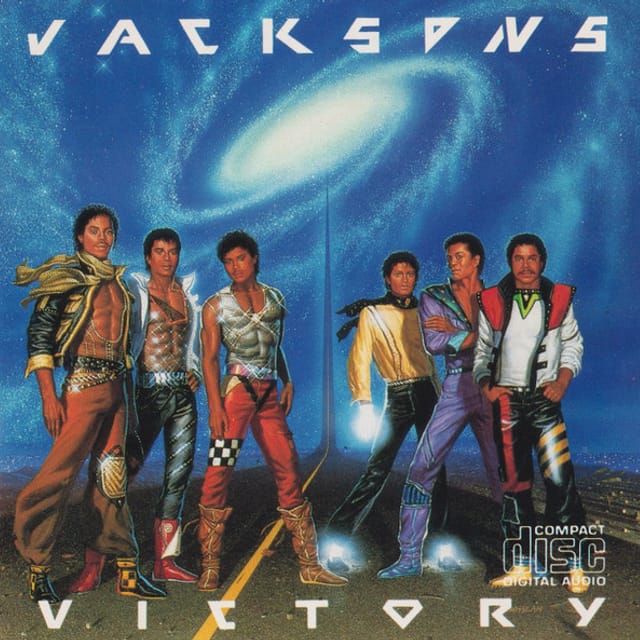
The strangest fact about the Victory Tour is that the Victory tour did not perform Victory. Marlon has said that Michael refused to rehearse the album's songs at all, and refused to perform them; across fifty-five shows, nothing from the record the tour was named after was played, beyond a passing nod to “State of Shock” folded into another number. He had been reluctant about the whole enterprise, and agreed only after his mother Katherine and the weight of public expectation went to work on him. The brothers needed the income. He did not.
What the audience got instead was Thriller and Off the Wall, plus the older Jacksons material from Destiny and Triumph, and a Jermaine solo spot — the brother who had stayed at Motown in 1975 while the rest left, now back in the fold. Even “Thriller” itself was left out, because Michael did not like how it sounded in a stadium. The staging around all this was a fantasy sequence about a sword in a stone, complete with giant creatures called Kreetons and warriors trying to pull the blade free, and it was enormous enough that it cost significant seating capacity and needed more than thirty trailers to move.
The reviews, oddly, were good. Writing in TIME after the Kansas City premiere, Jay Cocks catalogued the lasers, magic tricks, detonations and fireworks and pronounced the show a four-star eye-glazer and ear-bender with a healthy portion of good solid funk underneath. The spectacle worked. The economics did not.
Seven Million Each, and a Surprise
By the numbers the Victory Tour was the most successful tour anyone had ever staged: fifty-five shows between July 6 and December 9, 1984, most of them stadiums, more than two million tickets, and a gross around seventy-five million dollars — a record at the time. The brothers cleared roughly seven million dollars each. Michael gave his away.
The strain inside the family did not survive the arithmetic. Don King, never a man to leave a wound unpoked, complained publicly that there was no way Michael should be as big as he was and treat his family the way he did — a remark that so enraged Jackson he called his lawyer John Branca and demanded to sue, and had to be talked down. By December the tour was carrying a European leg and an Australian leg for 1985 on its books.
Then, at the last of six sold-out nights at Dodger Stadium on December 9, in the rain, Michael Jackson told the audience that this would be the final time he performed with his brothers. He had not told them. The 1985 dates evaporated. As a working group, the Jacksons never really came back; Michael and Marlon would appear on a single track of the family's 1989 album and that was the end of it. The album that gave the tour its name is covered in full in our review — a record made by six men who could still sing together and could no longer agree on anything else.
The Man Who Lost the Patriots
Chuck Sullivan was the last casualty and by far the most expensive. The production burned through something like a million dollars a week. Cancelled dates and unsold seats meant the guarantee could never be recouped, and the surprise ending removed the overseas legs he had been counting on. His projected thirteen million in profit finished at roughly half a million; his company's losses have been put at between thirteen and twenty-two million dollars. Sullivan suffered a heart attack during the renegotiations that followed.
The mortgage on the stadium came due in the way mortgages do. By 1992 the Sullivans had the Patriots and the stadium on the market for a hundred million dollars. The franchise passed to Victor Kiam, then to James Orthwein, while the stadium went through bankruptcy proceedings — where it was bought by a local paper-and-packaging executive named Robert Kraft, who then used his control of the building to acquire the team itself in 1994 for $172 million, the highest price paid for an NFL franchise to that point.
Kraft is said to keep a Victory Tour poster in his office. It is a fair souvenir. A family reunion nobody in the family especially wanted, funded by a ticket lottery an eleven-year-old could see through, playing everything except the album it was named for, grossed more money than any tour in history and left almost everyone who touched it worse off — except a man in Massachusetts who was not in the music business at all.