The Whistled Intro
Billy Joel turned down a Beatle's producer to keep his road band, then hired the one man in New York who wanted to record them exactly as they were. A whistle tells the rest.
 Trevor Fortune•🎵 Billy Joel - The Stranger•7 min read•October 6, 2026
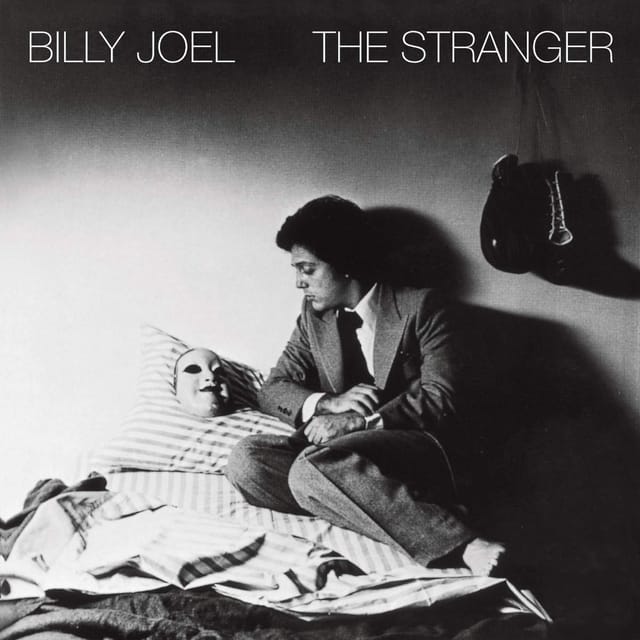
The title track was already on tape at A&R Recording in the summer of 1977, and Billy Joel thought it was missing a front door. “It needs a prelude or a theme, and then it should slam into the song,” he remembered thinking. He sat at the piano, played a slow, lonely melody, and whistled along to show what he meant. Then he turned to his producer. “What instrument do you think should do that?” Phil Ramone's answer: “You just did it.”
That whistle, echoing over an empty street before the band crashes in, is the first sound on The Stranger. It is also a neat summary of what Ramone brought to Billy Joel's career. Joel had spent five years being told his records needed fixing by someone else. Ramone was the first producer who listened to what Joel was already doing and told him to keep it.
A Career at No. 122
By 1977 Joel had a hit, a nickname, and a problem. “Piano Man” had made him a recognizable name, but his last album, Turnstiles, peaked at No. 122 on the Billboard 200. He had produced it largely himself, after dismissing James William Guercio, the producer behind Chicago and Blood, Sweat & Tears. He cut it with his live band rather than session players. The songs were some of his best, including “New York State of Mind” and “Say Goodbye to Hollywood.” The sales were not.
Joel himself never thought the early records captured him. Years later, introducing live versions of those songs on 1981's Songs in the Attic, he wrote that “something was missing on those old records.” His goal was to hear the material “played the right way — with honest road muscle.” The road muscle he meant belonged to a specific group of Long Island musicians: drummer Liberty DeVitto, bassist Doug Stegmeyer, saxophonist and organist Richie Cannata, and guitarist Russell Javors.
Those players were the sticking point when Joel went looking for a real producer. The obvious choice, for a lifelong Beatles fan, was George Martin. Martin came to see Joel perform and wanted to make his next record. He just didn't want the band.
Saying No to George Martin
Martin's condition was standard practice in the 1970s: keep the artist, replace the touring musicians with seasoned studio hands. For Joel it was a dealbreaker. He reportedly told Martin, “Love me, love my band,” and walked away from the man he considered “the fifth Beatle.” People around him thought he was crazy. His own reasoning was simple: “He wants to not use my band, and that's part of my sound.”
It cost him something. “That was one of the most traumatic things I went through,” Joel said decades later, “deciding not to work with George Martin, who was one of my heroes.” At the time it looked like a struggling artist turning down the most famous producer in the world out of loyalty. With a No. 122 album behind him, it was not an obvious bet.
"That was one of the most traumatic things I went through, was deciding not to work with George Martin, who was one of my heroes."
The Producer Who Came to Carnegie Hall
Phil Ramone came at the problem from the opposite direction. He had been a violin prodigy and a Juilliard student before opening his own Manhattan studio, A&R Recording, while still a teenager. By 1977 he was one of the most sought-after engineer-producers in New York. He had just made Paul Simon's Still Crazy After All These Years, which won the Grammy for Album of the Year.
Ramone went to see Joel and the band at Carnegie Hall on June 3, 1977, a month before sessions began. What impressed him was the thing Martin wanted to remove. “We had playing down live. We could rock the place,” DeVitto later said. “When Phil heard that, he knew how to get what he heard live onto a record.”
That suited Ramone's own instincts. He described his method in almost the same terms Joel would have used: “I still make records on the basis that three or four players and a singer, and the song, come together right there.” Joel saw the fit immediately. “I was very happy that we chose Phil Ramone,” he said. “He got it right away.”
“You Just Did It”
The sessions ran through July and August 1977 at A&R, with engineer Jim Boyer. Ramone let the band play together in the room. When a part was missing, he looked for it in what was already happening rather than calling in outside polish. The whistle is the clearest example. Joel had whistled the theme only as a guide for some other instrument. Ramone heard a finished part.
Joel was not convinced until the playback. “I heard it played back and went, ‘That's kind of cool, I like that,’” he told USA Today in 2008. “It was really the theme to the album because it was born in the studio during the process.” The whistle opens and closes the song, a lonely late-night figure framing a track about the hidden faces people keep from each other. A trained horn player would have played it more cleanly. It would not have sounded like a man alone on a street.
The same habit shaped the rest of the record. Ramone kept the rough edges of a band that had grown up together. Javors and DeVitto had been playing together since they were 15. Where outside musicians did appear, they added color rather than replacing anyone. The most famous was jazz saxophonist Phil Woods, whose alto solo became part of the identity of one particular ballad.
The Ballad Nobody in the Band Wanted
“Just the Way You Are,” written for Joel's first wife, Elizabeth Weber, nearly didn't make the album. Its first arrangement was a cha-cha, which Joel later described by singing the title phrase with a “cha-cha-cha” after each line. DeVitto hated it. By Joel's account, the drummer threw his sticks and announced, “I'm no goddamned sissy drummer.”
Ramone fixed it the way he fixed the title track: by working with the player in front of him. He tapped out a South American rhythm for DeVitto to try. DeVitto started dropping out the bass drum in places and moving accents to the toms, and switched to brushes. “Using brushes on the snare gave it a very sexy sound,” DeVitto said. The groove that resulted is the one the world knows.
Joel still wanted to leave it off. “I didn't even want to put it on the album cuz I thought it was too mushy,” he said. Linda Ronstadt and Phoebe Snow, who were recording in the same building, heard it and disagreed. Ronstadt's verdict, as Joel recalls it: “Are you out of your mind? That's a hit record! You got to put that on the album.”
"Are you out of your mind? That's a hit record! You got to put that on the album. That's a great song."
The Most Talented Guy in the Band
The Stranger was released on September 29, 1977, and peaked at No. 2 on the Billboard 200. It has sold more than 10 million copies. “Just the Way You Are” reached No. 3 on the Hot 100 and won both Record of the Year and Song of the Year at the 1979 Grammys. The man who made Turnstiles a year earlier was suddenly one of the biggest-selling artists in America.
Joel himself claimed no foresight. “I don't recall particularly feeling ‘this is going to be the breakthrough,’” he said. “We were just happy with the album we were making at the time.” The partnership continued through the next decade of Joel's studio albums. The follow-up, 52nd Street, won Album of the Year, one of 14 competitive Grammys Ramone collected in his career.
Ramone died on March 30, 2013. Joel's tribute put the relationship in the terms he had defended to George Martin: the band came first, and Ramone was part of it. “I always thought of Phil Ramone as the most talented guy in my band,” he said. “So much of my music was shaped by him.”
The whistle is still there at the start of the record. It is not a great piece of whistling, and that was the point. Ramone's gift was hearing that the rough version in the room was often the right one.