One Grammy
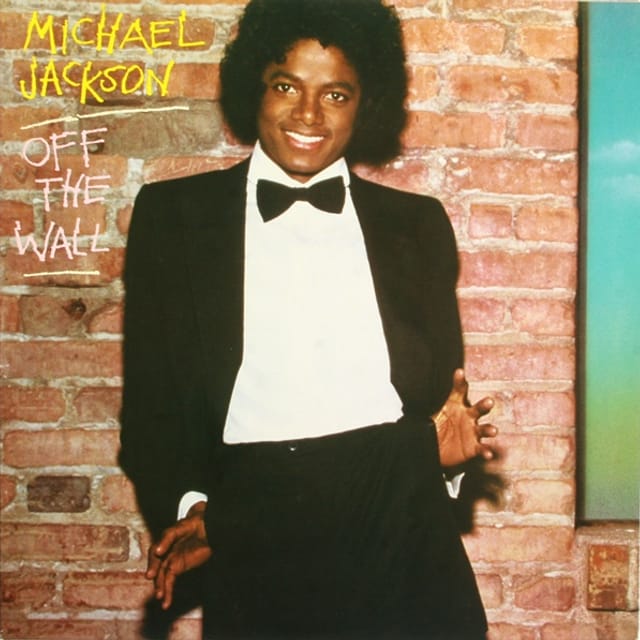
Off the Wall was boxed into a disco category the Recording Academy created and then killed in the same evening. Michael Jackson spent the next four years making sure it couldn't happen twice.
 Trevor Fortune•🎵 Michael Jackson - Off the Wall•8 min read•September 22, 2026
On February 27, 1980, at the Shrine Auditorium in Los Angeles, the Recording Academy handed out a brand-new award called Best Disco Recording and then, within the same ceremony's planning cycle, quietly agreed to never give it out again. Gloria Gaynor won it for “I Will Survive.” Michael Jackson's “Don't Stop 'Til You Get Enough” lost it. That loss, and the single Grammy Jackson did take home that night, would do more to shape the sound of Thriller than almost anything that happened in a studio.
A Landmark Album, Two Nominations
By the time the 22nd Annual Grammy Awards rolled around, Off the Wall had already rewritten what a Black solo artist's crossover album could do commercially — four Top 10 Hot 100 singles, a sound Quincy Jones and Rod Temperton had built to move as easily on rock radio as on R&B stations. The Recording Academy saw none of that range. The album collected exactly two nominations, both filed under the industry's narrowest read of what Jackson was making: Best Male R&B Vocal Performance for “Don't Stop 'Til You Get Enough,” and Best Disco Recording for the same song.
No nomination for Album of the Year. None for Record of the Year or Song of the Year — the three categories that vote on a record's stature rather than its genre. The winner of Album of the Year that night was Billy Joel's 52nd Street; Record of the Year went to the Doobie Brothers' “What a Fool Believes.” Off the Wall wasn't in the room for either conversation.
Jackson won the R&B category. He lost Best Disco Recording to Gaynor, and lost it to a category that turned out to have no future at all — battered by a year of “Disco Sucks” promotions, a White Sox doubleheader in Chicago that ended in a riot over a crate of demolished disco records, and an industry that had decided disco couldn't produce the reliable, multi-platinum stars it needed. The Recording Academy scrapped Best Disco Recording before the next ceremony. It had existed for exactly one year, and Jackson's album was filed inside it on its way out the door.
"That experience lit a fire in my soul. All I could think of was the next album and what I would do with it. I wanted it to be truly great."
A Pattern, Not a One-Off
The R&B-only box wasn't new to Jackson and Jones. When Jackson first told Epic Records he wanted the jazz and film-score veteran to produce his solo album, the label's response, as Jones recalled it years later, was blunt: “No way, Quincy's too jazzy.” Jackson pushed past that dismissal to make Off the Wall in the first place. Getting the Grammys to look past his genre a year later proved harder than getting his own record company to.
The snub arrived alongside a second one. In 1980, Rolling Stone passed on putting Jackson on its cover, and he didn't take the rejection quietly: “I've been told over and over that black people on the cover of magazines doesn't sell copies,” he said. “Just wait. Some day those magazines are going to be begging me for an interview.” The Grammy nominations and the spiked cover story were two data points describing the same ceiling — an industry that had decided how big a Black artist coming out of R&B and disco was allowed to get, regardless of what the songs themselves proved.
Building a Record the Categories Couldn't Ignore
Jones and Jackson didn't respond to the snub by making a safer record. They responded by making one engineered to be impossible to file under a single genre. Jones later described the thinking behind Thriller in blunt commercial terms: “To penetrate, you have to go for the throat in four, five, six different areas: rock, AC, R&B, soul.” Every track was built to be a smash in its own lane rather than an album track riding a lead single — Eddie Van Halen's solo dragging “Beat It” onto rock radio, “Billie Jean” forcing its way onto a still largely segregated MTV, “The Girl Is Mine” pairing Jackson with Paul McCartney for the adult-contemporary crowd the Grammys had never associated with him.
It wasn't subtle, and it wasn't meant to be. Where Off the Wall had let its genre-blending speak for itself and lost the argument to the Academy's categories anyway, Thriller was built so that no single genre box could plausibly contain it. Nine tracks were built as nine potential singles, each one aimed at a different chart and a different Grammy field, so that no committee could wave the whole album off with two nominations again.
Same Room, Different Verdict
Four years and one day after the 22nd Grammys, the Recording Academy returned to the same building — the Shrine Auditorium — for the 26th Annual Grammy Awards on February 28, 1984. Jackson walked in as the artist behind the best-selling album in American history and walked out with eight trophies in a single night, a record no one had set before and only Carlos Santana has matched since. Album of the Year went to Thriller. Record of the Year went to “Beat It.” Best R&B Vocal Performance, Male went to “Billie Jean” and Best Rock Vocal Performance, Male went to “Beat It” — the same song, in two genres the Academy had never let Jackson occupy at once. Quincy Jones took Producer of the Year alongside him.
Every category that had been closed to Off the Wall — Album, Record, and now a rock field the Academy hadn't even offered Jackson a shot at in 1980 — opened for Thriller. The math wasn't subtle: two nominations for the album that broke commercial ground, versus twelve nominations and eight wins for the one built specifically to leave the voters no genre to hide behind.
What the Snub Actually Bought
It's tempting to read the 1980 ceremony as a footnote — one disappointing night on the way to the biggest album ever made. But the specific shape of the snub matters: not a bad record dismissed, but a five-times-platinum, four-Top-10-single album filed into a genre category invented that same year and abolished the next. Jackson didn't need to imagine a ceiling. The Academy built one, gave it a name, and then admitted within twelve months that the category itself had been a mistake — without ever revisiting what it had kept out.
Thriller didn't erase that night. It answered it, category by category, in the same room, in front of the same institution. Jackson had said the experience “lit a fire” in him; four years later, sitting in the Shrine Auditorium with eight Grammys in his arms, he had turned a single sentence in his autobiography into the most complete rebuttal a snub has ever received.
Related Review
Read our comprehensive analysis of Michael Jackson's Off the Wall
Off the Wall Review →