The Mötley Crüe Producer
Metallica didn't trust Bob Rock, fought him for eight months, and swore never to work with him again. Then fans spent fifteen years blaming him for everything.
 Trevor Fortune•🎵 Metallica - Metallica (The Black Album)•5 min read•October 7, 2026
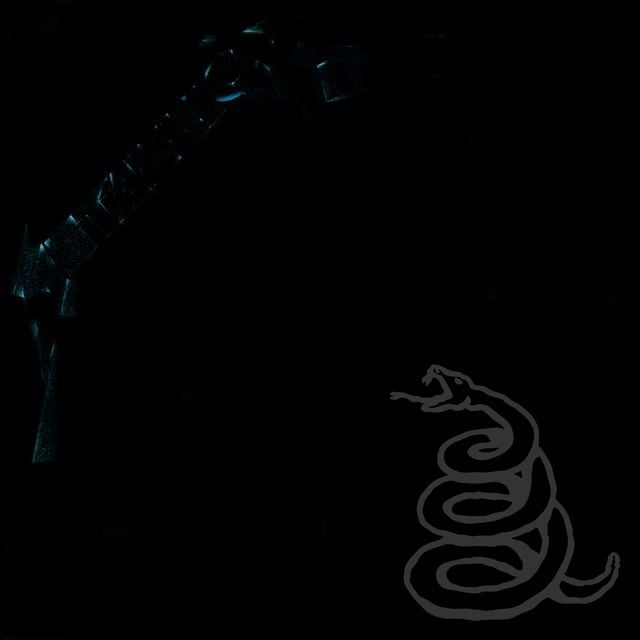
Before a note of the Black Album was recorded, Lars Ulrich and James Hetfield flew to Vancouver to meet a producer they only half wanted. They brought a cassette of demos. Bob Rock played it and heard early versions of “Sad but True” and “Enter Sandman.” “Straightaway I was like, ‘Oh, I could do this,’” he recalled.
Metallica had wanted Rock only to mix their next album. He wanted to produce it. That disagreement was the first of many. It led to eight hard months in a Los Angeles studio, the best-selling album of the SoundScan era, and fifteen years in which many of the band's fans blamed Rock for nearly everything.
A Producer on Probation
Rock's résumé was the problem. He had engineered Bon Jovi's Slippery When Wet and produced Mötley Crüe's Dr. Feelgood. To thrash fans, that made him a pop-metal hitmaker. To the band, it made him an outsider, and Metallica did not trust outsiders.
Rock did not help himself early on. He told them their records did not sound like their shows. He meant ...And Justice for All, whose thin, bass-light sound he could not square with the heavy band he had seen live. The band's first reaction, Ulrich admitted later, was to ask who this man thought he was. They kept Flemming Rasmussen, who had produced their previous three albums, on standby in case Rock did not work out.
Rock's view was that he was not changing the band. “A lot of people think that I changed the band. I didn't,” he told MusicRadar's Joe Bosso. “In their heads, they were already changed when I met them.”
Solos Played Live, Songs Retuned
Rock's demands began in pre-production, which the band had never done so methodically. Six songs in, he noticed every one was in E. The band asked whether E wasn't the lowest note anyway. Rock pointed out that Mötley Crüe had tuned down to D on Dr. Feelgood, a record Metallica liked. They tuned down, and the “Sad but True” riff became the heaviest thing on the album.
Kirk Hammett's routine changed the most. He usually came in at the end of a project to record his solos alone. “I told everybody right off, ‘Well, that's not how we're going to do things. He's going to play live, like everybody else,’” Rock said. Hammett was uncomfortable, and treated his live solos as guides. Often those first ideas were the ones that ended up on the record.
Hetfield wanted to change too. “He said: ‘Bob, I've never really sang before, I've just kind of yelled,’” Rock recalled. Hetfield played him Chris Isaak and asked how to sing like that. Rock told him that doubling his vocals took character away, and had him sing while listening through speakers rather than headphones. On “Enter Sandman,” Rock pushed back on a first lyric about a baby dying in its crib. “Does it have to be so literal?” he asked. Hetfield rewrote it.
None of it came easily. Hetfield turned down so many ideas that a story still circulates of Rock nicknaming him “Dr. No.” Rock's answer, years later, was that it “just took a while longer with them.” Ulrich went past 40 takes on a single song, and recalled punchbags being installed at One on One studios to deal with the tension.
A Year Without Speaking
The sessions ran from October 1990 to June 1991. The album was mixed three times and only just made its pressing deadline. There was no wrap party. The exhausted band and producer had a drink at a local bar in near silence. Afterward, Ulrich and Rock did not speak for a year.
"Sure, we had some laughs, but things were difficult. I told the guys when we were done that I'd never work with them again. They felt the same way about me."
Then the album came out on August 12, 1991, entered the Billboard 200 at No. 1, and kept selling. When it came time to make the next record, the band called Rock. “If it ain't broke, don't fix it,” he told Metal Hammer. He went on to produce Load, Reload, the covers album Garage Inc., the orchestral S&M, and St. Anger.
“Everyone Blamed Him”
The longer the partnership lasted, the more Rock became the target for fans who missed the old Metallica. Every change in the band's sound, from the short hair of Load to the clanging snare of St. Anger, was put down to him. “Bob Rock was a huge target,” Hetfield said. “Everyone blamed him. He got some horrible death threats and shit from fans.”
In January 2005, a group of fans posted an online petition titled “Save Metallica.” It argued that “nothing has been the same since he joined the ranks as longtime METALLICA producer.” It conceded his technical skill but said his “contributions to help craft a METALLICA song are quite wrong.” Some 1,500 people signed it.
Rock and the band parted ways in 2006. Their next album, Death Magnetic, was produced by Rick Rubin. Rock told Reuters the criticism had been hurtful for his children, “who read it and don't understand the circumstances.” He accepted the split. “Sometimes, even with a great coach, a team keeps losing. You have to get new blood in there.”
The Biggest Accomplishment
Time has been kinder to Rock than the petition was. In 2025 the RIAA certified the Black Album 20-times platinum in the United States. The band that once swore they would never work with him again kept him for fifteen years.
Rock still describes the Black Album as “probably the biggest accomplishment of my professional life,” and thinks the band would say the same. He also insists it was never personal. “My 15 years working with Metallica were some of the best times of my life,” he told Metal Hammer.
He has never pretended the Black Album sessions were calm. His explanation is that the fighting was the point. “Some of the best work comes out of tension,” he said.
Related Review
Read our comprehensive analysis of Metallica's Metallica (The Black Album)
Metallica (The Black Album) Review →