The “Worst Thing I Ever Heard”
Berry Gordy tried to kill the single. A Motown sales executive pressed it anyway, without asking, and it sold out in days
 Trevor Fortune•🎵 Marvin Gaye - What's Going On•9 min read•September 8, 2026
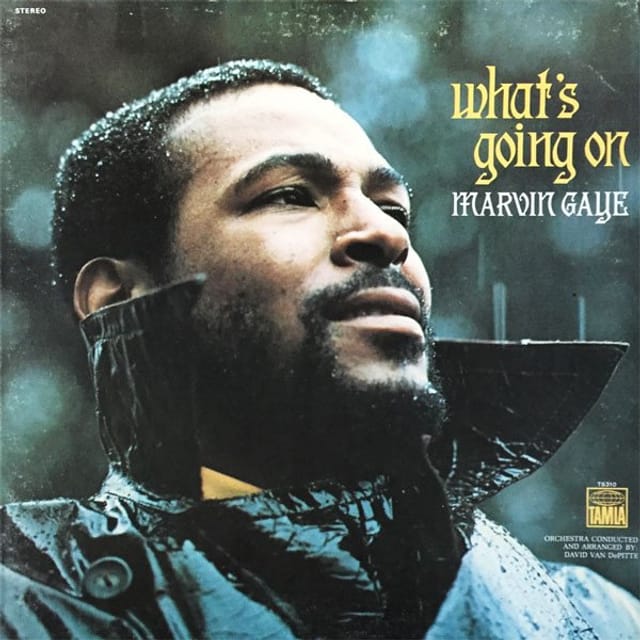
In the fall of 1970, Marvin Gaye phoned Motown boss Berry Gordy to describe the album he wanted to make next. It would be about the war, police violence, and a country coming apart. Gordy didn't like the idea. “Marvin, why do you want to ruin your career?” he asked. When he later heard the finished single, he reportedly called it the worst thing he'd ever heard. Motown's review committee rejected it too. But the label's head of sales pressed 100,000 copies anyway without telling Gordy. It became Motown's fastest-selling single up to that time.
A Phone Call to the Bahamas
Motown in 1970 had a formula, and the formula worked: three-minute singles, love and heartbreak, nothing that would give a Top 40 program director a reason to skip the record. Berry Gordy had built the label on staying out of politics, and he had no interest in testing that policy against Marvin Gaye, one of his most reliable hitmakers, at the exact moment Gaye was proposing to abandon the formula entirely.
Gaye pitched him anyway, by phone, while Gordy was away in the Bahamas. He described songs about Vietnam, about police brutality, about poverty and pollution — nothing that had ever been the subject of a Marvin Gaye single. Gordy's objection was not vague discomfort. It was a direct warning that Gaye was about to throw away everything he had built. When Motown's Quality Control committee — the internal panel that vetted every record before release — reviewed the finished single some time later, it rejected the record too, formally and on the record, the same way it had once initially passed on “I Heard It Through the Grapevine” before that song became one of Motown's biggest hits.
Gaye, by most accounts of the standoff that followed, simply stopped delivering new material to the label. He had spent the previous year mostly out of the studio and off the road following the death of his singing partner Tammi Terrell, who collapsed in his arms onstage in 1967 and died of a brain tumor in March 1970. His younger brother Frankie had come home from a tour in Vietnam as an Army radio operator and had been writing him letters describing what he had seen there — letters that fed directly into songs like “Save the Children” and “What's Happening Brother.” This was not a commercial experiment Gaye was willing to negotiate away.
A Love Song, Not a Protest Song
The song that gave the album its title did not start as Gaye's idea at all. Renaldo “Obie” Benson of the Four Tops had watched police clash violently with anti-war demonstrators in Berkeley's People's Park in May 1969, and the experience unsettled him enough that he started writing about it with lyricist Al Cleveland. He brought the song to his own group first. The other Four Tops turned it down — too political, they said, not what the group did. Benson has since described his own reaction to that label: “I said, ‘No, man, it's a love song, about love and understanding.’”
Gaye took the song, reworked it, and built an album around its questions rather than its politics. That distinction — a love song about love and understanding, rather than a protest song about a war — is the one Gordy either did not hear or did not believe when Gaye called him from the Bahamas. It is also the distinction that eventually let Motown sell the album to an audience much larger than a protest record could have reached.
Backgrounded on the Whole Song
The sessions themselves, recorded at Hitsville U.S.A. and the former Golden World studio in Detroit through 1970, produced two of the album's most durable pieces of studio folklore. Session saxophonist Eli Fontaine was warming up before his actual take on the title track when engineer Ken Sands, tape already rolling, caught the run on record. Gaye loved it and told Fontaine he had what he needed. When Fontaine protested that he had just been goofing around, Gaye told him: “Well, you goof exquisitely.” The warm-up became the song's opening line, never repeated anywhere else in the track.
Bassist James Jamerson's contribution has its own studio legend, repeated often enough by Motown veterans that it has become part of the record's permanent mythology even where the details blur: Gaye is said to have found him at a bar, already well into a bottle, and brought him to the studio anyway. Unable to sit up straight on a stool, Jamerson reportedly recorded the song's fluid, wandering bassline lying flat on his back on the studio floor. Whether or not every detail survived fifty years of retelling intact, the bassline itself is real, and it is one of the most studied basslines in American recording.
The record's famous opening chatter — overlapping voices greeting each other over a saxophone figure, “Hey, brother, what's happening? Solid! Right on!” — came from two Detroit Lions defensive backs, Lem Barney and Mel Farr, friends of Gaye's who were invited into the studio and simply asked to talk. “He says, ‘Lem, you take this part,’ ‘Mel, you take this part,’” Barney later recalled. “We backgrounded him on the whole song, man!” Farr remembered Gaye directing the whole process himself: “What he did, he just wanted to put it in lyrics. He wrote everything. He did it all.” Both players received gold records for a few seconds of ad-libbed greeting that became one of the most recognizable intros in soul music.
"Mel and I would talk about it all the time. It was a hit before it became a hit."
Pressed Without Permission
With Gordy unmoved and Quality Control having formally passed on the record, it should have stayed on a shelf. Instead, Motown's head of sales, Barney Ales, and A&R executive Harry Balk went around him. Balk had heard the acetate, played it for anyone who would listen, and became convinced Motown was sitting on a hit. With Ales's authority behind him, Motown pressed and shipped roughly a hundred thousand copies of the single to radio stations and record stores in January 1971 — without Gordy's sign-off. Asked later why he took the risk, Ales gave a characteristically blunt commercial answer rather than an artistic one: “We needed a Marvin Gaye record desperately.”
The bet paid off almost immediately. The pressing reportedly sold out within days, a second run followed just as fast, and the single became the fastest-selling record in Motown's history to that point. It climbed to number two on the Billboard Hot 100 and topped the R&B chart. A record the label's own founder had called the worst thing he had ever heard was now the biggest thing Motown had on the market, sold entirely on the initiative of employees who had gone around him to release it.
Thirty Days
Gordy did not need long to read the sales figures. Once it was clear the single he had tried to kill was outselling everything else on the label, he reversed course completely — reportedly driving to Gaye's home himself to tell him he could make the full album exactly as he wanted, on one condition: deliver it within thirty days. Gaye did. What's Going On was released on May 21, 1971, reached number six on the Billboard 200 and number one on the R&B albums chart, and has been certified Gold since its first year in release.
Robert Christgau, reviewing it that year in his Consumer Guide, called it “a groundbreaking personal statement” even while grading it a qualified B+ and singling out three tracks — the title song, “Inner City Blues” and “Mercy Mercy Me” — as “so original they reveal ordinary Motown-political as the benign market manipulation it is.” It was not an unqualified rave, but it recognized immediately that something at Motown had permanently changed.
The clearest proof of that change arrived within months, for a different artist entirely. When Stevie Wonder turned twenty-one later in 1971 and renegotiated his own Motown contract, he walked away with full creative control, ownership of his own publishing, and an advance reported at close to a million dollars — a deal biographers have consistently linked to the commercial proof What's Going On had just supplied: that an uncompromised, personal Motown album could still be a hit. Gordy had spent months insisting the record would ruin a career. Instead, it rewrote what a Motown artist was allowed to ask for, and the label's biggest star asked for it almost immediately.
Related Review
Read our comprehensive analysis of Marvin Gaye's What's Going On
What's Going On Review →