The Rock Opera Nobody Understood
Pete Townshend's Lifehouse was meant to be bigger than Tommy. It nearly broke him in a New York hotel room, and what survived became Who's Next.
 Trevor Fortune•🎵 The Who - Who's Next•6 min read•October 7, 2026
In March 1971, Pete Townshend walked down a corridor of the Navarro Hotel on Central Park South to a band meeting in Kit Lambert's suite. Through the door he could hear his manager complaining about him, and calling him “Townshend.” When he walked in, Lambert greeted him warmly as “Pete.” Within minutes, Townshend was standing at an open window on the 24th floor.
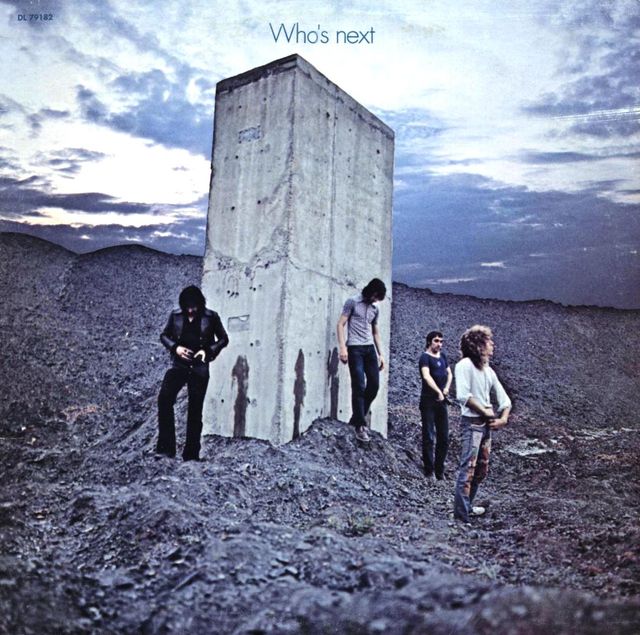
He had come to New York to rescue Lifehouse, the project he believed would follow Tommy and surpass it. Instead it was coming apart, and so was he. The songs he had written for it would survive. They became Who's Next, the only Who album ever to reach No. 1 in Britain.
A Future Wired to the Grid
The story was set in a polluted future Britain. Most people live sealed inside “Lifesuits” connected to the Grid, a government-run network that feeds them food, medicine, and programmed entertainment. Music has almost no place in it. Out in the countryside, a Scottish farming couple, Ray and Sally, learn that their daughter has run away to a rock festival in London called the Lifehouse.
The festival is the work of a hacker named Bobby, who turns data from the Grid's users into music. At its climax, every person's song combines into one perfect note, and the audience, including those watching from their suits, disappears.
Townshend traced the idea to Woodstock. Fame had broken his connection with his audience, he felt, and he looked out at the morning crowd in the mud and saw a wasteland. “What ultimately alienated us from our fans was the way Woodstock turned us into superstars,” he later told Guitar Player's Christopher Scapelliti. Lifehouse was his attempt to use rock to wake people up.
An Experiment at the Young Vic
Townshend did not want only to write about that concert. He wanted to stage it. On January 13, 1971, the band held a press conference at the Young Vic theatre in London. “We shall not be giving the usual kind of Who rock show,” Townshend announced. “The audience will be completely involved in the music, which is designed to reflect people's personalities.” The plan was to film the shows and fold the footage into the movie.
The first proper sessions came in mid-February, with a small invited audience. They did not go as hoped. “It was disturbing. The place was empty,” Townshend recalled. “There weren't Who fans there. It was people we'd invited in off the street. Local kids.” The band and the crowd stayed in their usual roles, and the perfect note never arrived.
Explaining the idea was even harder than staging it. Townshend compared the Grid to television, and people followed him that far. Then they asked why that mattered to the story. “And I would say, ‘Because what's at risk here is our karma – our free will to choose our destiny.’ And that's where I lost them.”
The Window on Central Park South
Kit Lambert had been Townshend's creative partner on Tommy, the one person who could translate his ideas for everyone else. But Lambert had moved to New York after Townshend rejected his script for a Tommy film. When he invited the band to record at the Record Plant, Townshend accepted eagerly. He hoped Lambert would help him get Lifehouse going.
Lambert wanted something simpler: a finished album that would earn money. The sessions began on March 15. Leslie West of Mountain came in to play lead guitar on a cover of “Baby Don't You Do It.” After a few days, though, the work stalled, and Townshend called the meeting at the Navarro.
Hearing himself called “Townshend” through the door, he decided that was who he became to people when he stopped doing what they wanted. “I got this welling of energy, which I think you can only get in New York,” he said. “And I started to hallucinate. I thought, I must get some air, and I stumbled toward the window.”
"I was about to jump out when Kit's secretary grabbed me – just like that! I nearly killed myself."
The person who pulled him back was Lambert's assistant, Anya Butler. Townshend called off the rest of the New York sessions, suffering from nervous exhaustion. “And that,” he said, “is when I gave up on Lifehouse.”
“I Don't Understand a Word”
Back in England, Townshend hired Glyn Johns, who offered a trial run. “I said, ‘I'll come and work with you for a week, and we'll see how we get on, and if it doesn't work out, you can have whatever we've done as a pressie and we'll call it quits,’” Johns said. In April they cut “Won't Get Fooled Again” at Stargroves, Mick Jagger's country house, then moved to Olympic Studios.
Johns persuaded Townshend to drop the double album and keep only the strongest songs. He also had to sequence them without a plot, because he could not follow it either. Shortly before he did, he took Townshend to a pub and asked to hear the story one more time.
“So I told him the story. And he sat there, thinking. I thought he was going to say, ‘Now I get it!’” Townshend recalled. “And instead he said, ‘I don't understand a word that you said!’” Eight Lifehouse songs made the album, alongside John Entwistle's “My Wife.” The farmers, the hacker, and the Grid were left out.
Fifty Years of Unfinished Business
Townshend did not mourn the story for long. “I was delighted with it. It felt like the Who's first proper album,” he said of Who's Next. “It felt uncomplicated and simple, and I didn't care that the story had been lost. I was just relieved to have made anything at all.”
But he never let Lifehouse go. “Join Together,” “Relay,” and “Let's See Action” came out as singles. “Pure and Easy” turned up on Odds & Sods in 1974. “Who Are You,” written in 1976 during another attempt to revive the project, became a title track two years later. In December 1999, BBC Radio 3 broadcast a Lifehouse radio play. In February 2000 Townshend released his demos as the six-CD Lifehouse Chronicles.
In September 2023, the Who's Next / Life House box set gathered 155 tracks, including the Record Plant sessions and a full Young Vic concert. It came with a 172-page graphic novel of the story. Townshend now describes the plot as a government-enforced “national lock-down in which every person is hooked up to an entertainment grid.”
The idea has always held him, he wrote, “partly because so many of the strands of the fiction seem to be coming true.” In 1971 nobody could follow a story about people living their lives through a screen. It is easier to follow now.