The UN Blacklist
Paul Simon went to Johannesburg in 1985 to record with Black South African musicians, against the advice of friends and the policy of the ANC. The argument that followed lasted longer than apartheid did.
 Trevor Fortune•🎵 Paul Simon - Graceland•6 min read•October 6, 2026
In April 1987, Paul Simon arrived at London's Royal Albert Hall to play songs from Graceland with the South African musicians who had made it with him. Outside, a picket line was waiting. Billy Bragg, Paul Weller, and Jerry Dammers of the Specials were among the protesters. Their leaflet came from Artists Against Apartheid, and their complaint was simple: Simon had broken the cultural boycott of South Africa.
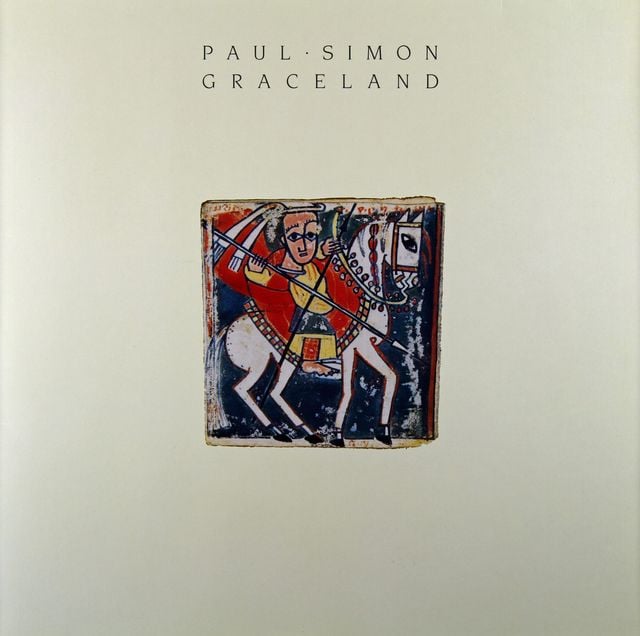
By then Graceland was one of the biggest records in the world. It would go on to sell about 14 million copies and win the Grammy for Album of the Year. It had also put Simon on a United Nations register of artists who had violated the boycott. The question it raised has never been fully settled: can you help people by breaking a boycott that was designed to help them?
Recording Is Not Performing
The boycott was aimed at isolating the apartheid government. Western stars were asked not to perform in South Africa. Above all, they were asked not to play Sun City, the resort in the nominally independent homeland of Bophuthatswana that paid huge fees for big names. Simon had turned down a reported $1 million to play there.
But in 1984 he heard a bootleg tape of South African township music and wanted to work with the people who made it. Before he went, he asked his friend Harry Belafonte for advice. Belafonte, a longtime anti-apartheid campaigner, told him to talk to the African National Congress first. Simon didn't. In February 1985 he flew to Johannesburg with engineer Roy Halee and booked Ovation Studios.
His reasoning drew a line between playing and recording. “Going to SA to perform in front of a segregated audience is to support the apartheid regime,” he said. “Going there to record is not the same thing.” The musicians he hired, including guitarist Ray Phiri, bassist Bakithi Kumalo, and the vocal group Ladysmith Black Mambazo, were paid three times the New York session rate, according to Under African Skies, the 2012 documentary about the album.
On the Register
Graceland came out on August 25, 1986. Its success made the trip impossible to ignore. Britain's Anti-Apartheid Movement and Artists Against Apartheid condemned the album as a breach of the boycott. The UN Special Committee Against Apartheid added Simon to its register of artists who had broken it.
The listing did not last. Simon gave the UN a written statement that he rejected apartheid and would stay out of South Africa in future. The committee then removed his entry. Simon still refused to concede the principle. Before the tour began, he told reporters he did not feel obliged to consult anyone about his work, and did not accept conditions on what he said, thought, or wrote.
Critics did not accept that the boycott had a recording exception. Their point was that any contact with South Africa helped normalize it, however well the musicians were treated. For the boycott's organizers, the problem wasn't the music on Graceland. It was that one of the world's most famous songwriters had decided the rules didn't apply to him.
Two Exiles on the Stage
Simon's answer was the tour. He added two of South Africa's most famous exiles to the lineup: singer Miriam Makeba and trumpeter Hugh Masekela, both fierce critics of the government that had kept them out of the country for decades. It was hard to call a show that featured them a show for apartheid.
In February 1987 the tour played Rufaro Stadium in Harare, Zimbabwe, as close to South Africa as Simon could go. Not everyone in Harare approved. A columnist in the local Herald urged readers to stay away. Still, the crowd included Black and white Zimbabweans and several thousand South Africans, most of them white, who had crossed the border to see it. The troupe sang “Nkosi Sikelel' iAfrika,” the anthem of the Black liberation movement, and some of the white South Africans sang along.
Simon told a reporter that the sight of Black and white fans dancing together was “the way it is supposed to be.” The concerts were filmed and released as Graceland: The African Concert. Two months later, the pickets were waiting for him in London.
"It pained me to be part of that because I'm a Paul Simon fan, but he was on the wrong side of the argument."
Mandela's Invitation
The politics shifted faster than anyone expected. In May 1987, ANC president Oliver Tambo announced that the organization would revise its cultural boycott rules. In February 1990 Nelson Mandela walked out of prison. Within two years the boycott was ending, and Simon was invited back.
In January 1992 he played two open-air concerts in Johannesburg under heavy police guard. Mandela hosted a reception for him at the Carlton Hotel and urged Black South Africans to attend “in your thousands.” Not everyone agreed. The Azanian People's Organisation protested at the first show, and two grenades were thrown at the tour's sound company, causing minor damage and no injuries. The ANC Youth League called the attack “ultra-left political terrorism.”
Simon played down the opposition. “The impression I was under was that this was a minority viewpoint and the tour had overwhelming support,” he said. The organization that had once opposed his trip was now welcoming him, and the musicians who had been on the record were playing for home crowds.
Meeting Dali Tambo
The argument got one more public round in 2012. For Graceland's 25th anniversary, director Joe Berlinger's Under African Skies was built around Simon's first meeting with Dali Tambo. Tambo had founded Artists Against Apartheid and was the son of Oliver Tambo. Twenty-five years earlier, he had been one of Simon's most prominent critics.
Neither man fully gave ground. Berlinger sided with Simon: “Paul was exporting the very culture that the apartheid regime was trying to crush and extinguish,” he said. Tambo offered something closer to a truce. “I forgive him,” he said, “though he was going against the policy of the United Nations and the ANC.” Jerry Dammers, who had been on the London picket line, said much the same: “I still believe he was wrong to go there and contravene the boycott, but that's in the past.”
Simon was more certain. “I don't have any regrets because it's a happy ending,” he said. That summer he brought the Graceland band back together for a concert in London's Hyde Park, with Ladysmith Black Mambazo among the musicians.
Both sides still have a case. The boycott helped isolate a government that fell. Graceland took South African musicians to stadiums around the world while that government was still standing. The record has never been able to separate the two, and the argument goes on whenever a Western artist plans to work under a regime the rest of the industry is boycotting.