‘Rhyming Nonsense’
Freddie Mercury never explained “Bohemian Rhapsody.” Fifty years on, here is what he said, what his bandmates and his manager say, and what his handwritten drafts show.
 Trevor Fortune•🎵 Queen - A Night at the Opera•8 min read•November 27, 2026
When people asked Freddie Mercury what “Bohemian Rhapsody” was about, he gave the same answer. “People still ask me what ‘Bohemian Rhapsody’ is all about,” he said years after it came out, “and I say I don't know.” In private he went further. His friend Kenny Everett, the DJ who first played it on the radio, said Mercury called the whole thing “rhyming nonsense.”
Nobody has quite believed him. The song opens with a young man confessing a killing to his mother, and it ends with him escaping, or trying to. In between is a mock opera full of devils and Italian names. Queen released it in October 1975, and it became the most-streamed song of the 20th century, with more than 2.8 billion plays on Spotify alone. Its meaning is still argued over, including by Brian May and Roger Taylor of Queen.
A Song Started Before Queen
The song is older than the band. Chris Smith, who played keyboards with Smile, the band May and Taylor had before Queen, recalled him working on a piano piece that Smith called “The Cowboy Song.” It already had the melody and the opening confession. In a 1984 interview, Mercury said “Bohemian Rhapsody” was really three songs he had joined together.
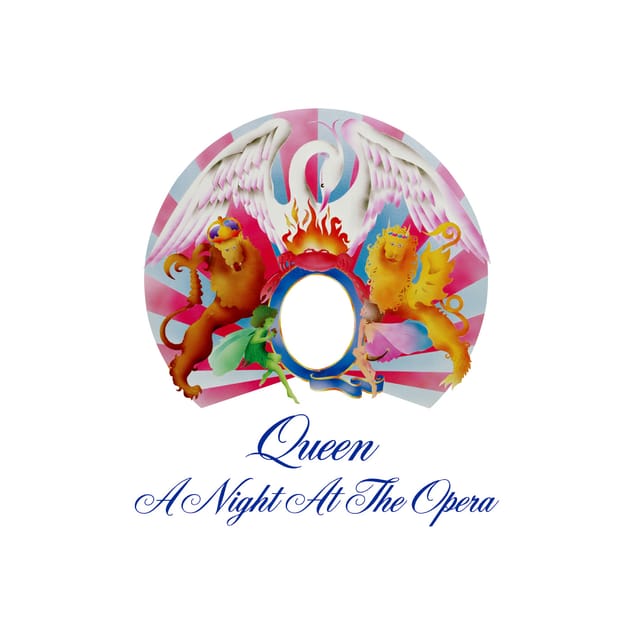
He brought it to the band in 1975, when Queen were recording A Night at the Opera at Rockfield Studios in Wales. The opera section kept growing. “Freddie kept coming in with more ‘Galileos’ and we kept on adding to the opera section, and it just got bigger and bigger,” producer Roy Thomas Baker recalled. Mercury admitted he had studied opera for it. “Something like ‘Bohemian Rhapsody’ didn't just come out of thin air,” he said.
According to Rolling Stone's 2025 interviews with the band, the members of Queen never discussed their lyrics with each other. So the others did not ask him what it meant, and he did not say. “Sadly, we can't ask Freddie,” Taylor said.
What Mercury Would Say
Mercury's refusal was a deliberate choice. Explaining the song, he said, “loses the myth and ruins a kind of mystique that people have built up.” He did talk about individual words, usually to play them down. Of the devil in the opera section, he once said: “It doesn't necessarily mean I study demonology and things. I just love the word Beelzebub! Great word, isn't it?”
Many of the other words have plain meanings. A scaramouche was a stock character in 17th-century Italian commedia dell'arte, a clown known for getting into trouble and wriggling out of it. “Bismillah” is Arabic for “in the name of God,” the phrase that opens the Quran. Fans have tried to fit each one into a hidden story. Mercury's own comments suggest he chose many of them for their sound.
He was more open about the risk than the meaning. “It was very risky, but we had so much confidence in that song – I did anyway,” he told Sounds in 1976. Their label, EMI, thought “You're My Best Friend” would be an easier single. Everett played it on Capital Radio anyway, 14 times over one weekend according to Louder. EMI released it on October 31, 1975, and it spent nine weeks at No. 1 in Britain, until ABBA's “Mamma Mia” replaced it in January 1976.
The Coming-Out Reading
The most popular theory is that the song is about Mercury's sexuality. The timing fits. In 1975 Mercury was still living with his girlfriend, Mary Austin. But he had begun spending his evenings at a London gay club, where he met a young man named David Minns and began an affair. Minns later wrote that Mercury “was tormented by some form of guilt that he had about his past life.”
John Reid became Queen's manager in mid-1975. Reid was openly gay, and was in a relationship with his other client, Elton John. When Reid mentioned his own sexuality over dinner, Mercury casually came out to him. He told Rolling Stone in 2025 that he is convinced the theory is right. “I think that's the key to it,” he said, “and a little bit of self-doubt, and the fact that he could never be that open to his parents.” In that reading, the man killed in the first verse is Mercury's old, straight self. “He was saying goodbye to that life,” Reid said.
Mercury's background makes the reading more plausible to its supporters. He grew up Freddie Bulsara, in a religious Zoroastrian family; Mental Floss notes the faith does not acknowledge homosexuality. He went to boarding school in India, and his family left Zanzibar for England in 1964 after a revolution there.
"It was Freddie's confessional. It was about how different his life could have been. How much happier he would have felt, had he been able to be himself."
The theory's best-known champion is the biographer Lesley-Ann Jones. She says she put it to Mercury directly in 1986. He laughed, fell silent, and then said: “Bad timing!” After Mercury's death in November 1991, she says, his partner Jim Hutton told her she had been right. “Freddie was never going to admit it publicly, because he had to carry on the charade about being straight, for his family,” Hutton told her.
In 2015, on the eve of the song's 40th anniversary, the lyricist Tim Rice backed her in the Mail on Sunday. “It's fairly obvious to me this was Freddie's coming-out song,” he said. “Every time I hear the song I think of him trying to shake off one Freddie and embracing another.”
What Queen Say
Brian May answered Rice within weeks. “Freddie never talked about it to my knowledge and didn't want to and that's the way it should be,” he said. “He had something in his mind and he loved to spin these little pieces of magic. A little bit of reality and little bit of fantasy.” Anyone who tries to unravel it, he added, will “never know what went into those lyrics.”
Ten years later, May sees it as personal but not literal. “He's using his pain, his frustration, his confusion,” he told Rolling Stone. “It's not very literal. It's not very conscious.” He compares it to Mercury's earlier fantasy songs, like “My Fairy King.” “Freddie doesn't feel the need to explain himself, or be direct. Sometimes he loves the way his voice sounds doing those syllables.”
Taylor thinks the search for a code is “overinterpretation.” “He was writing a fairly intense, ruminative song,” he said. “And then we put all these amazingly daft bits in the middle. So many people have been wondering, ‘What's the secret meaning?’ I'm not sure there is one.” The rest, he said, “is nonsensical in a sort of Lewis Carroll way.”
Taylor has not always sounded so sure. Queen's official website notes that in an earlier documentary he said the meaning was not much of a mystery and should be fairly obvious. Rice said in 2015 that he had talked to Taylor about it.
“Mongolian Rhapsody”: What the Drafts Show
In 2023, Mercury's working drafts of the lyrics came up for sale at Sotheby's in London. They had been kept in his home since his death. The 15 pages were written in pencil and ballpoint on airline stationery, and they sold on September 6 for about $1.7 million.
The drafts change the picture in two ways. First, Mercury had titled the song “Mongolian Rhapsody,” then crossed out “Mongolian” and wrote “Bohemian.” Second, the famous opening confession is not fixed. In one version, the young man tells his mother about a war that has started, not a man he has killed. “The revelations in these pages include the extensive redrafting which was part of his songwriting process,” said Sotheby's manuscripts specialist Gabriel Heaton.
The pages also show Mercury trying out words like “belladonna” and “matador” that never made it into the song. Rolling Stone reads them as a brainstorm of Italian- and opera-sounding words chosen “with more concern for sound and rhyme than meaning.” That supports what May and Taylor say about the opera section. It does not settle the first verse, which is the part the coming-out theory relies on.
The Bohemian Rhapsody theories, checked
Mercury explained the song
He never did. He said he didn’t know, and that explaining it would ruin the mystique.
It is meaningless
Partly supported. Kenny Everett said Mercury called it “rhyming nonsense,” and the drafts show words picked for sound. Taylor calls the middle section Lewis Carroll-style nonsense.
It is Mercury coming out
Believed by his manager John Reid, Tim Rice and biographer Lesley-Ann Jones, who says his partner Jim Hutton confirmed it. Mercury never confirmed it, and May says nobody knows.
The opening murder is literal
Unlikely. A draft has the young man announcing a war instead, so the image changed during writing.
Beelzebub means Mercury studied the occult
Denied by Mercury: “I just love the word Beelzebub!”
The title was always “Bohemian Rhapsody”
False. The draft shows “Mongolian Rhapsody,” with “Mongolian” crossed out.
The Answer He Left
Mercury died at his home in Kensington on November 24, 1991, of AIDS-related bronchial pneumonia. “Bohemian Rhapsody” went back to No. 1 in Britain that Christmas. In 1992 it appeared in a famous car scene in Wayne's World, and Queen won an MTV Video Music Award for best video from a film. The 2018 biopic took its title from the song.
The evidence points in two directions at once. The opening and closing sections are serious and personal, and the people closest to Mercury in 1975 heard a confession in them. The middle is, by his and his bandmates' accounts, a game played with sounds. May's summary may be the closest anyone will get: “A little bit of reality and little bit of fantasy.”
How Queen recorded it, and the album it was made for, is told in our review of A Night at the Opera. The money behind that album is in The £40,000 Gamble.
Related Review
Read our comprehensive analysis of Queen's A Night at the Opera
A Night at the Opera Review →