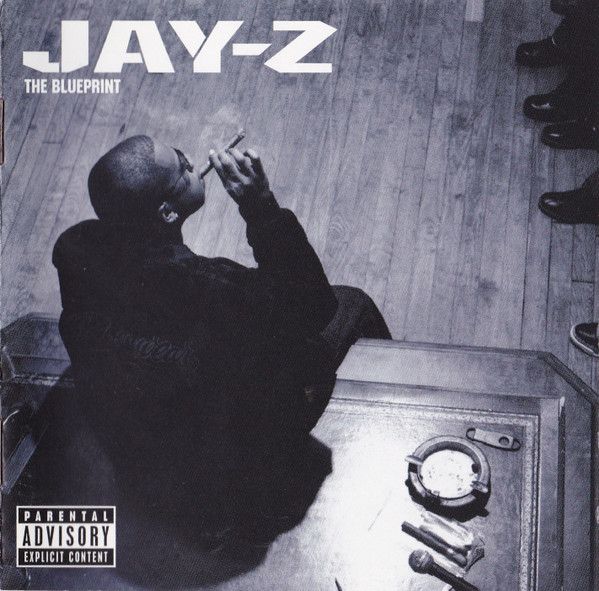
Seven Days Early
Jay-Z spent two years fighting people who copied his records. Moving The Blueprint up a week to beat them put it in stores on the morning of September 11, 2001.
 Trevor Fortune•🎵 Jay-Z - The Blueprint•6 min read•October 8, 2026
On the morning of Tuesday, September 11, 2001, record stores across America opened with a new Jay-Z album on the racks. It wasn't supposed to be there yet. The Blueprint had been moved up a week because Jay-Z was worried about bootleggers. By the time most New Yorkers were awake, the city was under attack.
The album has never been separated from that date. But the reason it landed there goes back two years, to a nightclub fight over counterfeit tapes. Bootlegging was the thread that ran through the whole record, from the court cases hanging over it to the release date that tied it to history.
A Fight Over Counterfeit Tapes
On December 1, 1999, Jay-Z went to a party at the Kit Kat Club in Manhattan. There he confronted the record executive Lance “Un” Rivera. According to police, Jay-Z accused Rivera of making and selling counterfeit copies of one of his recordings. Rivera was stabbed at least twice with a five-inch knife, and Jay-Z was charged with assault.
The case dragged on for almost two years. In April 2001 he picked up a second one. Police arrested him outside Club Exit in Manhattan after they said his bodyguard, Hamza Hewitt, took a loaded gun from the car. Jay-Z was charged with criminal possession of a weapon and released on $10,000 bail. He told reporters he was “100 per cent innocent.”
So the man who made The Blueprint that spring was facing two criminal cases at once. One of them had started because somebody, he believed, was selling his music without paying for it.
Two Weeks at Baseline
The album came together fast, mostly at Baseline Studios in Manhattan. There was no grand plan. “He literally just walked into the studio one day and was like ‘Anybody got some beats?’” Just Blaze told Sean Fennessey of the Village Voice. “Kanye had like five and I had like three or four and he did nine songs in three days.”
Jay-Z set his young producers against each other. Kanye West and Just Blaze would hear what the other was making and go back to their own rooms to beat it. Jay-Z later described the scene to XXL.
"Just would peep his head in and hear what me and Kanye was doing and would just go back mad… And it was like this every day. It was like a heavyweight slugfest."
Some of the beats were old. Just Blaze had made “Girls, Girls, Girls” for Ghostface Killah and never got it to him. “I think I had ‘Song Cry’ started but I hadn't finished it yet,” he said. The whole record was done in about two weeks.
One Week Earlier
A finished album was a target, and Jay-Z had spent two years in court over a fight about counterfeit copies. So The Blueprint was moved up a week. As Tom Breihan put it in Stereogum, Jay “was worried about bootleggers — he was always worried about bootleggers.”
The new date was a Tuesday, the industry's usual release day. It was a crowded one. Bob Dylan's Love and Theft, Nickelback's Silver Side Up, Slayer's God Hates Us All, and Mariah Carey's Glitter came out the same morning. The date was September 11, 2001.
Jay-Z wasn't in New York. He had flown to Los Angeles to shoot the video for “Girls, Girls, Girls.” He woke up to the news on television. “It looked like a movie to me,” he said in 2009. “It didn't look like anything that could be real. So the last thing I was thinking about was an album.”
The Morning New York Bought It Anyway
Some people bought it anyway, that morning. Breihan described friends who watched the towers fall from their windows and rooftops and then went to the record store.
"On that calamitous morning, when people didn't know if New York was under attack or the world was ending or what, people still found their ways to record stores or Best Buys, and they still bought The Blueprint."
The sales held up better than anyone expected. The Blueprint sold 427,000 copies in its first week and debuted at No. 1, Jay-Z's fourth chart-topping album in a row. NME reported that analysts were surprised the market had stayed “relatively buoyant,” with overall sales down only about 5 percent. Nickelback debuted at No. 2, Dylan at No. 5, and Glitter at No. 7.
Jay-Z didn't shy away from the date. Less than two weeks after release, he opened a show at Manhattan's Hammerstein Ballroom by pointing out that his album had come out the same day the towers fell. The coincidence became part of the record's legend almost immediately.
Probation, Then a Benefit at the Garden
The court cases ended that autumn. In October 2001, Jay-Z pleaded guilty to misdemeanor assault for the Kit Kat Club stabbing. That December he was sentenced to three years' probation. The album that had been recorded under the threat of prison was, by then, the most celebrated record of his career.
Eight years later he went back to the date on purpose. The Blueprint 3 was scheduled for September 11, 2009, alongside a benefit concert at Madison Square Garden for the New York Police and Fire Widows' and Children's Benefit Fund. “I turned on the TV September 12, and I saw footage of these heroic actions,” he said when announcing it. “I just saw the strength of New York. It made me proud.”
Then history repeated itself. Tracks from The Blueprint 3 leaked online, and the release was moved up three days to September 8. Jay-Z sounded more amused than angry this time. “I may be the most bootlegged artist in history,” he told MTV News. “It's a preview.”
The first Blueprint would have been a classic on any date. The beats and the Nas feud saw to that. But it reached stores on September 11 for the most ordinary reason in the record business: someone was trying to sell it before Jay-Z could.