Guitar Groups Are on the Way Out
On New Year’s Day 1962 the Beatles drove through a snowstorm to audition for Decca Records. They played 15 songs in an hour, and Decca signed another band.
 Trevor Fortune•🎵 The Beatles - Anthology 1•7 min read•November 10, 2026
At 11 a.m. on January 1, 1962, the Beatles started recording an audition for Decca Records at the label's studios in West Hampstead, north London. They had driven down from Liverpool through snow. In about an hour they played 15 songs. A few weeks later Decca said no, and signed Brian Poole and the Tremeloes instead.
The rejection has gone down as one of the worst decisions in the history of the record business. A line from it became famous: “Guitar groups are on the way out, Mr Epstein.” The man said to have spoken it, Decca's head of A&R, Dick Rowe, denied it until he died. And the tape from that morning ended up getting the Beatles their deal somewhere else.
A Favour for a Record Shop
Brian Epstein had only recently taken over as the Beatles' manager. He ran NEMS, a record retailer in Liverpool, and he had already been turned down by Columbia, Pye, Philips and HMV. NEMS was an important customer for Decca, though, and that helped. In December 1961 Decca sent an A&R man, Mike Smith, to see the band at the Cavern Club.
Smith saw them on December 13. The show was not strong enough to win a contract on the spot, but Decca offered a test session in London. The date set was New Year's Day.
The band at the time was John Lennon, Paul McCartney, George Harrison and the drummer Pete Best. They set off on New Year's Eve in a van driven by their roadie, Neil Aspinall. Aspinall got lost and the snow was heavy, and a trip of about four hours took ten. Epstein went separately by train.
Fifteen Songs Before Lunch
They made it for 11 a.m. Smith did not. He had been out seeing in the new year and arrived late, which annoyed the band. Then he told them their amplifiers were not good enough and made them use Decca's. It was not the start they wanted.
Epstein had helped choose a set to show how much they could do. It was mostly covers: Chuck Berry's “Memphis, Tennessee,” Buddy Holly's “Crying, Waiting, Hoping,” the Coasters' “Searchin'” and “Three Cool Cats,” and even “Bésame Mucho” and the old show tune “The Sheik of Araby.” Only three songs were Lennon-McCartney originals: “Like Dreamers Do,” “Hello Little Girl” and “Love of the Loved.”
“Like Dreamers Do” came first. McCartney had written it as a teenager and tried it out at the Cavern. “We did a weak arrangement but certain of the kids liked it because it was unique, none of the other groups did it,” he said later. Most songs were probably done in a single take, with no overdubs. The whole session took roughly an hour.
The band were nervous, and it shows on the tape. Smith told them he “saw no problems” and that they would hear in a few weeks. Epstein was so sure of a contract that he took them to dinner and let them order wine.
The Band From Dagenham
The Beatles were not the only group Decca auditioned that day. Brian Poole and the Tremeloes, from Dagenham in east London, had a session too. Rowe told Smith he could sign only one of them, and it was his call.
"I told Mike he'd have to decide between them. It was up to him – The Beatles or Brian Poole and the Tremeloes. He said, ‘They're both good, but one's a local group, the other comes from Liverpool.’ We decided it was better to take the local group."
A local band would be cheaper and easier to work with. In Rowe's telling, it was a practical decision about travel, not a verdict on the music. The Tremeloes were, after all, a guitar group too.
Epstein tried to change Decca's mind. He went back to London for more meetings and told the label's sales staff he would buy 3,000 copies of any Beatles single it released. Rowe said nobody passed that on. “If we'd been sure of selling 3,000 copies, we'd have been forced to record them, whatever sort of group they were,” he said.
The famous line comes from Epstein's 1964 autobiography, A Cellarful of Noise, which was ghostwritten by Derek Taylor. It describes a tense meeting with Rowe in February in which he said guitar groups were on their way out. Rowe insisted, until his death in 1986, that he never said it. Nobody knows whether the book improved the story, or whether Rowe was distancing himself from a famous mistake.
The Tape That Found George Martin
The audition gave Epstein something he had not had before: a good-quality recording of his band. He got the tapes from Decca, two reels holding the 15 songs, and took them round the remaining London labels. At the HMV shop on Oxford Street, the manager suggested he have them cut onto disc to make them easier to play. There was a small studio upstairs.
The engineer there, Jim Foy, liked what he heard. When Epstein told him three of the songs were the band's own, Foy called Sid Coleman at Ardmore & Beechwood, a music publisher owned by EMI. Coleman offered a publishing deal, but Epstein wanted a record contract. So Coleman put him in touch with George Martin, who ran EMI's Parlophone label.
Martin heard the Decca recordings and offered an audition at Abbey Road. He was honest about the tape, though. Years later he said that he too would have turned the Beatles down on the strength of it. He offered the audition anyway, but he had doubts about Pete Best's drumming. Within months Best was replaced by Ringo Starr.
Was Decca Wrong?
The Beatles themselves never agreed on it. “Listening to the tapes I can understand why we failed the Decca audition,” McCartney said. “We weren't that good, though there were some quite interesting and original things.” Lennon disagreed. “I wouldn't have turned us down on that. I think it sounded OK,” he said. “I think Decca expected us to be all polished, we were just doing a demo. They should have seen our potential.”
In the long run, losing Decca was probably their luckiest break. At Parlophone they got a producer who let them record their own songs and, later, experiment in the studio, the path that led to records like Rubber Soul. They also got a new drummer and another year of gigs and songwriting before their first album.
Rowe did not repeat the mistake. On George Harrison's recommendation he signed the Rolling Stones. He went on to sign the Animals, the Moody Blues, the Small Faces and Tom Jones. He was still remembered as “the man who turned down the Beatles.”
The Tapes That Got Away
The recordings had a long, messy afterlife. Decca kept a copy and later tried to release it, but Apple sued and the plan was shelved. In the late 1970s the songs began circulating on bootlegs, starting with a series of coloured-vinyl singles sold through a Beatles fanzine. Budget LPs followed, often leaving out the three originals to avoid paying songwriting royalties.
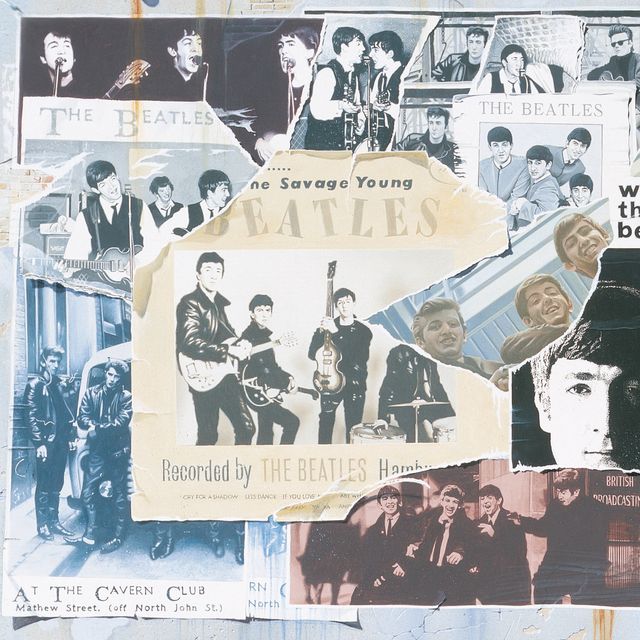
The Beatles finally released five of the songs on Anthology 1 in 1995: “Searchin',” “Three Cool Cats,” “The Sheik of Araby,” “Like Dreamers Do” and “Hello Little Girl.” Apple did not have its own copy and used tapes from collectors. The other ten Decca recordings have never been officially released, though bootlegs have circulated since 1977.
In December 2019 one of Epstein's own reels, labelled “2” in ballpoint pen, went up for auction at Sotheby's. It held seven of the songs. The Beatles historian Mark Lewisohn authenticated it from tiny details: on this copy, “Three Cool Cats” ends “a single bass note longer than any version we've had before.”
Sixty-four years on, the tape is less a lost treasure than a snapshot of a band that was not ready yet. Fifteen months after the audition, the Beatles released Please Please Me.