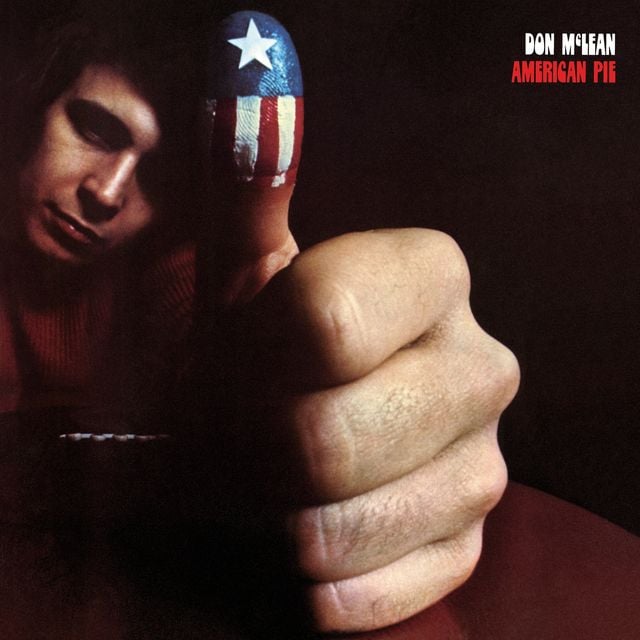
A Thorny Crown
For fifty years, fans have decoded “American Pie” line by line. Here is what Don McLean has confirmed, what he has denied, and where his answers changed.
 Trevor Fortune•🎵 Don McLean - American Pie•7 min read•November 26, 2026
For most of his career, Don McLean had one answer when people asked what “American Pie” meant. “It means I never have to work again,” he would say. The joke kept him from explaining an eight-and-a-half-minute song full of kings, jesters and coded names. It also left the explaining to everyone else.
Fans, teachers and early internet users built a detailed key to the song. Most of it was confident, and some of it was wrong. In 2015 McLean sold his handwritten drafts for $1.2 million, and in 2022 he finally answered some of the questions in a documentary. His answers did not always match each other.
The Part Nobody Argues About
One line has never been in doubt. “The day the music died” is February 3, 1959, when Buddy Holly, Ritchie Valens and J.P. “The Big Bopper” Richardson were killed in a plane crash in Iowa. McLean was a paperboy in New Rochelle, New York, and learned of Holly's death from the papers he was folding.
The song began ten years later. At the 1969 Newport Folk Festival, McLean asked Phil Everly, who had known Holly, what really happened. Everly told him Holly took the plane so he would have time to do his laundry before the next show. “It brought everything cascading back,” McLean told the Arizona Republic's Ed Masley in 2022. He wrote the opening section, through to “the day the music died,” in one go. “I just wrote it as I sang,” he said. “And I just had to figure out where to take it from there.”
The Internet's First Decoder Ring
Where he took it was into the 1960s, through a crowd of characters who are never named. Listeners started matching them to real people almost at once. By the early 1980s the song had become a running argument on Usenet, the online discussion network that came before the web. In 1993 a Usenet user, Rich Kulawiec, collected years of those threads into “The Annotated American Pie,” a line-by-line guide that is still online today.
The standard key went like this. The king was Elvis Presley, the King of Rock and Roll. The jester was Bob Dylan. The song says the jester wore a coat borrowed from James Dean, which fans matched to the jacket Dylan wears on the cover of The Freewheelin' Bob Dylan. The jester “in a cast” was Dylan after his 1966 motorcycle crash. The girl who sang the blues was Janis Joplin, “Jack Flash” was the Rolling Stones, and the “Helter Skelter” line pointed to the Manson murders. Even the historian Douglas Brinkley, writing in the 2015 Christie's catalogue, thought it “fair to surmise” that the king was Elvis and the jester Dylan.
Kulawiec added a warning, passed on from another reader: “the entire song can be viewed as one big projective test, so interpretations vary quite a bit.” McLean stayed out of it. In 1993 he wrote to the Straight Dope newspaper column that songwriters “should make their statements and move on, maintaining a dignified silence.”
$1.2 Million for the Drafts
In 2015, as he approached 70, McLean put his original working manuscript up for sale at Christie's in New York. It ran to 16 pages, with 237 handwritten lines and 26 typed ones, including lines that never made the record. Before the sale he told Reuters that “the writing and the lyrics will divulge everything there is to divulge.” On April 7, an anonymous buyer paid $1.2 million.
McLean explained his reasons through the auction house. He wanted people to learn “that this song was not a parlor game. It was an indescribable photograph of America that I tried to capture in words and music.” The drafts included an unrecorded verse in which the narrator prays for the music to come back to life. He dropped it because it did not speak to him the way the other verses did.
He has also explained one image. Many fans thought the marching sergeants were the Beatles on the Sgt. Pepper cover. McLean said he had pictured Philadelphia's Mummers Parade and the soldiers in Vietnam. A lot of the song is “sort of fiddling while Rome burns,” he said. “Vietnam is going on and they're marching, and then these guys are dressed in funny white suits and playing banjos and they're marching.”
“It Ain't Him”
In 2022, for the song's 50th anniversary, McLean took part in a documentary called The Day the Music Died. Its producer, Spencer Proffer, told The Guardian he had pushed McLean to reveal “what 50 years of journalists have wanted to know.” McLean used it to knock down the three most famous readings.
The king was not Elvis. “The King in my song has a thorny crown,” he said. “And only Jesus had a thorny crown.” The girl who sang the blues was not Janis Joplin. And the jester was not Dylan. “I certainly would have mentioned Dylan's name if I had meant to mention him,” he said. “I would have said Bob or something else, but I didn't ’cause it ain't him.” The jester on the sidelines, he explained, simply meant the times had stopped being funny.
"There's a lot of reasons why I don't turn this into a board game. Because it's not. It's an impressionistic piece."
Except When It Might Be
McLean's denials were not quite as firm as they first sounded. Two years earlier, The Guardian had asked him outright whether Dylan was the jester. “I can't tell you,” he said. “But he would make a damn good jester, wouldn't he?” And in a 2022 interview with AARP, he left room for Elvis too. “I specifically say the king has a thorny crown, and only Jesus Christ had a thorny crown,” he said. “But that doesn't mean you can't think it's Elvis. Something can be three things at once.”
The same applies to the line about Lenin reading Marx. Fans had long heard “Lennon,” as in John. “Lenin read Marx,” McLean told Forbes. “John Lennon certainly read Marx because he wanted socialism. So, it's both.” He told AARP that one passage was “literally” about the Holy Trinity. “Things had become so chaotic and decadent that even God was corrupted and went to California,” he said. “Most of the interpretations I've heard about my intentions are all wrong.”
Dylan himself was asked about it in 2017. “Yeah, Don McLean, ‘American Pie,’ what a song that is,” he told the writer Bill Flanagan. “A jester? Sure, the jester writes songs like ‘Masters of War,’ ‘A Hard Rain's a-Gonna Fall,’ ‘It's Alright, Ma’ — some jester. I have to think he's talking about somebody else. Ask him.”
The American Pie key, checked against McLean
“The day the music died” is the 1959 plane crash
Confirmed. February 3, 1959: Buddy Holly, Ritchie Valens and the Big Bopper.
The king is Elvis Presley
Denied, loosely. The thorny crown makes him Jesus, McLean says, but “that doesn’t mean you can’t think it’s Elvis.”
The jester is Bob Dylan
Denied in 2022 (“it ain’t him”), after saying in 2020 that Dylan “would make a damn good jester.”
The girl who sang the blues is Janis Joplin
Denied in the 2022 documentary.
Lenin is really Lennon
Both, McLean says: Lenin read Marx, and so did John Lennon.
The marching sergeants are Sgt. Pepper
McLean says he pictured Philadelphia’s Mummers Parade and the soldiers in Vietnam.
The Song That Outlived Its Key
The pattern is consistent, even if the answers are not. McLean confirms the parts that come from his own life, like the paper round, the crash and the war. He resists any one-to-one match between a character and a celebrity, because he thinks it shrinks the song. “It's not a board game,” he told AARP. “It dumbs down the song, and it's not a dumb song.”
The song held No. 1 on the Billboard Hot 100 for four weeks in early 1972, and its last week at the top fell on the 13th anniversary of Holly's death. Rolling Stone critic Rob Sheffield summed up why the decoding never ended: you “don't need to unravel the riddle to love it.” The making of the record itself is told in our review of American Pie.