The 14-Minute Film That Saved the Music Video
Nobody wanted to pay for it — so John Landis and Michael Jackson's lawyer built a loophole instead
 Trevor Fortune•🎵 Michael Jackson - Thriller•9 min read•July 20, 2026
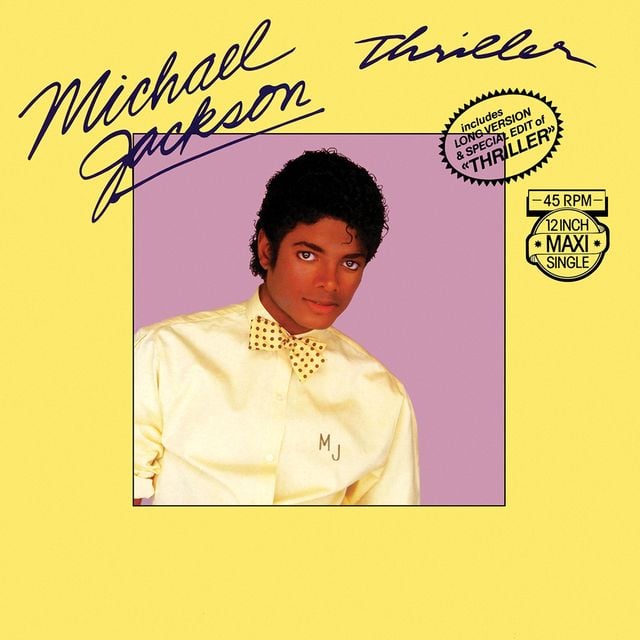
By the summer of 1983, Epic Records had already paid for two Michael Jackson videos off Thriller and didn't see the point of a third. The album was a year old. It had already been Number One. MTV, meanwhile, had a standing policy of never paying for music videos at all — artists and labels supplied them for free, as advertising. Michael Jackson wanted a fourteen-minute horror film with makeup effects, a title song from the director of An American Werewolf in London, and a budget nobody in the music business would approve. His lawyer solved it by refusing to call it a music video.
“Branca, Figure It Out”
Jackson had been a fan of John Landis's horror-comedy An American Werewolf in London and called the director directly in August 1983 to ask him to make “Thriller.” Landis and Jackson co-wrote a treatment that had almost nothing to do with a typical album promo: a fourteen-minute short film with a full narrative, a werecat transformation sequence, zombie choreography, and a spoken-word rap performed by horror legend Vincent Price. The budget Landis and his producer, George Folsey Jr., worked out ran well past a million dollars against the roughly $50,000 labels typically spent on a video in 1983.
Epic wasn't interested. The label had already funded videos for “Billie Jean” and “Beat It” off the same album and considered a third an unnecessary expense for a record that had already done its commercial job. When Jackson's entertainment attorney, John Branca, brought him the news that nobody would pay for it, Jackson gave him a one-line assignment.
"Branca, figure it out."
A Movie, Not a Video
Branca's solution exploited a gap in how MTV categorized what it paid for. The channel refused, as a matter of policy, to fund music videos — but it did buy television programming. So instead of asking MTV to pay for a video, Branca and Folsey pitched a forty-five-minute “making of” documentary about the production, with the “Thriller” short film itself bundled in as part of the package. MTV agreed to pay $250,000 for exclusive television rights. Showtime, the pay-cable network, matched it with another $250,000 for its own broadcast rights. The documentary's existence — not the song, not the video — was what actually got the checks written.
John Landis found the arrangement funny enough to give the documentary its own private nickname on set.
"The Making of Filler."
Directed by Jerry Kramer, the real documentary — officially titled Making Michael Jackson's Thriller — combined behind-the-scenes footage of the production with archival clips of Jackson as a child performer, including material fromThe Ed Sullivan Show and Motown 25. It premiered on MTV alongside the short film itself on December 2, 1983, and it had done exactly what it was built to do: it got a $500,000, effectively feature-quality horror film financed without a record label spending a cent.
The Objection Nobody Saw Coming
Financing wasn't the only crisis. Jackson, raised a Jehovah's Witness, grew increasingly uneasy about the film's werewolf transformation and zombie imagery as the premiere approached, worried it endorsed a belief in the occult that conflicted with his faith. According to accounts from people close to the production, he asked Landis to destroy the negative days before its scheduled broadcast. Landis instead held onto the footage and negotiated a compromise: a disclaimer, read aloud by Jackson himself, would open the film.
Jackson also wrote a statement for Awake!, a Jehovah's Witness publication, distancing himself from the content he was about to star in: “Due to my strong personal convictions, I wish to stress that this film in no way endorses a belief in the occult.” The disclaimer bought enough peace for the video to air on schedule — a strange footnote to a project that was, at the same time, quietly rewriting the economics of an entire industry.
What Airing It Actually Did
The film debuted on MTV on December 2, 1983, drawing an audience the network had never approached before and forcing some stations to rearrange programming to accommodate demand for repeat airings.Thriller the album, already more than a year old and sliding down the charts behind Flashdance and The Police, jumped back toward the top and, according to Branca's own account, roughly tripled its sales pace in the aftermath of the broadcast. For an album that had already been Number One and multi-platinum, that kind of second wind a full year after release had no real precedent.
The home-video release compounded it. Vestron Video, a young company betting that consumers would buy cassettes outright rather than only rent them, licensed Making Michael Jackson's Thriller for VHS and paid roughly $500,000 more just to market it, timing the release for the weeks before Christmas 1983. The tape sold a million copies almost immediately, a figure unheard of for music-video programming, and went on to move roughly nine million units total — making it, by a wide margin, the best-selling music video release of all time.
Every Label Suddenly Had a Line Item
The math was now impossible to ignore. A video that cost roughly ten times the industry standard had been financed without the record label paying anything, had revived a year-old album's sales overnight, and had generated a second, independent revenue stream through home video that dwarfed what a typical promotional clip could ever earn back. Within a few years, ambitious, feature-quality music videos with real directors, real budgets, and real narrative stakes went from a novelty to an expectation — and labels that had spent 1983 treating video as a grudging expense started treating it as a line item worth fighting over.
“Thriller” is remembered today as the video that “unlocked the unlimited possibilities of music video, while helping to cement the viability of the medium,” as Rolling Stone put it decades later. In 2009, the Library of Congress added it to the National Film Registry — the first music video ever selected — calling it simply the most famous music video of all time. It remains the only one on that list financed by pretending, on paper, that it wasn't a music video at all.
The Director's Own Verdict
Landis himself has always pushed back against the tidy version of this story — the one where a savvy financing structure rescued an entire art form on purpose. Told that Harvard Business School had built a course module around the video's financing and marketing strategy, he was blunt.
"Complete bullshit."
In Landis's telling, the documentary loophole was a scramble to pay for something Jackson wanted to make regardless of the economics — “a vanity video,” he called it, built because Jackson had always wanted to transform into a monster on-screen, budget be damned. That the accidental byproduct of satisfying one star's specific fixation was a financing template that changed what every music video afterward was allowed to cost, and what it was allowed to be, is the part nobody involved was actually trying to engineer.