Fifteen Verses by Fax
Leonard Cohen's label wouldn't release the album “Hallelujah” was on. It took a fax, a cover of a cover and an animated ogre to make it a standard.
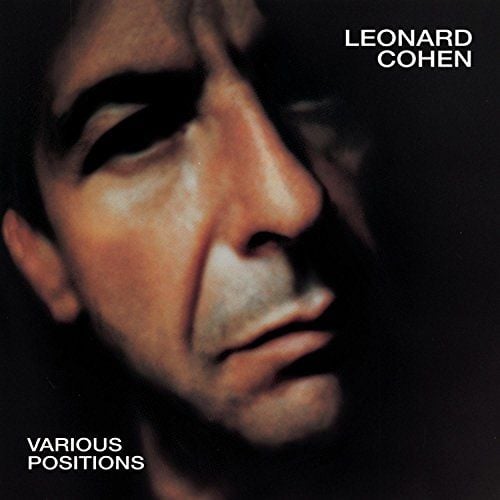
 Trevor Fortune•🎵 Leonard Cohen - Various Positions•4 min read•November 2, 2026
In 1984, Leonard Cohen delivered his album Various Positions to Columbia Records. One of its songs was “Hallelujah.” The label's president, Walter Yetnikoff, refused to release the album in the United States.
Twenty-four years later, three versions of the song were in the British charts in the same week. More than 300 artists have now recorded it. Cohen's own original did not reach the Billboard Hot 100 until the month he died, in November 2016. This month marks ten years since his death.
“This Is a Disaster”
Cohen worked on the song for years. RTÉ reported that it took him five years to finish, and the Washington Post wrote that he filled more than 80 verses before cutting it down for the record.
Columbia did not want the result. According to Alan Light's book The Holy or the Broken, Yetnikoff heard the album and said: “What is this? This isn't pop music. We're not releasing it. This is a disaster.”
Cohen remembered a gentler but more cutting version of the same verdict. “Leonard, we know you're great,” he recalled Yetnikoff telling him, “but we don't know if you're any good.”
Various Positions came out in America on a small independent label, Passport, and never charted there. “Hallelujah” was not released as a single. According to RTÉ, Rolling Stone's review of the album didn't even mention it.
A Floor Covered in Verses
Cohen kept changing the song on stage. In 1990 he was singing it with new verses at the Beacon Theatre in New York, and former Velvet Underground member John Cale was in the audience. “I'd never heard the song before and it really caught my ear,” Cale told CBC Music in 2016.
A few months later, the French magazine Les Inrockuptibles asked Cale to contribute to a Cohen tribute album, I'm Your Fan. He chose “Hallelujah” and asked, through a friend, for the words.
"A day later I woke up and the floor was covered with 15 verses of the song."
Many of the verses were religious in a very personal way. “That wouldn't work with me,” Cale said. “So I picked out the verses that I thought were cheeky or mischievous, and that's how I came to my version.” His version was slow and stately. That arrangement, not Cohen's synthesizer-backed original, is the one most people now know.
A Cover of a Cover
A copy of I'm Your Fan ended up in a New York apartment where an unknown singer, Jeff Buckley, was cat-sitting for a friend. He fell for Cale's version and built his own on it for his 1994 debut album, Grace. As CBC Music put it, Buckley's famous recording is “a cover of a cover.”
Buckley read the song as earthly rather than holy. “The ‘hallelujah’ is not a homage to a worshipped person, idol or god, but the ‘hallelujah’ of the orgasm,” he once said. “It's an ode to life and love.” He drowned in the Mississippi River in 1997, aged 30, and his recording took on extra weight after his death.
Then came Shrek. The 2001 animated film used Cale's recording in a key scene. Because of label issues, the soundtrack album carried a new version by Rufus Wainwright instead. RTÉ dates the song's real surge in popularity to Shrek.
“It's All Your Fault”
Not long after Shrek, Cale ran into Cohen at a Starbucks in Hollywood. “I asked him, ‘How many versions of ‘Hallelujah’ are there? How many can there be?’” Cale said. “He said, ‘Well, it's all your fault, you know.’” When Cale admitted he couldn't sing the religious verses, Cohen told him: “Yeah, you take what you find useful.”
The song spread through talent shows. In December 2008, X Factor winner Alexandra Burke's version became the UK's Christmas No. 1, selling 576,000 copies in a week, a record for a female solo artist. Jeff Buckley's version reached No. 2 on downloads alone. It was the first time the same song held the top two places at Christmas. Cohen's original entered at No. 36, its first appearance in the UK top 40.
“Chart placings at one, two and 36 are remarkable for a 25-year-old song that has never previously reached the top 40,” said Martin Talbot of the Official Charts Company. Cohen's songwriting royalties from that run came close to £1 million.
“Too Many People Sing It”
Cohen enjoyed the irony. In 2009, he told the CBC that the success gave him “a mild sense of revenge in my heart,” because it came from “a record the label wouldn't put out. They didn't think it was good enough.” Asked about the song's ubiquity, he was dry: “I think it's a good song, but too many people sing it.”
He had predicted something like this. “I feel I have a huge posthumous career ahead of me,” he once told Rolling Stone's Larry Sloman. “My estate will swell; my name will flourish.”
Cohen died on November 7, 2016, after a fall. That month, his own 1984 recording of “Hallelujah” finally entered the Billboard Hot 100, more than three decades after his label declined to release it.