98 Cents and a Disco Record
On July 12, 1979, a Chicago DJ blew up a crate of records in center field at Comiskey Park. Thousands of fans poured onto the field, and the White Sox had to forfeit a game.
 Trevor Fortune•🎵 Steve Dahl and the Chicago White Sox - Saturday Night Fever: The Original Movie Sound Track•7 min read•November 10, 2026
On the evening of Thursday, July 12, 1979, the Chicago White Sox let fans into Comiskey Park for 98 cents if they brought a disco record. Between the two games of a doubleheader against the Detroit Tigers, the radio DJ Steve Dahl blew up a crate of them in center field. Thousands of people then ran onto the field, and the second game was never played.
The night became known as Disco Demolition. At the time it was treated as a baseball embarrassment: a ruined outfield and a forfeit. Within two years disco had faded from the charts. Since then the event has become something else, an argument about whether the crowd was attacking a style of music or the Black, Latino and gay communities who made it.
A Fired DJ and an Empty Ballpark
Steve Dahl was 24 and angry. At the end of 1978 he had lost his job at the Chicago rock station WDAI when it switched to an all-disco format. He moved to a rival rock station, WLUP, known as The Loop, and made destroying disco part of his morning show. “I would drag the needle across the record and blow it up with a sound effect, and people liked that,” he told NPR in 2016.
He held “Death to Disco” rallies at nightclubs and recorded a parody of Rod Stewart's disco hit “Da Ya Think I'm Sexy?” called “Do You Think I'm Disco?” He saw his listeners as rock fans who felt shut out. “Rod Stewart, The Stones, a lot of mainstream rock 'n' roll acts were putting out disco records,” he told WBUR. “I think that there was a feeling of disenfranchisement by the kids wearing the blue jeans and the rock 'n' roll T-shirts.”
Across town, the White Sox had their own problem. Halfway through the 1979 season they were 35–45 and drawing fewer than 10,000 fans a game. Their owner, Bill Veeck, was famous for stunts. His son Mike, the team's promotions director, went to Dahl's studio one morning at 10:05, just after the show ended, and knocked on the door. “Let me in,” he said. “I got an idea.”
Fifty Thousand People
The plan was simple. Fans who brought a disco record would pay 98 cents, a figure tied to the station's spot on the dial, and the records would be blown up between games. At a morning meeting Veeck predicted 35,000 people. “They thought that was hilarious,” he said.
In the end about 50,000 turned up, far more than the team usually drew and more than the park could hold. The game sold out, and thousands were left outside. Many climbed the fences or jumped the turnstiles. Banners reading “Disco sucks!” hung from the upper deck. David Brown, who went with his younger brother, remembered “a lot of young guys in concert T-shirts” who were clearly not there for the baseball.
The records were supposed to go into boxes at the gates. Not all of them did. “They were just throwing records periodically on the field,” said Dave Gaborek, a teenager selling soda that night. “Kids were whipping them out of the upper deck. So it was starting to become a little mayhem-ish.” By the ninth inning of the first game, chants of “disco sucks” were drowning out the baseball.
The Usher Who Watched the Gates
One of the ushers collecting records was Vince Lawrence, a 15-year-old Black kid saving up for a synthesizer. He liked rock and even wore a Loop T-shirt under his uniform. What bothered him was what people were handing in.
"People were bringing Tyrone Davis records to this thing, and they were still getting let in for 98 cents. I mean, there were people bringing in Marvin Gaye records, Stevie Wonder records. Black records."
He asked his chief usher whether they had to admit people whose records were not disco. “They said, ‘If they bring a record, let them in,’” Lawrence recalled. He noticed the mistakes only went one way. “No one came in bringing a Supertramp record!”
A Jeep, a Helmet and a Crater
The White Sox lost the first game. Then Dahl rode onto the field in a military Jeep, wearing a helmet and army fatigues. “The electricity picked up several volts,” Veeck said. “We went from 120 immediately to 220.” Dahl led the crowd in chants and told them rock fans would resist and triumph. Then a fuse was lit on the crate in center field.
The blast left a hole in the outfield and a cloud of smoke hanging over the field on a hot, windless night. Dahl did a lap of the warning track. “People were throwing cherry bombs and beer at us,” he said. “And those were the people that liked us.” Then he left through the center-field gate.
The crowd followed him onto the field. Fans slid down the foul poles and jumped from the center-field bleachers, a 40-foot drop. One long-haired kid slid into second base, pulled it up and waved it around, and that set off a stampede. People burned banners and records, ripped up turf and wrecked the batting cage.
Bill Veeck, who walked on a wooden leg after a war injury, went out to try to calm things down. “His peg leg gets stuck in a piece of sod, you know?” said Dave Hoekstra, who later co-wrote a book about the night with Dahl. “But they just couldn't control the crowd.” Police in riot gear cleared the field, and 39 people were arrested. The umpires ruled the field unplayable, and the White Sox forfeited the second game to Detroit.
“I Packed Bill Veeck's Stadium”
Dahl did not apologise. “There were some people who got a little carried away,” he told CBS 2 the next day. “I haven't done anything. I packed Bill Veeck's baseball stadium for him and made him a lot of money last night.” Most of the coverage, Lawrence remembers, was about the damage to the grass and the lost game.
The consequences fell on Mike Veeck. Bill Veeck sold the team in 1981, and Mike was out of baseball for ten years. He has said Disco Demolition played a part in that. Dahl's radio career, meanwhile, carried on.
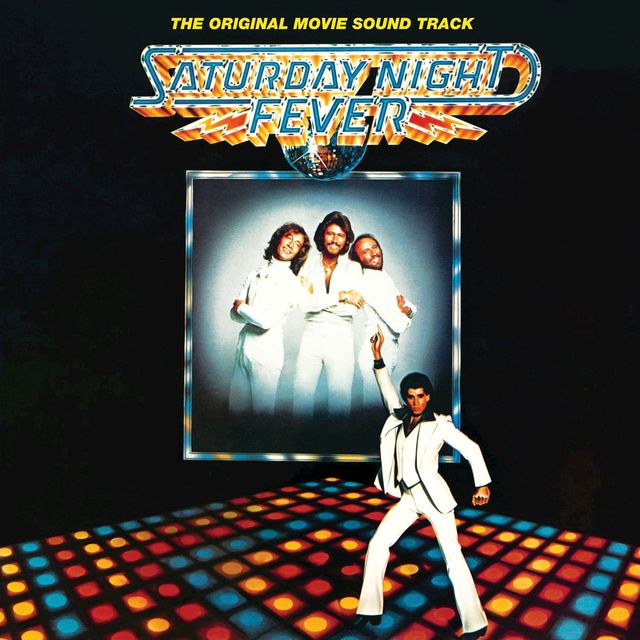
Disco itself was already huge and already tired. The Saturday Night Fever soundtrack had sold 16 million copies in the US, and rock stars from the Rolling Stones to Kiss had made disco records. But radio turned on it fast. Nile Rodgers of Chic, whose run of hits stopped dead, later said: “Prior to that I never had a single that wasn't gold, platinum, double-, or triple-platinum. But we never, ever had a hit record again after that.”
Kids, or Something Worse?
The argument over what the night meant has never settled. Darlene Jackson, now the Chicago house DJ known as Lady D, was 10 at the time and loved disco. When she saw the news pictures, she heard a message. “I think part of what Steve tapped into was a little bit of this unspoken transcript, that, ‘This is the music of black people, of gay people, of Latino people – and we should not accept it,’” she told WBUR in 2019.
Dahl has always denied it. “I don't believe I'm a racist, and I am not a homophobe,” he told WBUR. He said his audience knew disco only from Saturday Night Fever and Studio 54, not from its underground gay clubs. In his 2016 book he called the event “just kids pissing on a musical genre.” Mike Veeck calls the newer view “revisionist history.” “It had simply to do with choosing between rock 'n' roll and disco and dance clubs,” he said.
Others saw it differently even then. Writing in Rolling Stone in 1979, the critic Dave Marsh argued that young white men were the most likely to see disco as the music of “homosexuals, blacks, and Latins.” One White Sox pitcher, Richard Wortham, put it more bluntly: it “wouldn't have happened if they had Country & Western Night.”
"People started running up on me, yelling ‘Disco sucks!’ in my face, getting in my face, confronting me as a person that ‘represents’ disco."
Lawrence got through the riot unhurt. He opened his uniform shirt to show the Loop T-shirt underneath, and walked home holding his flashlight like a baton. Disco did not die that night. In Chicago it went back underground and turned into house music, and Lawrence, who did get his synthesizer, became one of its early innovators. “It's kind of ironic,” he said, “that the guy who started house music was present at the ‘death of disco.’”
In 2019, for the 40th anniversary, the White Sox gave away 10,000 Disco Demolition T-shirts and had Dahl throw out the first pitch. Many critics called it tone-deaf. Lawrence just shrugged. “Who collects a Disco Demolition T-shirt?” he asked.