Shot Two Days Before the Show
Gunmen attacked Bob Marley's home in Kingston on the eve of a free concert. He played it anyway, then left Jamaica and made Exodus in London.
 Trevor Fortune•🎵 Bob Marley & The Wailers - Exodus•6 min read•October 15, 2026
On the evening of December 3, 1976, gunmen drove into Bob Marley's home at 56 Hope Road in Kingston, Jamaica, and opened fire. Marley, his wife Rita, and his manager Don Taylor were all shot. Two days later Marley played a free concert to tens of thousands of people. The next morning he left Jamaica, and he did not live there again for well over a year.
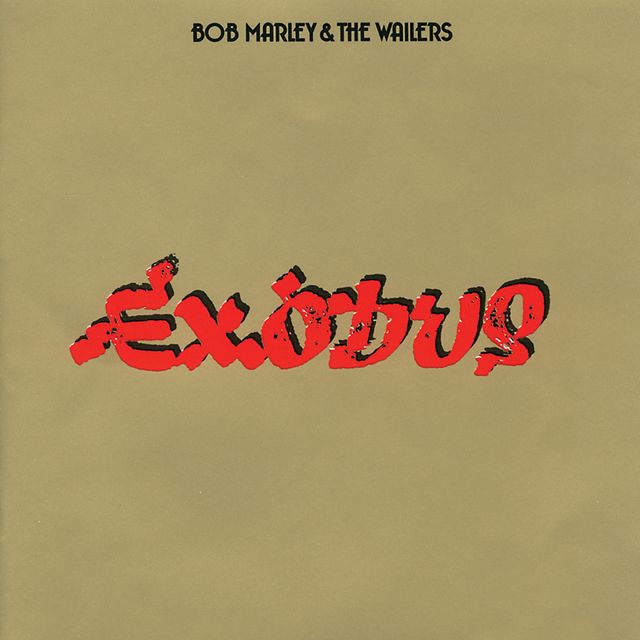
Most of that time he spent in London, where he and the Wailers made Exodus. Released in June 1977, it became his best-selling studio album. In 1999 Time magazine named it the best album of the 20th century.
A Concert Before an Election
By 1976 Marley was the most famous person in Jamaica, and that made him useful to politicians. The country was heading into a general election on December 15. Prime Minister Michael Manley of the People's National Party (PNP) persuaded Marley to headline Smile Jamaica, a free concert sponsored by the Ministry of Culture and set for December 5, ten days before the vote.
Manley presented the show as a way to calm the violence between his party's supporters and those of the opposition Jamaica Labour Party (JLP). Many people took it as an endorsement of Manley. Marley called himself apolitical, but he had played at PNP campaign events before, and plenty of Jamaicans already assumed he was on Manley's side.
His home was not easy to protect. Rita Marley later wrote that gunmen from every side came to Hope Road asking for help, “24 hours a day.” She said he had become “more important than the prime minister,” and that “it was risky to be in the middle.”
The Attack at Hope Road
The Wailers were rehearsing at the house on the night of December 3 and had just taken a break. Guitarist Donald Kinsey was in the kitchen with Marley and Taylor when the shooting started. “Good thing, because if everybody had been in the same room, it would have been a real massacre,” he said later. “There was a back door to go outside and as soon as I thought about going out that door, this gun came up inside and started shooting. We couldn't go anywhere.”
A bullet creased Marley's chest below the heart and lodged in his left arm. Outside, other gunmen fired into Rita's car as she tried to drive away; a bullet grazed her skull, and she survived by playing dead. Taylor was hit five times in the lower body and was later flown to Miami for emergency surgery. A friend of the band, Louis Griffiths, was also wounded. Nobody died.
No one was ever arrested or charged. Suspicion fell on JLP enforcers. Other theories pointed to the CIA, or to a dispute over a fixed horse race involving one of Marley's associates. None has been proved.
Ninety Minutes With a Bullet in His Arm
After the attack, Marley went into hiding, and it was not clear he would play. A PNP minister, Tony Spaulding, urged him to go ahead to show he would not be frightened off. Kinsey spoke to him by walkie-talkie on the night of the concert, because the band feared their phones were tapped. “He asked me if I would do it,” Kinsey said. “I just felt God was with us because we survived that night, so I said, ‘Yeah, I'll do it.’”
On December 5, with the bullet still in his arm, Marley walked onstage at National Heroes Park in Kingston. Rita sang behind him, still in her hospital gown. He played for about 90 minutes, and the show passed off without violence. He told the crowd he had agreed to the concert before any politicians were involved: “I just wanted to play for the love of the people.”
The next morning he flew to the Bahamas on a chartered jet and stayed at a house in Nassau owned by Chris Blackwell, the head of his label, Island Records. Manley's PNP won the election ten days later, taking 47 of 60 seats.
A Townhouse in Chelsea
After some time recovering, Marley and the Wailers regrouped in London in February 1977 to start work on Exodus, mostly at Island's Basing Street Studios in west London. From about February to June, the band lived together at 42 Oakley Street in Chelsea, where the later stages of the album were recorded and produced. English Heritage put a blue plaque on the house in 2019.
Don Taylor, recovered from his wounds, described the routine: Marley got up late, played football with the band in Battersea Park, then went to the studio and often stayed until the early hours. He told the journalist Vivien Goldman he thought of London as “a second base,” and he liked that the police there did not carry guns. The city was in the middle of punk, and Marley got to know the Clash through the filmmaker Don Letts. He later wrote “Punky Reggae Party” about it.
"After the shooting, me never want to just think about shooting. So me just ease up me mind and go in a different bag. What me stand for me always stand for. Jah is my strength."
The album came out in two halves. The first side is religious and political, building to the seven-minute title track about a people leaving Babylon for a new home. The second side is lighter: “Jamming,” “Waiting in Vain,” “Three Little Birds,” and “One Love/People Get Ready,” a reworking of a Wailers single from 1965.
A Hit, a Football Injury, and a Return
Exodus was released on June 3, 1977. In Britain it reached No. 8 and stayed on the chart for 56 weeks in a row. “Jamming” went to No. 9 on the UK singles chart, with “Punky Reggae Party” on the B-side. In the US the album peaked at No. 20.
It might have done better in America if the band had toured there. In May 1977, Marley injured his toe playing football with journalists in Paris, and the US dates were cancelled. Two of the six shows at London's Rainbow Theatre were also called off. The toe never properly healed, and it was later tied to the cancer that spread through his body. Marley died in May 1981, at the age of 36.
He went back to Jamaica in April 1978 to headline the One Love Peace Concert in Kingston. By then Exodus had made him an international star. More of its songs ended up on Legend, the best-selling reggae album of all time, than from any other Marley record.